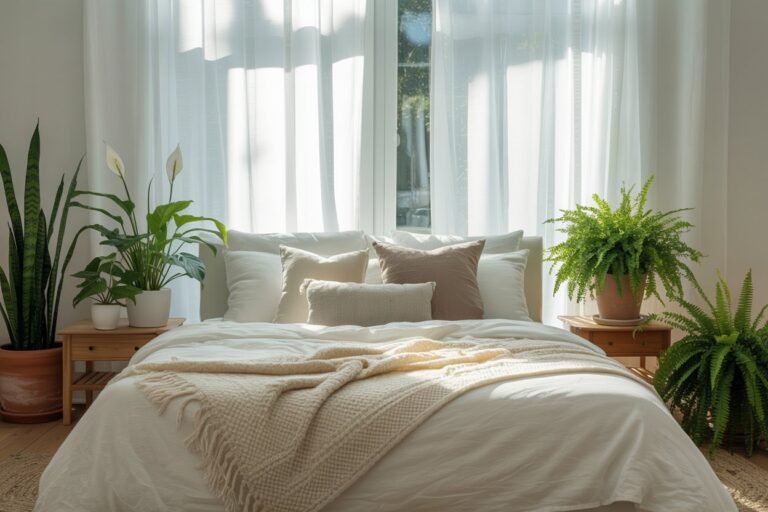
8 Indoor Plants That May Help Reduce Dust in Your Home
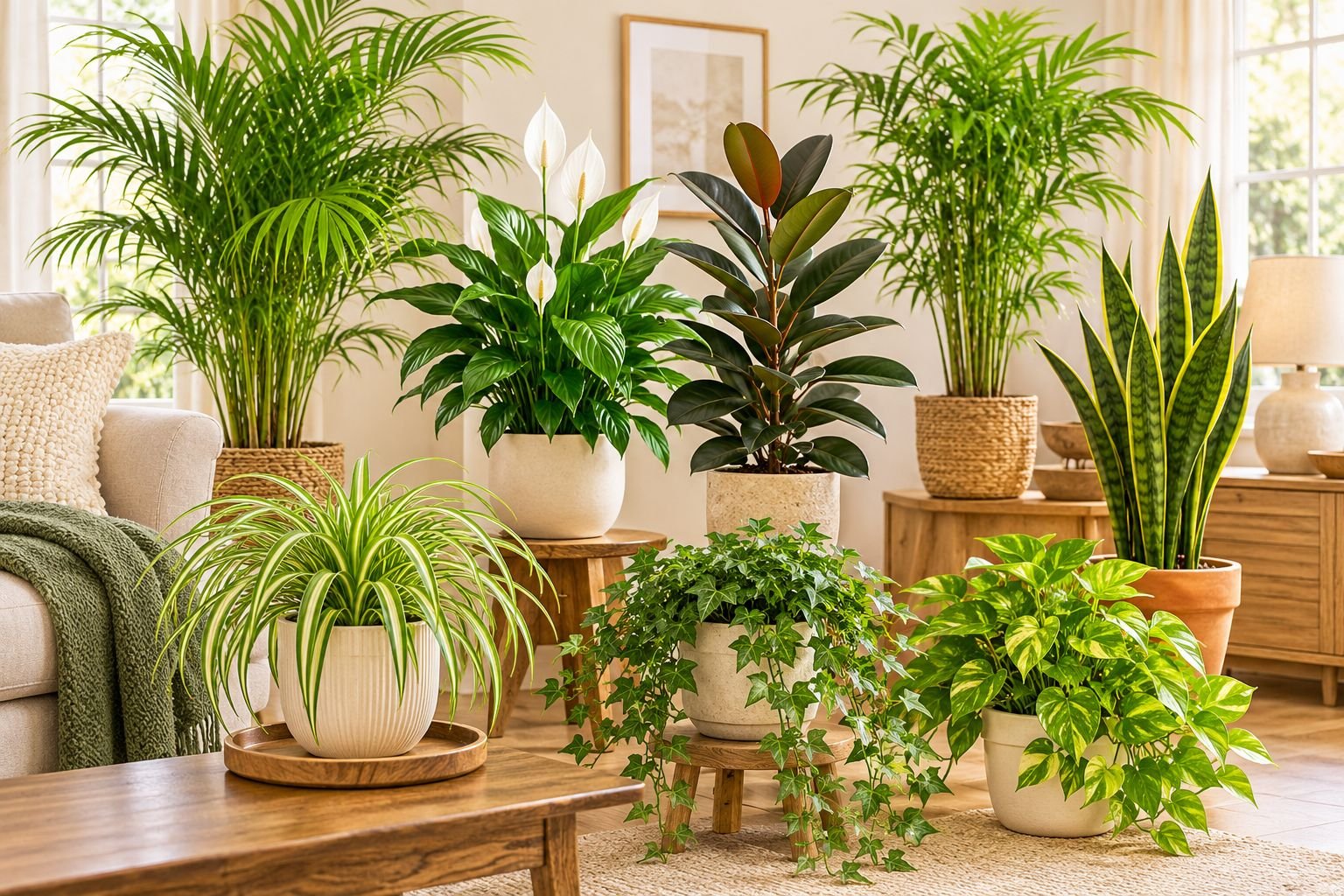
If you enjoy filling your home with greenery, indoor plants are a lovely way to make your rooms feel fresher, softer, and more inviting. A few well-placed plants can brighten an empty corner, add natural color to your decor, and bring a little bit of the outdoors inside.
But did you know that some plants also have leaves that collect dust from the air?
Plants with broad, textured, or abundant leaves can catch small airborne particles as they settle on their surfaces. This means a little dust may end up on the leaves instead of other nearby surfaces.
However, I want to be clear about something: houseplants have not been shown to remove enough airborne dust to noticeably clean the air in a typical home. They are not a replacement for vacuuming, dusting, good ventilation, or an air purifier with an appropriate filter.
Still, if you are already looking for beautiful indoor plants, choosing varieties with plenty of leaves is a lovely way to add greenery while making leaf cleaning part of your regular home routine.
In this guide, I’m sharing eight indoor plants featured in this collection, including the areca palm, peace lily, rubber plant, snake plant, bamboo palm, spider plant, English ivy, and golden pothos.
I’ll cover what makes each one a good indoor plant, how to care for it, and where it may look best in your home.
Can Indoor Plants Really Reduce Dust?
Before choosing your plants, it’s helpful to understand what they can and cannot do.
Dust is made up of a mixture of tiny particles, including fibers from clothing and carpets, skin flakes, pollen, soil particles, and other materials brought into the home. These particles settle on furniture, floors, windowsills, and other surfaces.
Plant leaves can collect some of these particles as they settle. Larger plants with plenty of leaves give you more surfaces where dust can accumulate, but that doesn’t mean they actively pull large amounts of dust out of the air.
A small number of houseplants won’t replace proper indoor air cleaning. If dust is a concern in your home, regular cleaning, washing fabrics, using a vacuum with a suitable filter, and improving ventilation are much more effective steps.
So why choose leafy houseplants?
- They add natural color and texture to your rooms.
- Their leaves provide surfaces that can collect some settled dust.
- They can make empty corners and shelves feel more welcoming.
- Caring for them gives you a regular opportunity to notice and clean dusty leaves.
- Many varieties are attractive and relatively easy to maintain.
The best approach is to enjoy your plants for their beauty and use them as part of a clean, comfortable home rather than relying on them as air-cleaning devices.
8 Indoor Plants That May Help Collect Dust on Their Leaves
1. Areca Palm
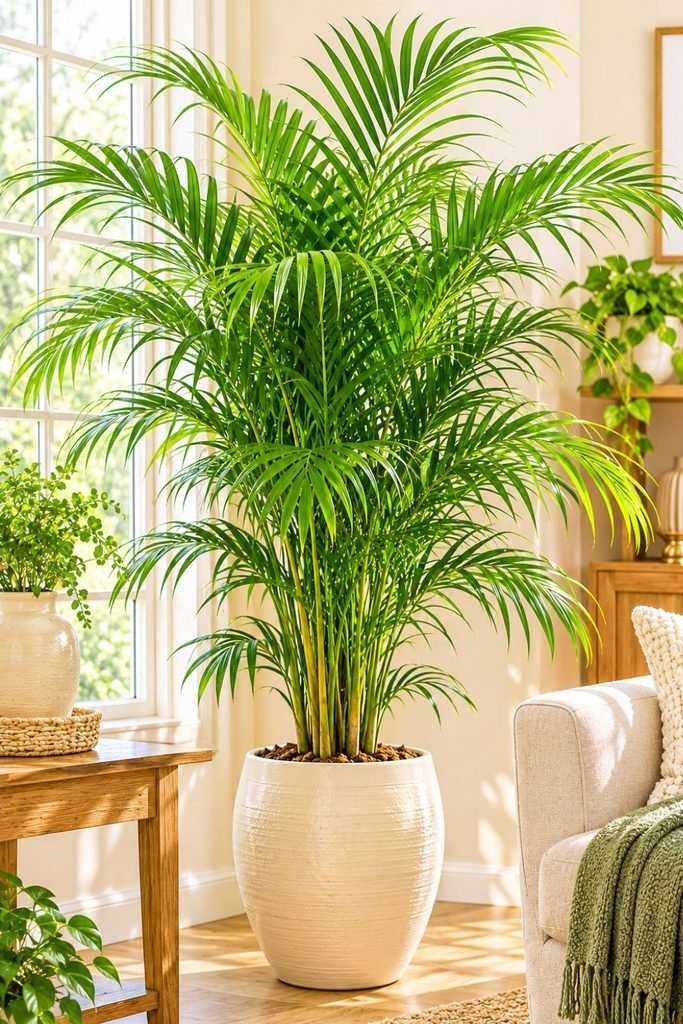
The areca palm is a beautiful choice if you want to bring a soft tropical feel into your home. Its long, arching fronds create a full, feathery appearance, making it especially lovely in living rooms, bright corners, and larger spaces.
Because it has many narrow leaflets, there are plenty of surfaces where settled dust can collect. The leaves can also make a room feel more relaxed and welcoming.
Why I like it:
The areca palm adds height and volume without looking too heavy. It’s a lovely option if you want a statement plant that still has a light, airy appearance.
How to care for it:
- Light: Bright, indirect light is ideal. Avoid harsh afternoon sunlight that can scorch the leaves.
- Water: Water when the top layer of soil begins to dry. Don’t leave the roots sitting in water.
- Humidity: It appreciates moderate to higher humidity.
- Soil: Use a well-draining indoor potting mix.
- Placement: A living room corner, bright hallway, or space near a window works well.
Dust-care tip: Gently wipe the leaflets with a soft, damp cloth when you notice dust collecting. Support each frond while cleaning so you don’t bend or damage it.
2. Peace Lily
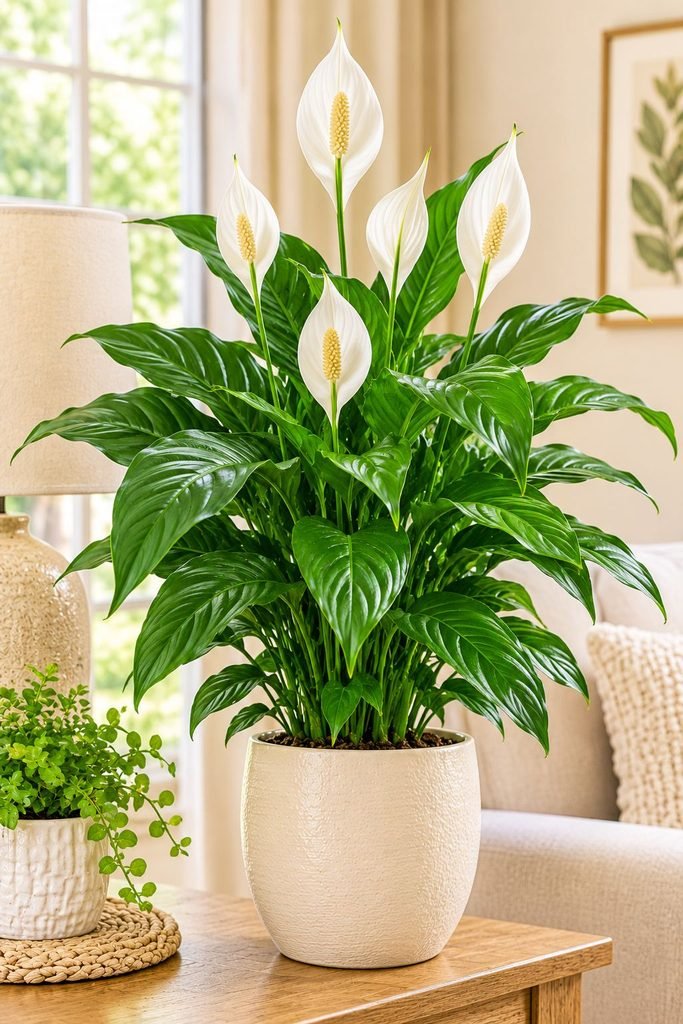
Peace lilies are popular indoor plants because of their deep green leaves and elegant white flowers. They have a softer, more classic look than many tropical houseplants, which makes them easy to incorporate into different decorating styles.
Their broad leaves provide a noticeable surface where dust can settle. They are also relatively compact compared with larger palms, so they’re suitable for shelves, side tables, and corners that receive indirect light.
Why I like it:
A peace lily adds greenery and occasional flowers without taking up as much space as a large floor plant. It looks particularly pretty in a simple white, cream, or ceramic planter.
How to care for it:
- Light: Bright, indirect light is best, although it can tolerate lower-light conditions.
- Water: Keep the soil lightly moist, but avoid waterlogging. Water when the surface begins to feel dry.
- Humidity: It enjoys moderate to high humidity.
- Soil: Choose a moisture-retentive but well-draining potting mix.
- Placement: A bright bedroom corner, living room, or home office can work well.
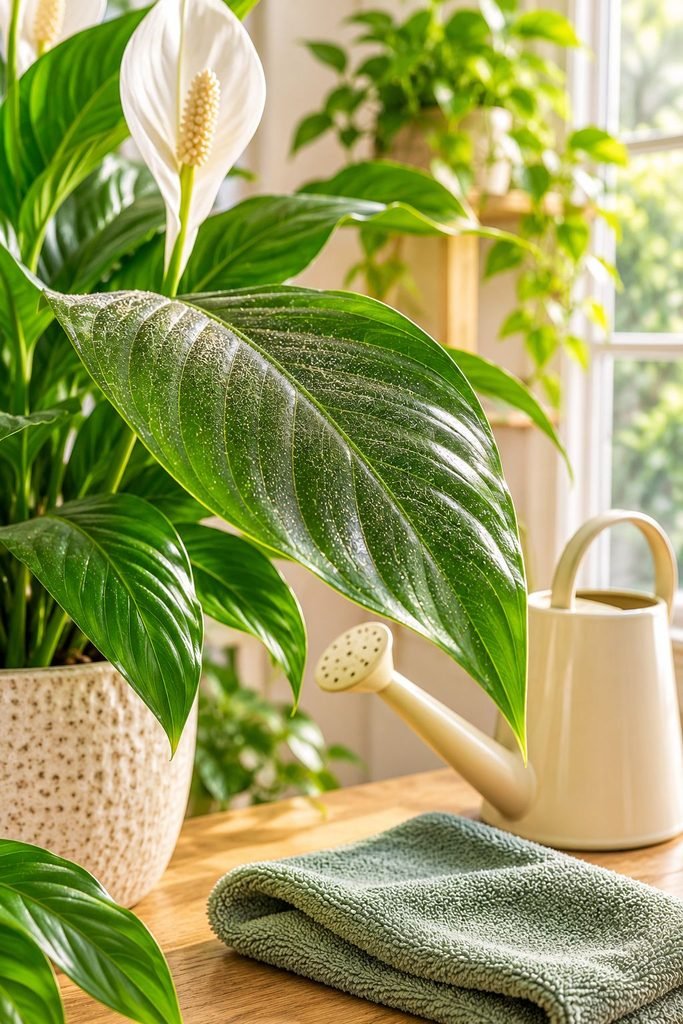
Dust-care tip: Wipe the broad leaves gently with a damp microfiber cloth. Clean both sides when needed, taking care not to rub too hard.
Important: Peace lilies are toxic to cats and dogs if chewed. Keep them away from pets and young children who might put leaves in their mouths.
3. Rubber Plant
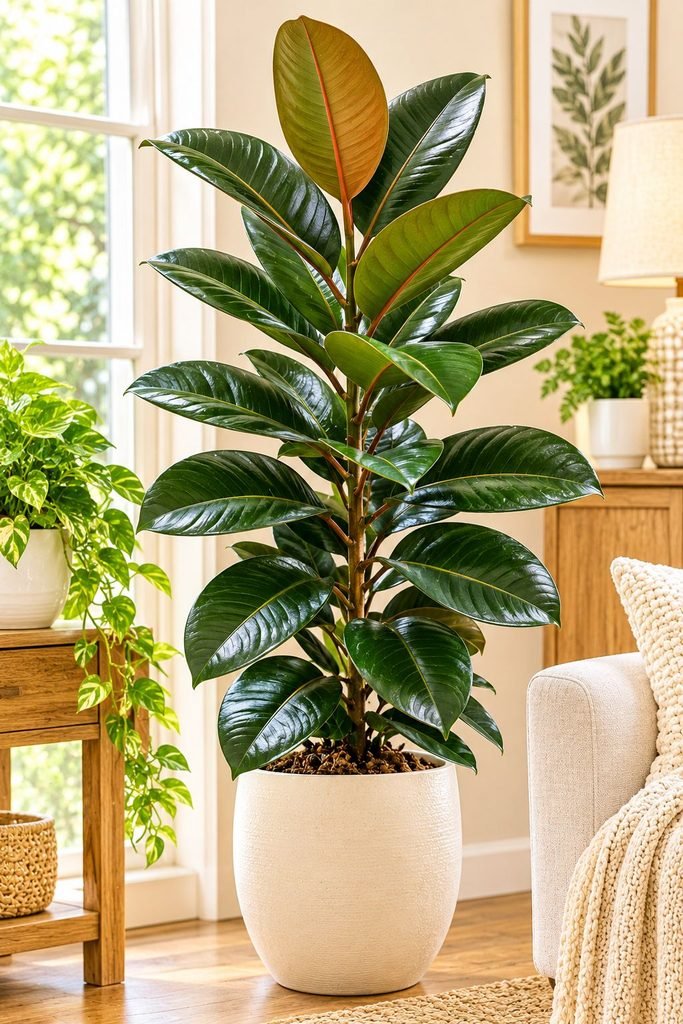
If you prefer plants with large, glossy leaves, the rubber plant is a beautiful option. Its thick, oval-shaped leaves give it a bold appearance, and mature plants can grow tall enough to make an attractive statement in a living room.
The broad leaves are easy to inspect and wipe clean, which makes this plant particularly convenient if you want to keep your indoor greenery looking tidy.
Why I like it:
A rubber plant looks stylish in a simple planter and works beautifully with modern, minimalist, and neutral home decor. Its dark green leaves also create a lovely contrast against light walls and furniture.
How to care for it:
- Light: Give it bright, indirect light. Some gentle morning sunlight may be suitable once the plant has adjusted.
- Water: Allow the top few inches of soil to dry before watering again.
- Humidity: Average indoor humidity is usually fine.
- Soil: Use a well-draining houseplant mix.
- Placement: Place it near a bright window, but avoid strong direct afternoon sun.
Dust-care tip: Its large leaves are easy to wipe with a soft, damp cloth. Support each leaf underneath as you clean to avoid damaging the stem.
Important: Rubber plants contain an irritating milky sap and can be harmful if chewed. Keep them away from pets and children.
4. Snake Plant
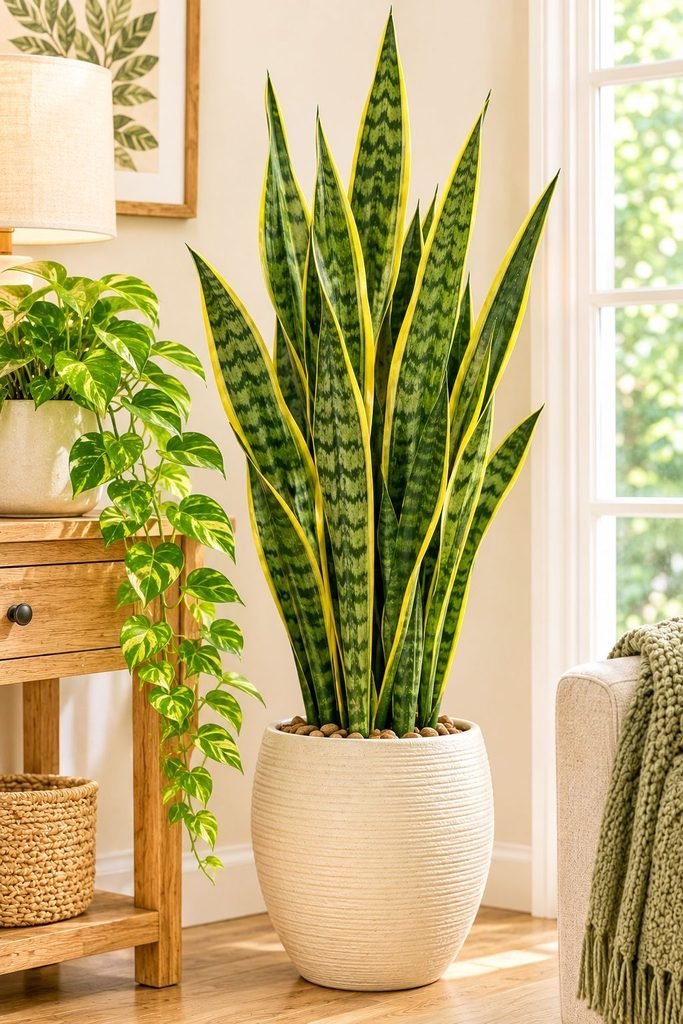
The snake plant is one of the easiest houseplants to maintain, making it a good choice if you’re new to indoor gardening or don’t have much time for plant care.
Its tall, upright leaves have a distinctive architectural shape. Unlike plants with delicate foliage, snake plants have firm leaves that are relatively easy to wipe clean.
Why I like it:
Snake plants are excellent for adding greenery to smaller spaces. They take up little floor area, look attractive in narrow planters, and don’t need frequent watering.
How to care for it:
- Light: It tolerates low light but generally grows better in bright, indirect light.
- Water: Let the soil dry out completely or nearly completely before watering again.
- Humidity: Average household humidity is suitable.
- Soil: Use a fast-draining cactus or succulent potting mix.
- Placement: A bedroom corner, home office, hallway, or living room can work well if the light is suitable.
Dust-care tip: Wipe each upright leaf with a soft, damp cloth. Avoid leaving water sitting in the center of the plant.
Important: Snake plants are toxic to cats and dogs if eaten, so choose a location where pets cannot reach them.
5. Bamboo Palm
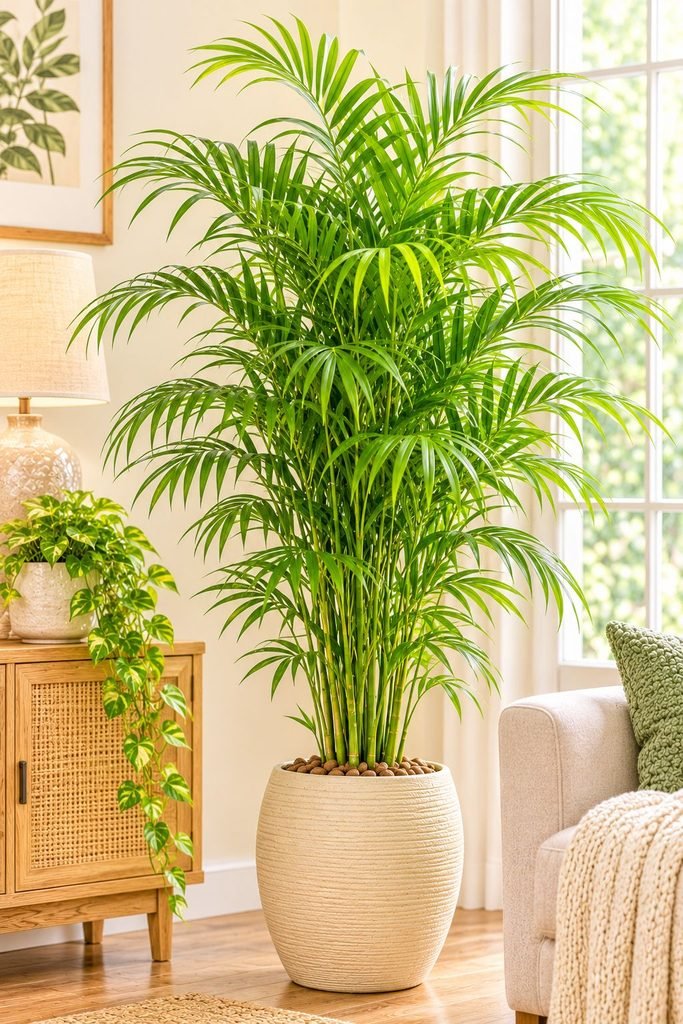
The bamboo palm is another attractive tropical plant that can add height and softness to an indoor space. Its slender stems and clusters of delicate green leaves give it a lush appearance without looking too bulky.
It’s a good option if you want a leafy plant that can fill an empty corner while keeping the overall decor light and natural.
Why I like it:
The bamboo palm works beautifully in living rooms and larger bedrooms. Its upright growth and soft foliage make it easy to pair with neutral furniture, wooden accents, and woven baskets.
How to care for it:
- Light: Bright, indirect light is ideal. Avoid strong direct sunlight.
- Water: Water when the top layer of soil begins to dry, keeping the soil lightly moist but never soggy.
- Humidity: It appreciates moderate humidity.
- Soil: Use a well-draining indoor potting mix.
- Placement: Choose a bright corner away from harsh direct sunlight and cold drafts.
Dust-care tip: The narrow leaflets can collect dust between them. Use a soft, damp cloth where possible, or gently rinse the foliage with lukewarm water and allow it to dry properly.
6. Spider Plant
Spider plants are cheerful, easy-going houseplants with long, arching leaves. Some varieties have green-and-white striped foliage, while others are mostly green.
They’re especially useful if you want a plant that can sit on a shelf, hang in a basket, or add greenery to a small space. Mature spider plants often produce long stems with baby plantlets, giving them a lovely cascading appearance.
Why I like it:
Spider plants are beginner-friendly and easy to propagate. You can grow new plants from the small plantlets that develop on mature stems, making them a lovely choice if you enjoy sharing plants with family and friends.
How to care for it:
- Light: Bright, indirect light is best. Avoid intense direct sunlight.
- Water: Water when the top inch of soil feels dry.
- Humidity: Average household humidity is generally suitable.
- Soil: Use a regular well-draining houseplant mix.
- Placement: Place it on a shelf, plant stand, or hanging basket where its leaves can trail naturally.
Dust-care tip: Spider plant leaves are long and narrow, so wipe them gently from the base toward the tips. Remove dry or brown leaf ends with clean scissors if needed.
7. English Ivy
English ivy is a trailing plant with attractive lobed leaves that can add a decorative touch to shelves, hanging planters, and indoor plant displays.
Its cascading stems make it especially useful if you want to add greenery at different heights rather than keeping every plant on the floor.
Why I like it:
English ivy has a classic look and can soften the appearance of shelves, bookcases, and window areas. It works particularly well in a hanging basket where its trailing stems have room to grow.
How to care for it:
- Light: Bright, indirect light is usually best for indoor growth.
- Water: Keep the soil lightly moist, allowing the surface to dry slightly between waterings.
- Humidity: It prefers moderate humidity and good air circulation.
- Soil: Use a well-draining potting mix.
- Placement: A bright shelf or hanging planter away from intense direct sunlight is a good choice.
Dust-care tip: The leaves can be cleaned gently with a damp cloth. Because the plant has many trailing stems, take your time and clean small sections rather than pulling the vines.
Important: English ivy is toxic if eaten and may irritate skin in some people. Keep it away from pets and children, and wear gloves if you are sensitive to the plant.
8. Golden Pothos
Golden pothos is one of my favorite choices for adding easy greenery to an indoor space. Its heart-shaped leaves often have beautiful golden-yellow markings, and its trailing vines can grow quite long when the plant is happy.
You can place it on a shelf, let it trail from a hanging basket, or train its vines along a support. It is also easy to propagate from stem cuttings.
Why I like it:
Golden pothos is adaptable and forgiving, which makes it a good option for beginners. Its trailing growth gives a room a softer, more lived-in look, especially when placed on a bookcase or high shelf.
How to care for it:
- Light: Bright, indirect light helps maintain the attractive golden variegation. It can tolerate lower light, although the leaves may become less colorful.
- Water: Allow the top layer of soil to dry before watering.
- Humidity: Average indoor humidity is usually fine, although it appreciates a little extra humidity.
- Soil: Use a well-draining indoor potting mix.
- Placement: A shelf, hanging planter, or plant stand works beautifully.
Dust-care tip: Wipe the larger leaves gently with a damp cloth. Check underneath the leaves too, since dust can collect there.
Important: Pothos is toxic to cats and dogs if chewed. Keep trailing vines out of reach of pets and young children.
Best Indoor Plants for Different Areas of Your Home
Not every plant will thrive in every room. Before choosing where to put your greenery, consider the amount of natural light, humidity, available space, and whether pets or children can reach the leaves.
Here are a few placement ideas:
| Area of your home | Plants to consider |
|---|---|
| Living room | Areca palm, rubber plant, bamboo palm |
| Bedroom | Snake plant, spider plant |
| Home office | Peace lily, spider plant, golden pothos |
| Shelves and bookcases | Golden pothos, English ivy, spider plant |
| Bright corners | Areca palm, rubber plant, bamboo palm |
| Smaller spaces | Snake plant, peace lily |
These are starting points rather than strict rules. For example, a peace lily may work in a bedroom if the light and humidity are suitable, while a snake plant can fit into many different rooms.
Always check the light conditions in the exact spot where you plan to place a plant. A room can look bright to you but still be too dim for a plant that needs strong indirect light.
How to Keep Indoor Plant Leaves Free of Dust
If you want your plants to look their best, cleaning their leaves is an important part of regular care. Dust can make foliage look dull, and a thick layer can interfere with the amount of light reaching the leaf surface.
The good news is that cleaning most houseplant leaves is simple.
1. Use a Soft, Damp Cloth
For plants with larger leaves, such as rubber plants and peace lilies, a soft microfiber cloth works well.
Dampen the cloth with plain water, support the leaf with one hand, and gently wipe from the base toward the tip. Avoid pressing too hard or pulling on the leaf.
2. Rinse Smaller Leafy Plants
Plants with lots of small leaves, such as palms and spider plants, can be difficult to clean individually.
If the plant is small enough, you can gently rinse the foliage with lukewarm water. Let the excess water drain away and allow the plant to dry in a well-ventilated spot away from harsh direct sunlight.
Don’t soak the soil unnecessarily, especially for plants that prefer drier conditions.
3. Clean Leaves Regularly
You don’t need to clean every plant every week. Check the leaves when you water, and wipe them when you notice visible dust.
How often you need to clean them will depend on your home, the plant’s location, and how quickly dust builds up.
4. Remove Dead or Damaged Leaves
Dry, yellow, or damaged leaves can make a plant look untidy. Remove them with clean scissors when necessary.
This also gives you an opportunity to inspect the plant for pests, discoloration, or other signs that it needs attention.
5. Avoid Leaf-Shine Products
You don’t need commercial leaf-shine sprays to keep most houseplants looking healthy. Some products can leave residue or interfere with the natural leaf surface.
Plain water and a soft cloth are usually enough for routine cleaning.
Other Ways to Reduce Dust Around Your Home
Plants can add beauty to your home, but if your main goal is to reduce dust, a few practical cleaning habits will make a much bigger difference.
Here are some useful things you can do alongside caring for your plants.
Vacuum carpets and rugs regularly. Carpets, rugs, and upholstered furniture can hold dust and fibers. Vacuuming with a suitable filter helps remove particles before they spread around the room.
Use a damp microfiber cloth. Dry dusting can move dust from one surface to another. A slightly damp microfiber cloth helps pick up particles from shelves, tables, and other surfaces.
Wash bedding and soft furnishings. Bedding, curtains, cushion covers, and blankets can collect dust over time. Wash them according to their care instructions.
Keep clutter under control. Decorative objects, open shelves, and crowded surfaces can create more places for dust to settle. A simpler arrangement is often easier to keep clean.
Replace air filters as recommended. If your home has an HVAC system or air purifier, check the manufacturer’s instructions and replace filters when needed. A properly sized air purifier with an appropriate particle filter can help reduce airborne particles.
Check for sources of dust. Open windows, outdoor shoes, pets, fabrics, and renovation work can all contribute to dust indoors. Identifying the main sources can help you decide where to focus your cleaning efforts.
Indoor Plants to Avoid If You Have Pets
If you share your home with cats or dogs, it’s important to check plant safety before bringing new greenery inside.
Several popular houseplants can be harmful if pets chew or swallow their leaves. Among the plants in this guide, peace lilies, snake plants, rubber plants, English ivy, and golden pothos should be kept away from pets.
Spider plants and areca palms are generally listed as non-toxic to cats and dogs by the ASPCA, but even non-toxic plants can cause mild stomach upset if an animal eats a large amount.
If you have curious pets, consider choosing pet-safe varieties and placing plants where they cannot be knocked over or chewed. Always confirm the identity of a plant before bringing it home, since common plant names can sometimes refer to different species.
Frequently Asked Questions
Do indoor plants remove dust from the air?
Plant leaves can collect some dust as particles settle on them, but ordinary houseplants have not been shown to remove enough airborne dust to significantly improve indoor air quality in a typical home. Regular cleaning and suitable air filtration are much more effective.
Which indoor plants have large leaves that are easy to clean?
Rubber plants and peace lilies are good choices if you prefer plants with broad leaves. Their foliage is relatively easy to wipe gently with a damp microfiber cloth.
How often should I clean dust off my houseplants?
Check the leaves whenever you water your plants. If you can see a layer of dust, gently wipe it away. The frequency will depend on how dusty your home is and where the plant is placed.
Can I spray my indoor plants with water to clean them?
Many houseplants can be gently rinsed with lukewarm water, but it is important to consider the plant’s needs. Avoid soaking plants that prefer dry soil, and allow foliage to dry properly in a well-ventilated area.
Are houseplants a substitute for an air purifier?
No. Houseplants are lovely decorative additions, but they do not replace a properly sized air purifier with an appropriate filter. If airborne dust is a concern, filtration and regular cleaning are more effective options.
Which indoor plants are easiest for beginners?
Snake plants, spider plants, and golden pothos are popular beginner-friendly choices. They are generally adaptable and don’t require complicated care routines, although each still needs suitable light and watering.
Are these plants safe for cats and dogs?
Not all of them. Spider plants and areca palms are generally considered non-toxic to cats and dogs, while peace lilies, snake plants, rubber plants, English ivy, and golden pothos can be harmful if chewed or swallowed.
Final Thoughts
Adding indoor plants is one of my favorite ways to make a home feel more welcoming. Whether you prefer the tall, tropical look of an areca palm, the glossy leaves of a rubber plant, or the trailing vines of golden pothos, there are plenty of beautiful options to choose from.
The eight plants in this guide can collect some settled dust on their leaves, but they shouldn’t be treated as natural air purifiers. Keep them healthy with suitable light and watering, wipe their leaves when needed, and continue using regular cleaning and filtration to manage household dust.
If you’re just starting your indoor plant collection, choose one or two varieties that suit your space and your routine. You can always add more as you become comfortable caring for them.
Save this guide for your next plant shopping trip, and use it to find a few leafy additions that will make your home feel even more inviting.