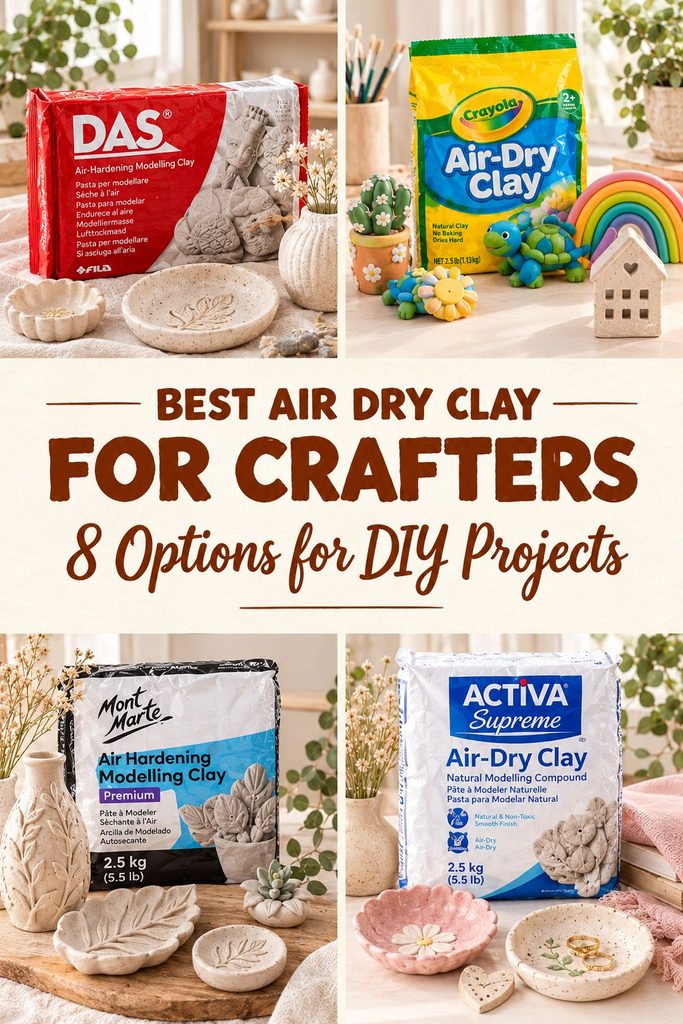
Best Air Dry Clay for Crafters: 8 Options for DIY Projects
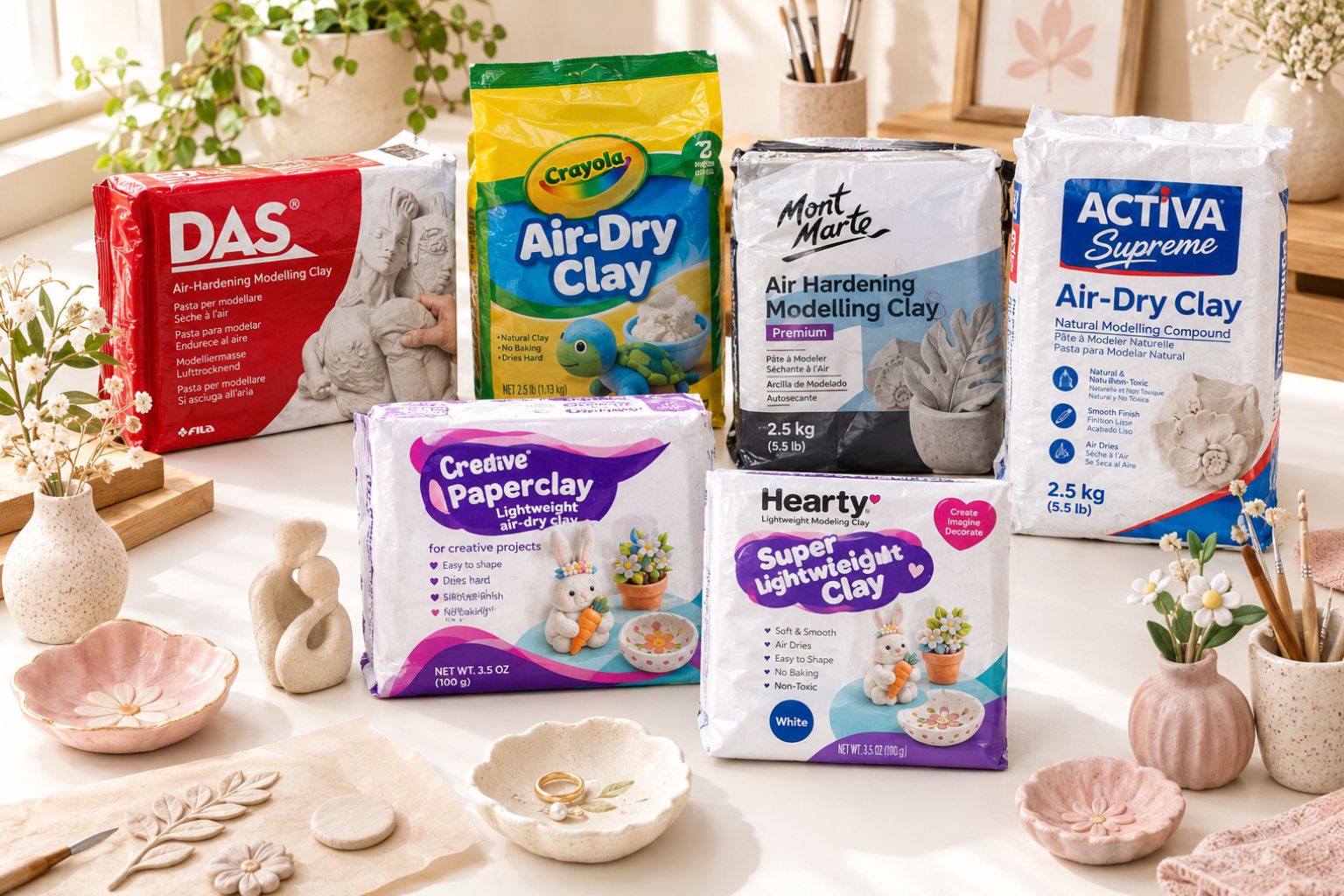
If you have ever searched for air-dry clay on Amazon, you know how many options there are. There are traditional clay blocks, lightweight modeling clay, colorful multipacks, beginner kits, and products designed for more detailed sculpting. With so many choices, it can be difficult to know which one is actually worth buying.
When choosing clay for home decor and handmade crafts, I look for a few important things. It should be easy to shape, comfortable to work with, and capable of drying into a finish that looks good once painted or sealed.
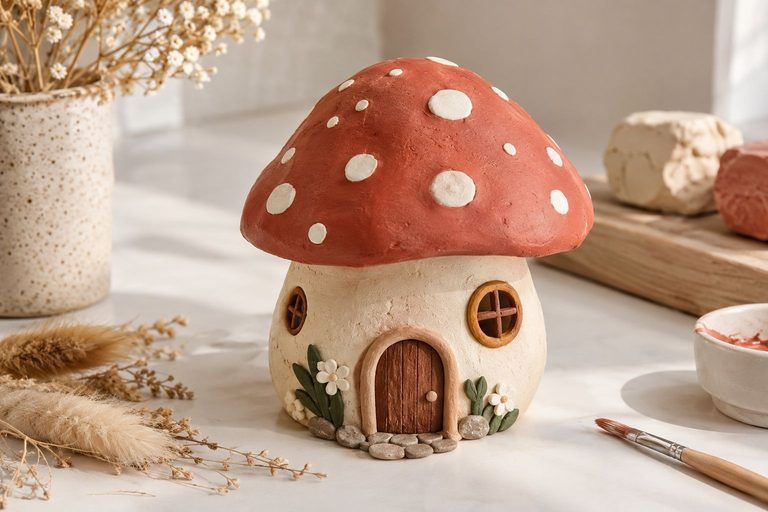
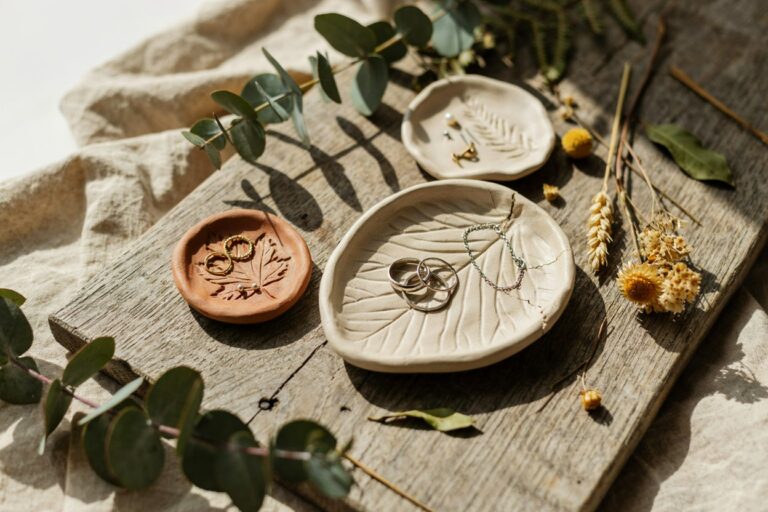
That matters whether you are making a leaf-imprint jewelry dish, a trinket tray, a miniature pot, or a set of Christmas ornaments.
The best air-dry clay depends on what you want to make. A clay that works well for simple ornaments may not be the best choice for lightweight decorations or detailed sculptures.
In this guide, I am covering eight air-dry clay options to consider, what each one may be suitable for, and what to look for before buying. I will also share practical tips for getting better results, avoiding common problems, and choosing clay for handmade products you might want to sell.
Best Air Dry Clay at a Glance
| Air-dry clay | Best for | What to consider |
|---|---|---|
| DAS Air-Hardening Clay | Everyday DIY crafts | A versatile option for decorative objects |
| Crayola Air-Dry Clay | Beginners and practice | A familiar option for basic modeling |
| Mont Marte Air Hardening Clay | Budget-conscious crafting | Compare package sizes and price per weight |
| ACTIVA Supreme Air-Dry Clay | Sculptural projects | Check its handling properties for detailed work |
| Creative Paperclay | Lightweight sculptural work | A paper-based modeling material |
| Sculpey air-dry products | Specific small decorative projects | Confirm the exact product and formulation |
| Hearty Super Lightweight Clay | Lightweight decorations | Consider it when weight matters |
| Air-dry clay kits with tools | Beginners starting from scratch | Compare clay quantity and included accessories |
These options are worth comparing, but they are not interchangeable. Product formulations, package sizes, and availability can vary by retailer, so check the current listing and manufacturer’s instructions before purchasing.
1. DAS Air-Hardening Clay: Best Overall for Everyday Crafts
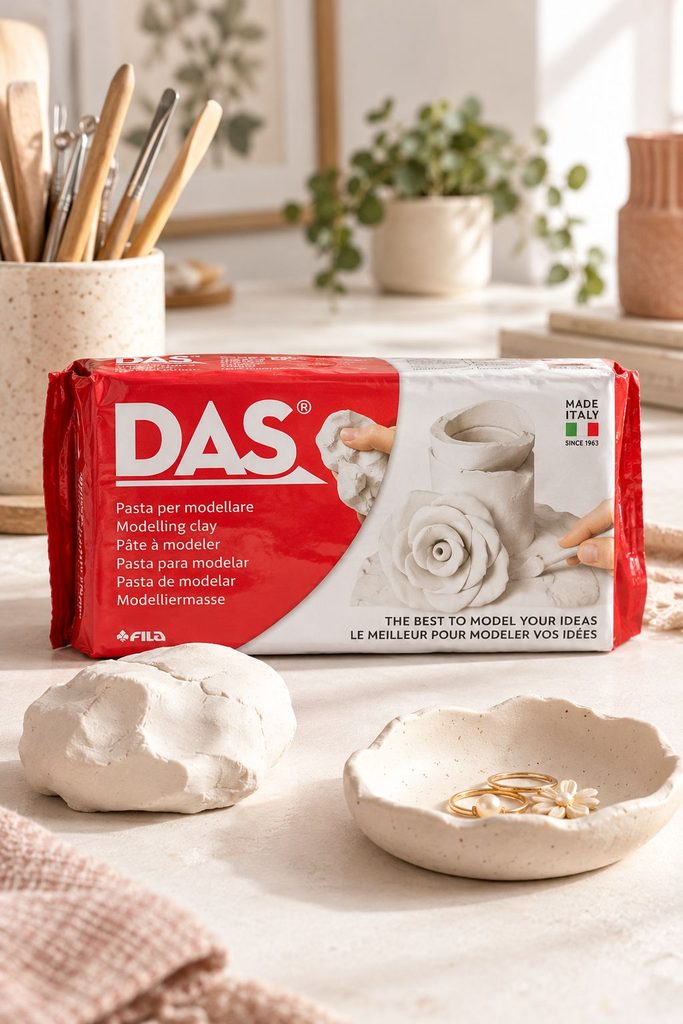
DAS is one of the first brands I would consider when looking for an all-purpose air-dry clay for home decor and handmade projects. Its traditional air-hardening clay is available in colors such as white and terracotta, making it useful for projects that will be painted or left with a more natural clay-colored appearance.
White clay is especially convenient if you enjoy decorating finished pieces in cream, blush pink, beige, brown, or other colors that complement your home.
Why consider DAS?
- Suitable for a variety of decorative modeling projects.
- Can be shaped by hand and refined according to the manufacturer’s instructions.
- Can be painted after it has dried completely.
- Available in different package sizes, depending on the retailer.
Projects you can make
DAS is worth considering for trinket dishes, hanging ornaments, small decorative sculptures, wall decor, and handmade gifts.
For a leaf-imprint jewelry dish, for example, you can roll the clay into a slab, press a suitable leaf into the surface, shape the edges, and allow the piece to dry. Once completely dry, you can refine suitable imperfections with fine-grit sandpaper before painting and sealing if desired.
What to keep in mind
Even a good clay can crack if a piece dries unevenly or has areas of very different thicknesses. Keep your project reasonably even and allow it to dry at a suitable pace.
My take: If you want one traditional air-dry clay to start exploring decorative crafts, DAS is a sensible option to compare with other widely available brands.
2. Crayola Air-Dry Clay: Best for Beginners and Practice
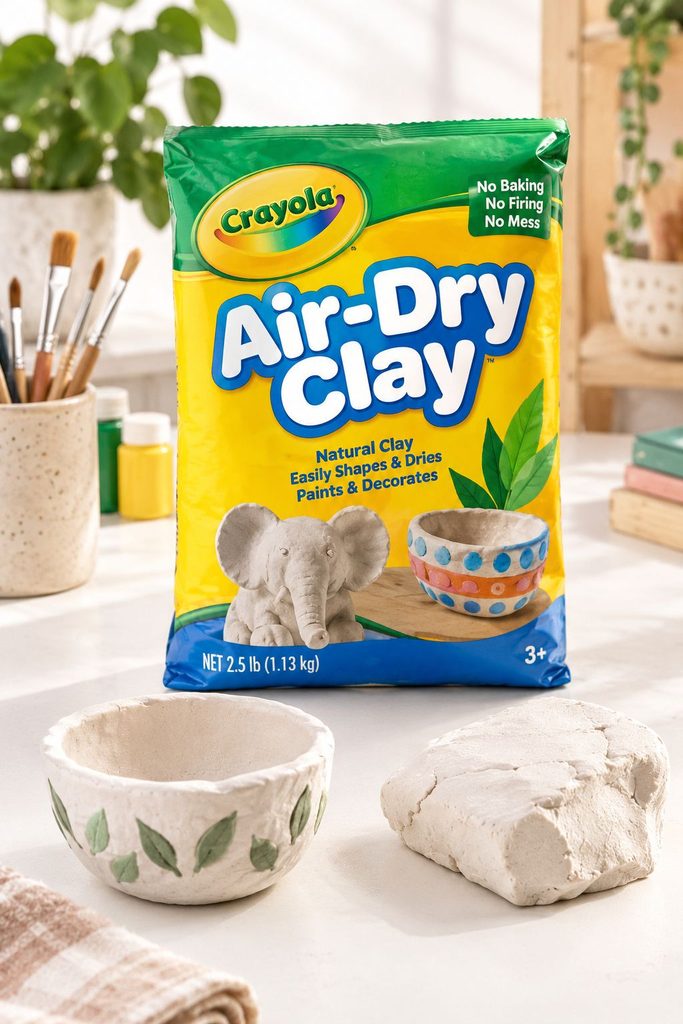
Crayola Air-Dry Clay is another recognizable option, particularly if you are learning basic modeling techniques or want clay for simple craft projects.
It hardens without requiring a kiln, making it accessible for home crafting. It can also be used to explore basic shapes, texture impressions, and simple decorative forms.
I would consider it for practicing techniques before moving on to more involved projects.
Why consider Crayola?
- A familiar option for beginner modeling.
- Suitable for practicing basic shapes and impressions.
- Can be painted after drying, following the product instructions.
- Available in different package sizes and product formats.
Projects you can make
Consider simple ornaments, stamped decorations, small sculptures, basic pinch pots, and practice pieces for learning how clay behaves.
If you are making a Christmas ornament, for instance, you can roll out the clay, cut your desired shape, make a hole for hanging, and add texture before drying.
What to keep in mind
If your goal is to make very thin jewelry components or delicate pieces with tiny projecting details, test the clay first. Different formulations have different handling properties, and the final result may not be suitable for every design.
My take: Crayola is worth considering if you are starting out and want to practice shaping, stamping, and making straightforward decorative objects.
3. Mont Marte Air Hardening Clay: Best for Budget-Conscious Crafting
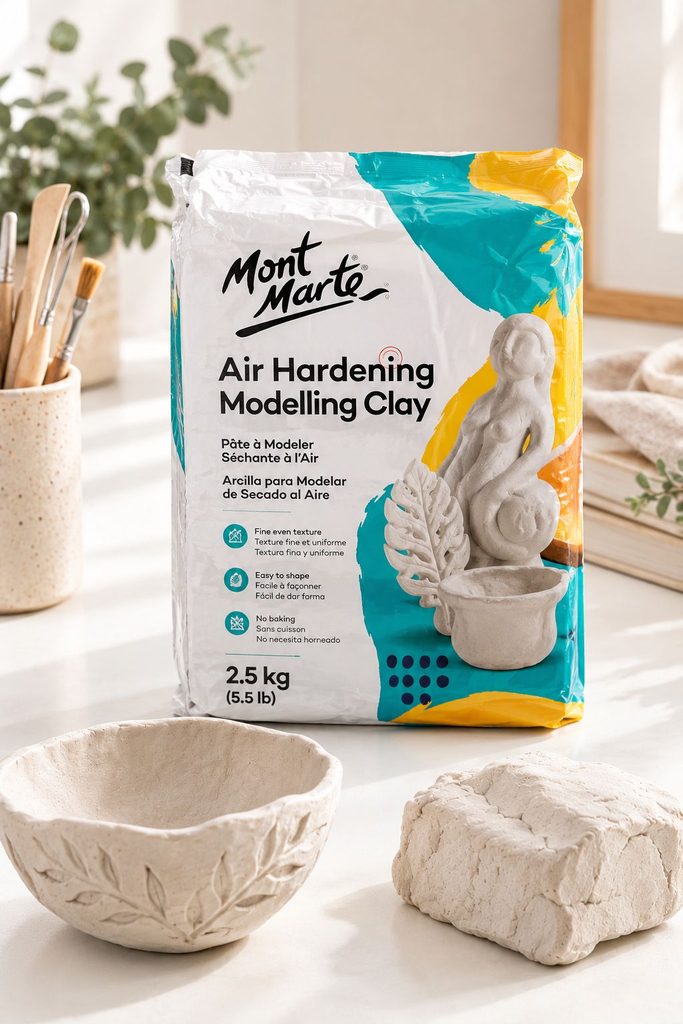
Mont Marte offers air-hardening clay for general modeling and creative projects. It is worth comparing if you want a straightforward material for practicing or making decorative pieces at home.
When shopping for clay, I would compare the package weight and total price rather than looking at the price tag alone. A smaller package may be cheaper upfront, while a larger block could offer better value if you already know you will use a lot of clay.
Why consider Mont Marte?
- An option for general-purpose decorative crafting.
- Suitable for experimenting with hand-shaped forms.
- Available in different product formats, depending on the market.
- Worth comparing with other traditional air-dry clays before buying.
Projects you can make
You could consider it for simple ornaments, decorative shapes, miniature decor, and practice pieces.
For example, if you want to experiment with a set of small trinket trays, making one test piece first can help you evaluate the texture, drying behavior, and finish before using the clay for a larger batch.
What to keep in mind
Check the specific product’s texture, drying instructions, and recommended uses. Different clays can behave differently when rolled thin, smoothed, carved, or painted.
My take: I would compare Mont Marte with DAS based on availability, package size, price per unit of weight, and how well the material suits your preferred projects.
4. ACTIVA Supreme Air-Dry Clay: Worth Considering for Sculptural Projects
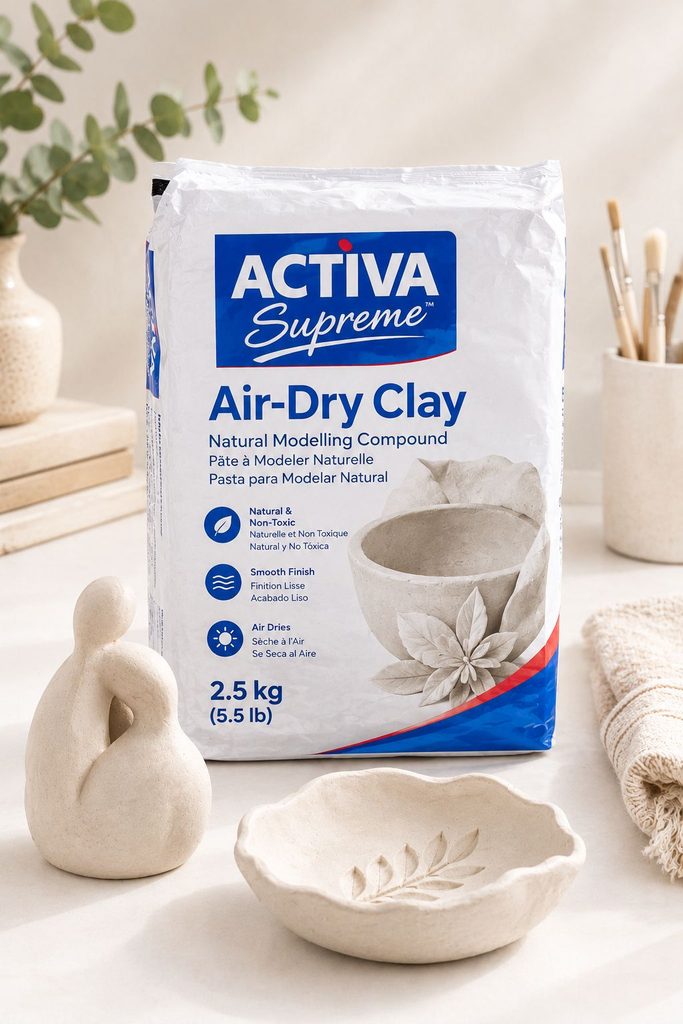
If your projects are becoming more detailed, ACTIVA Supreme is another option worth researching.
It is marketed for sculptural work, so it may appeal to makers who want to move beyond simple flat ornaments and experiment with more intricate forms.
Before purchasing, check the exact formulation and instructions for the version available to you. The way a clay responds to carving, fine details, sanding, and drying can make a noticeable difference to the final result.
Why consider ACTIVA Supreme?
- An option for people interested in sculptural projects.
- Worth comparing when detail and surface refinement matter.
- May suit crafters looking to explore more advanced modeling techniques.
Projects you can make
Consider small sculptures, figurines, textured decorative pieces, and more detailed handmade objects, provided the product’s instructions support your intended use.
What to keep in mind
If you mainly make flat jewelry dishes and simple ornaments, a specialist sculpting clay may not offer enough practical benefit to justify a higher price.
My take: Consider ACTIVA Supreme if detailed sculpting is becoming a bigger part of your crafting rather than buying it simply because it sounds more professional.
5. Creative Paperclay: Best for Lightweight Sculptural Work
Creative Paperclay is a paper-based modeling material designed for sculptural and decorative projects. It is worth considering if you want to make lightweight models or build shapes that need additional refining.
Paper-based clays can feel different from traditional air-dry clays, so I would recommend trying a small package first if you have never worked with one.
Why consider Creative Paperclay?
- Designed for sculptural and decorative work.
- An option to investigate for lightweight forms.
- Can be refined and decorated according to the manufacturer’s instructions.
Projects you can make
Depending on the product’s guidance, you might use it for decorative models, small sculptures, embellishments, and lightweight craft objects.
What to keep in mind
Do not assume a paper-based clay will handle exactly like DAS or another traditional air-hardening clay. Test your preferred techniques before using it for a large batch of products.
My take: Creative Paperclay is worth exploring if you want to experiment with a different type of modeling material, especially for sculptural projects.
6. Sculpey Air-Dry Products: Check the Exact Product Before Buying
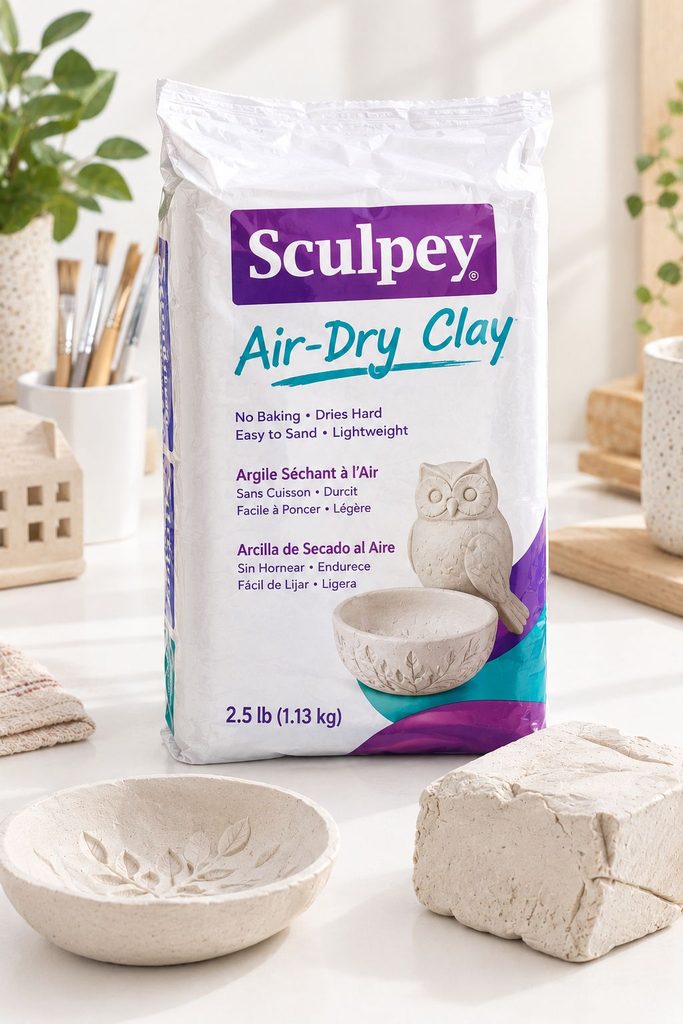
Sculpey is widely associated with polymer clay, so it is important to pay attention to the exact product name when shopping.
Polymer clay and air-dry clay are different materials. Polymer clay typically requires curing according to its manufacturer’s instructions, while traditional air-dry clay hardens through drying. They should not be treated as interchangeable.
If you come across a Sculpey product described as air-dry, verify its exact formulation and intended uses before adding it to your cart.
What to check
- Is the product genuinely air-dry clay?
- What does the manufacturer say about curing or drying?
- Is it intended for the type of project you want to make?
- What painting, finishing, and sealing methods are recommended?
Projects to consider
Choose projects based on the specific product’s instructions rather than assuming every material sold under a familiar brand will work for the same crafts.
My take: I would verify the exact product before recommending it for a particular project. A brand name alone does not tell you how a material will perform.
7. Hearty Super Lightweight Clay: Best for Lightweight Decorations
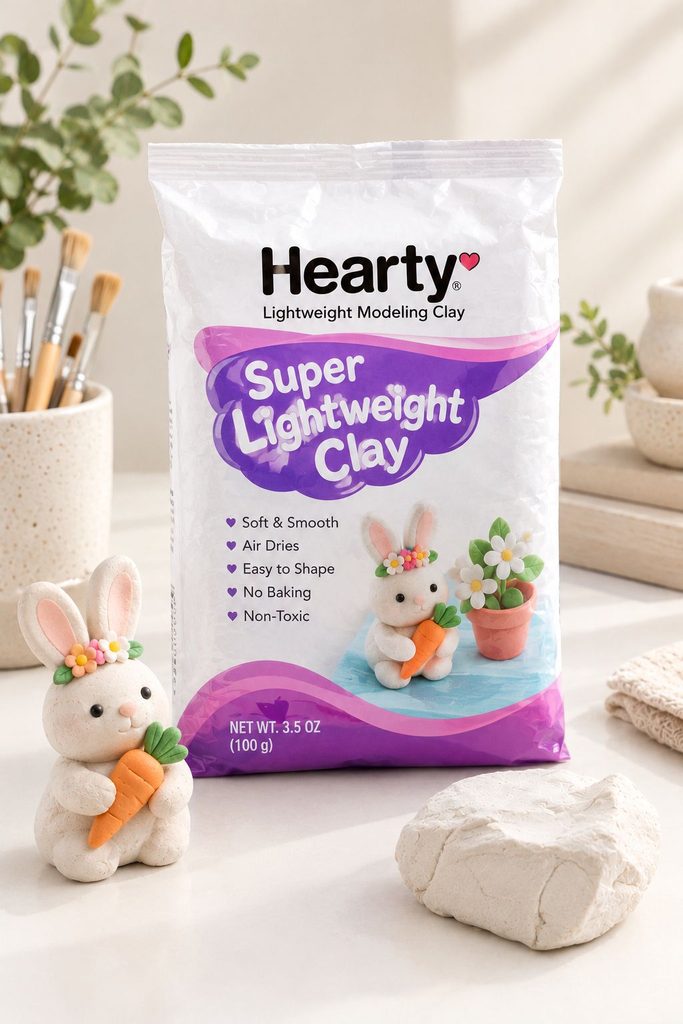
Hearty Super Lightweight Clay is different from traditional air-dry modeling clay. It is known for its lightweight texture, making it worth considering for decorative projects where weight is an important factor.
This is the type of material I would investigate for lightweight embellishments and certain sculptural decorations rather than assuming it will behave like a firm, traditional clay block.
Why consider lightweight clay?
- Useful when the weight of the finished piece matters.
- Offers a different working experience from traditional clay.
- May suit lightweight decorative forms and embellishments.
Projects you can make
Depending on the product’s instructions, consider lightweight embellishments, decorative miniatures, and craft components suitable for the material.
What to keep in mind
Lightweight clays can behave differently when rolled, textured, sanded, or painted. Test a small piece before using the material for a project that depends on crisp edges or a firm, solid feel.
My take: Choose lightweight clay for a specific reason, such as wanting a lightweight finish, rather than treating it as a direct replacement for every traditional air-dry clay.
8. Air-Dry Clay Kits with Tools: Best for Beginners Starting from Scratch
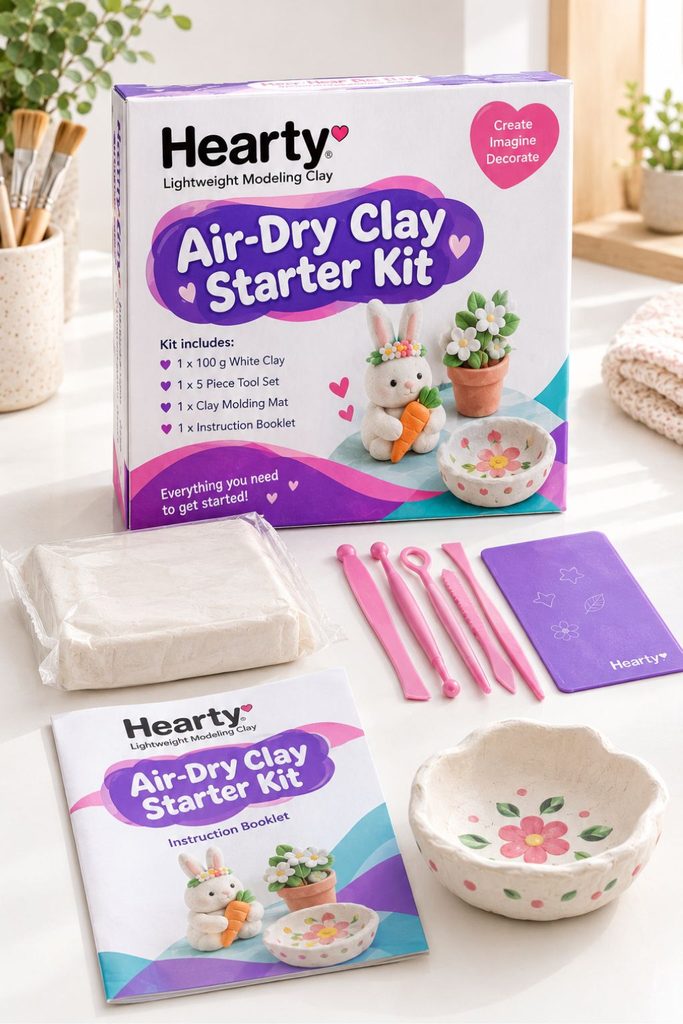
If you are starting from scratch, a clay kit can be convenient because it may include clay, shaping tools, rollers, cutters, and other accessories.
The Amazon results you shared show several different types of clay and craft kits. However, the contents and clay formulations vary, so compare each listing carefully instead of assuming every kit contains the same material.
Why consider a kit?
- Convenient if you do not own basic tools.
- Lets you try different shapes and techniques.
- May cost less than buying every included accessory separately.
- Can provide a starting point for experimenting with different craft ideas.
What to check before buying
- How much clay is included.
- Whether the clay is traditional air-dry clay, lightweight clay, or another modeling material.
- Which tools are included.
- Whether the listing provides clear drying and storage instructions.
- Whether the tools are useful for the projects you actually want to make.
Projects you can make
Depending on the clay included, a kit may be suitable for basic ornaments, simple shapes, miniature decorations, and beginner modeling exercises.
My take: A kit can be a good starting point, but I would not buy one based on the number of colors or accessories alone. The clay itself matters more than receiving a large collection of tools you may never use.
Which Air-Dry Clay Is Best for Your Project?
The easiest way to choose is to start with the item you want to make. A clay that works well for a simple ornament may not be the best choice for a detailed sculpture or a larger decorative piece.
| Your project | What to look for |
|---|---|
| Leaf-imprint jewelry dishes | Clay that rolls smoothly and holds clear impressions |
| Trinket trays | Clay that is easy to smooth and can dry evenly in a shallow form |
| Christmas ornaments | Clay that can be rolled to an even thickness and holds stamped details |
| Mini decorative pots | Clay suitable for shaping walls and bases without excessive uneven thickness |
| Small figurines | Clay that holds the details and forms you want to sculpt |
| Lightweight embellishments | A lightweight modeling material suited to the design |
| Beginner practice pieces | An affordable, easy-to-find clay in a manageable package |
| Making several products to sell | Clay that gives consistent results and fits your production budget |
For decorative crafts, I would pay particular attention to smoothness, how easily I can shape the clay, how well it holds impressions, and how the finished piece looks after painting and sealing.
Those details are more useful than choosing a brand simply because it appears frequently in online search results.
What to Look for When Buying Air-Dry Clay
Before choosing a clay, there are a few things worth checking. They can help you avoid buying a large package of material that does not suit your projects.
1. Texture and Workability
Think about the way you prefer to work. If you like rolling clay into slabs, cutting shapes, and smoothing edges, you will want a clay that can be handled comfortably without crumbling or sticking excessively.
If you prefer sculpting figures or building up three-dimensional shapes, the way the clay holds its form becomes especially important.
If possible, start with a small package. You can experiment with rolling, shaping, and smoothing before committing to a larger amount.
2. The Finish After Drying
Some projects look best with a very smooth surface, while others benefit from a natural, slightly textured finish.
For jewelry dishes, trinket trays, and decorative ornaments, I would choose a clay that you can refine with the tools you already own.
Sanding can improve small surface imperfections, but it cannot reliably fix major cracks or a poorly formed piece. It is worth taking time to shape and smooth the clay before leaving it to dry.
3. Drying Time
Do not base your decision on a drying-time claim alone. The thickness of your project, the surrounding humidity, and the product’s formulation all affect how long it takes to dry.
A thin ornament may dry much sooner than a thick sculptural object made from the same clay.
Always follow the manufacturer’s instructions and check that the entire piece is dry before painting or sealing. A surface that feels dry does not necessarily mean the inside has finished drying.
4. Package Size and Price
If you are new to a brand, consider buying a smaller package first. You can test how it feels, how it dries, and whether it suits your projects before investing in a larger quantity.
If you are making several products, compare the price per unit of weight rather than the total price alone.
Also consider how much clay you typically use for each project. A large package may offer better value, but only if you can store the unused clay properly and use it before its condition deteriorates.
5. Paint and Sealer Compatibility
If you plan to paint your finished pieces, check the clay manufacturer’s guidance for decorating and sealing. Many traditional air-dry clays can be painted after drying, but the best preparation depends on the material and the finish you want.
For decorative projects, I would test your paint and sealer on a small sample before finishing an entire batch.
Remember that sealing does not automatically make air-dry clay waterproof or food-safe.
6. The Type of Project You Want to Make
This is probably the most important consideration.
If you mainly want to make jewelry dishes, trinket trays, and ornaments, you may not need a specialized sculpting material. A traditional air-dry clay that suits your shaping and finishing techniques may be enough.
If you want to create lightweight decorations or intricate sculptures, a more specialized material could be worth investigating.
Think about the finished product first, then choose the clay that best suits the job.
Essential Supplies for Working with Air-Dry Clay
You do not need a professional studio to get started. A few basic supplies can make the process much easier.
- Air-dry clay: Choose a type suited to your project.
- Rolling pin: Helps create an even slab for trays, dishes, and ornaments.
- Parchment paper: Provides a convenient work surface for many small projects.
- Clay sculpting tools: Useful for refining edges, shaping details, and adding texture.
- Fine-grit sandpaper: Helps smooth suitable dry surfaces.
- Soft paintbrushes: Useful for applying paint and decorative finishes.
- Acrylic paints: A popular option for decorating dry clay.
- Protective sealer: Can help protect the finished surface, but does not make ordinary air-dry clay automatically waterproof.
- Plastic wrap or an airtight bag: Helps keep unused clay from drying out.
You can add more specialized tools later, once you know which techniques you enjoy most.
Tips for Getting Better Results with Air-Dry Clay
Choosing a suitable clay is only part of the process. How you shape and dry it matters too.
Keep the Thickness Consistent
Try to make the base and sides of a dish reasonably even. A very thick base combined with thin edges can dry unevenly, which may contribute to cracking or warping.
When making a jewelry dish, check the rim and base before drying. Small adjustments at this stage are usually easier than trying to correct a distorted piece later.
Smooth the Surface Before Drying
Use the appropriate amount of water or the smoothing method recommended for your clay. Work gradually rather than soaking the piece.
If you are making a jewelry dish or trinket tray, take a little extra time to smooth the rim and remove fingerprints before leaving it to dry.
You can also use suitable tools to refine the surface around stamped details without flattening the design.
Let the Piece Dry Fully
A surface can feel dry while moisture remains inside. Allow enough time for the entire piece to harden, turning it carefully if the product’s instructions allow this.
Avoid rushing the process with excessive heat, which can contribute to uneven drying.
For thicker projects, be prepared to wait longer than you would for thin ornaments or small flat decorations.
Sand Carefully
Once the clay is fully dry, fine-grit sandpaper can help refine rough edges and small imperfections.
Sand gently so you do not weaken thin sections or remove details you want to keep. If you are sanding a larger batch of crafts, work carefully and avoid breathing in dust.
Paint and Seal Only When Ready
Follow the manufacturer’s drying and finishing instructions. Apply paint and sealer in thin coats when appropriate, allowing each coat to dry before adding another.
A smooth finish often comes from taking your time rather than trying to cover everything in one thick coat.
And remember, ordinary air-dry clay is generally intended for decorative use. A coating does not automatically make a clay dish food-safe or suitable for holding standing water.
Common Air-Dry Clay Problems and How to Avoid Them
Even when you choose a suitable clay, you may encounter a few problems while learning to work with it. Here are some common issues and what you can do about them.
The Clay Keeps Crumbling While I Work
The clay may have started drying out, or it may not be suited to the technique you are using.
Check the manufacturer’s instructions before adding moisture. If the clay is too far gone or its texture has changed significantly, starting with a fresh portion may be the better choice.
To avoid this problem, keep unused clay covered while you work and close the package properly when you finish.
My Finished Dish Cracked
Cracks can develop for several reasons, including uneven thickness, rapid drying, or the way the clay was shaped.
Keep the base and rim reasonably even, avoid drying the piece too quickly, and follow the clay’s specific instructions.
A surface crack may sometimes be repairable, but a sealer will not repair a structural crack. If you are making items to sell, check each piece carefully before painting and packaging it.
The Surface Is Rough After Drying
Small rough areas can often be smoothed with fine-grit sandpaper once the clay is completely dry.
For your next project, spend more time smoothing the clay before drying and check the surface under good lighting.
If the roughness is caused by a texture you deliberately added, you may prefer to keep it rather than sanding away the detail.
The Clay Warped
Thin pieces may bend or distort as they dry, especially if one side dries faster than the other.
Support the piece appropriately while drying and follow the product’s recommendations for turning or positioning it. Avoid handling delicate pieces more than necessary before they have hardened.
The Paint Looks Patchy
Make sure the clay is completely dry and the surface is prepared appropriately before painting.
Try a test piece first, and apply thin coats rather than using one thick coat to cover the entire surface. Allow each coat to dry as directed before adding another.
If the finished piece will be sealed, test the complete paint-and-sealer combination on a sample first.
Frequently Asked Questions About Air-Dry Clay
What is the best air-dry clay for beginners?
DAS and Crayola are both worth considering for beginners who want traditional air-dry clay. Compare their texture, package size, availability, and intended uses before deciding which suits your first project.
If you are unsure, buy a small amount and make a simple ornament or dish before moving on to more complicated designs.
What is the best air-dry clay for jewelry dishes?
Look for a clay that can be rolled into a smooth slab, holds impressions well, and can be refined after drying.
DAS is one option to try, but testing a small sample is the best way to see whether you like the finish. The way you shape and dry the dish also affects the final result.
Can I use air-dry clay to make items to sell?
Yes, you can make decorative items such as ornaments, trinket dishes, and small sculptures to sell.
Choose a clay that produces consistent results, allow each piece to dry fully, and price your products to account for materials, labor, packaging, and other expenses.
Before selling a design in larger quantities, make a few samples and check their finish, consistency, and durability under normal decorative use.
Is air-dry clay waterproof?
Ordinary air-dry clay is not waterproof. A protective finish may improve moisture resistance, but it does not automatically make the finished piece waterproof or food-safe.
Keep decorative clay pieces away from standing water unless the product and finishing system have been specifically rated for that use.
Can I paint air-dry clay?
Many traditional air-dry clays can be painted after they have dried fully. Acrylic paint is a popular choice for decorative projects.
Follow the clay manufacturer’s instructions and test your paint and sealer on a small sample first.
How long does air-dry clay take to dry?
Drying time varies according to the brand, thickness, humidity, and temperature. Small, thin pieces may dry faster than thick objects.
Follow the product instructions and make sure the entire piece is dry before painting or sealing.
Can I mix different brands of air-dry clay?
I would avoid mixing different formulations unless their manufacturers say they are compatible. They may have different textures, drying behavior, and shrinkage rates.
If you want to experiment, make a small test piece first and allow it to dry completely before deciding whether the combination works for your project.
Do I need to seal every air-dry clay project?
No. Whether you need a sealer depends on the purpose of the piece and the finish you want.
Some decorative objects can be left unsealed, while painted pieces may benefit from an appropriate protective coating. Sealing is not a substitute for proper drying or a guarantee of waterproofing.
Is lightweight clay the same as traditional air-dry clay?
No. Lightweight modeling clays can have a different texture, weight, and handling behavior from traditional air-dry clay.
Choose the material according to the project you want to make, and check the product instructions before using unfamiliar clay for a detailed design.
Final Thoughts: Which Air-Dry Clay Should You Buy?
If I were choosing air-dry clay for home decor and handmade crafts, I would start by comparing DAS and Crayola for general modeling, then look at other options if I needed a particular texture, lightweight finish, or sculpting material.
For jewelry dishes, trinket trays, and ornaments, I would prioritize smoothness, ease of shaping, and the finish after drying. For more detailed sculptures, I would look more closely at the clay’s ability to hold the forms I want to create.
You do not need to buy the most expensive clay or the biggest kit to get started. Choose a manageable package, make a small test project, and see how the material behaves before using it for a larger batch.
Once you find a clay that suits your style, you can build on that experience and experiment with more designs, finishes, and handmade products.