
DIY Macrame Cat Hammock Your Cat Will Love
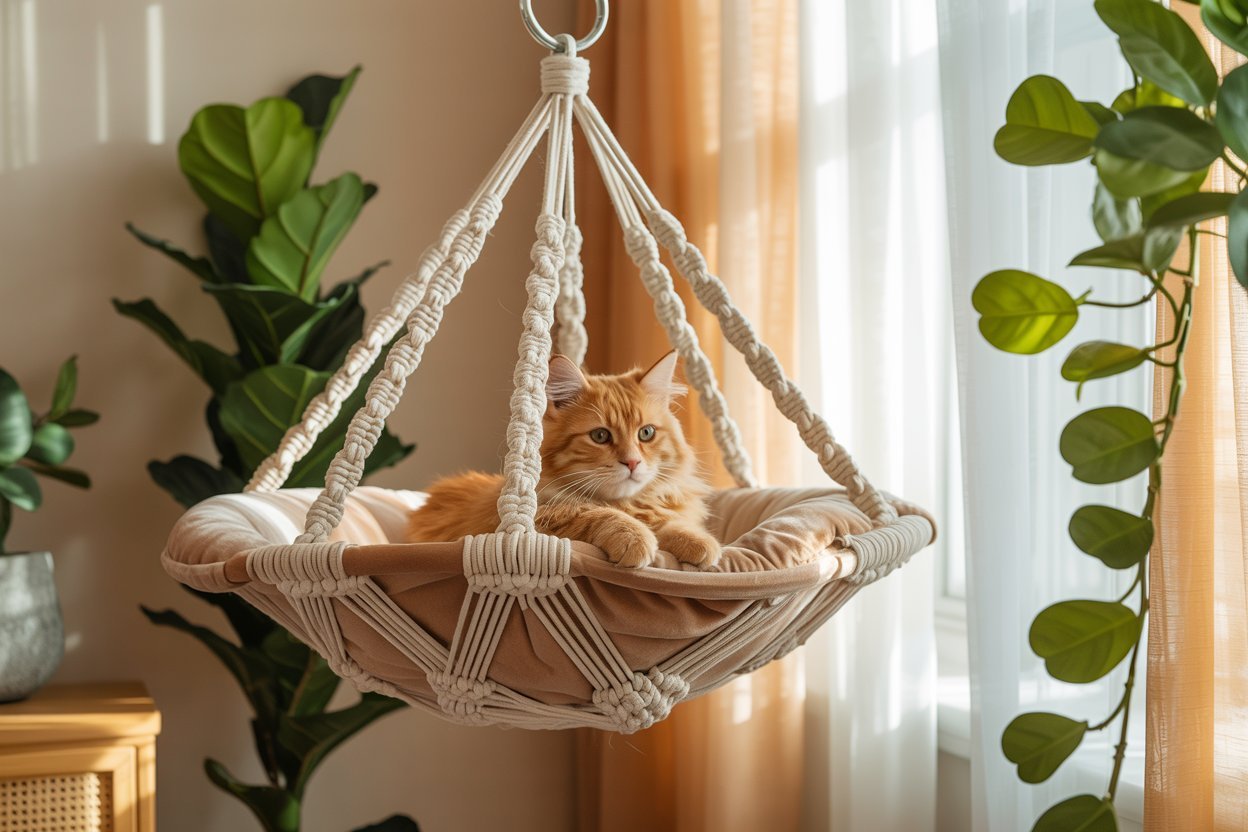
If you’re a cat parent, you already know how this goes. Our feline friends love sleeping in the most unexpected places and acting like absolute royalty while doing it.
I’ve lost count of how many times I’ve found a cat curled up in a shoebox instead of the cozy bed I carefully picked out for them.
That’s exactly why I love the idea of a macrame cat hammock. It gives your cat a cozy little throne where they can nap, lounge, and quietly judge you from above.
At the same time, it saves floor space and adds a soft, boho-inspired touch to your home. It’s functional, stylish, and surprisingly simple to make.
The best part is you don’t need to spend a fortune to create one. With a few basic supplies and a free pattern, you can make a hammock your cat will actually use.
Below are six free macrame cat hammock patterns that are beginner-friendly, affordable, and undeniably adorable.
A Note on Weight and Safety First
This is genuinely the most important section on this page, more important than any single pattern below, so please read it before you start.
- Know your cat’s actual weight, and choose hardware rated well beyond it. A hook or bracket rated for exactly your cat’s weight has no safety margin for jumping in, batting at toys, or two cats climbing in together.
- Mount into a ceiling joist or wall stud, never drywall alone. Drywall anchors are not rated for the repeated dynamic weight of a cat jumping in and settling.
- Use at least 5mm cord, thinner cord may look delicate and pretty, but it has a real, much lower breaking strength. Don’t downsize the cord thickness just for a lighter aesthetic on something weight-bearing.
- Test it yourself before your cat does. Press down firmly with your own body weight leaning into it. If it flexes more than expected or the mounting hardware shifts at all, stop and reinforce before your cat gets near it.
- Re-check the hardware every few months. Knots and hardware can loosen gradually with repeated use, a quick tug-test occasionally takes seconds and catches problems early.
- Skip this project entirely for very young kittens whose weight and jumping behavior are still unpredictable, or size the hammock low to the ground until they’re a bit older.
None of this is meant to scare you off the project, macramé hammocks are genuinely sturdy when built and mounted correctly. It’s just worth treating this like the weight-bearing furniture it actually is, not a purely decorative craft.
Supplies You’ll Need
Before you start, gather everything to make the process smooth and enjoyable.
I like to lay out all my materials so I can see exactly what I’m working with—it makes the knotting feel calm and organized.
- 5mm cotton macrame cord – strong, natural, and safe for pets
- Wooden dowel or sturdy metal ring – this will support the hammock from above
- Ceiling hook – make sure it can hold your cat’s weight securely
- Small pet cushion , or soft fleece – for a comfy base your kitty will love
- Measuring tape and scissors – to cut cord to equal lengths
- Optional: a comb or brush to gently fluff the knots and make the hammock look neat
Having these ready before you start makes the project flow effortlessly and ensures your hammock will be both sturdy and cozy for your cat.
The Base Technique (Used Across All Six Patterns)
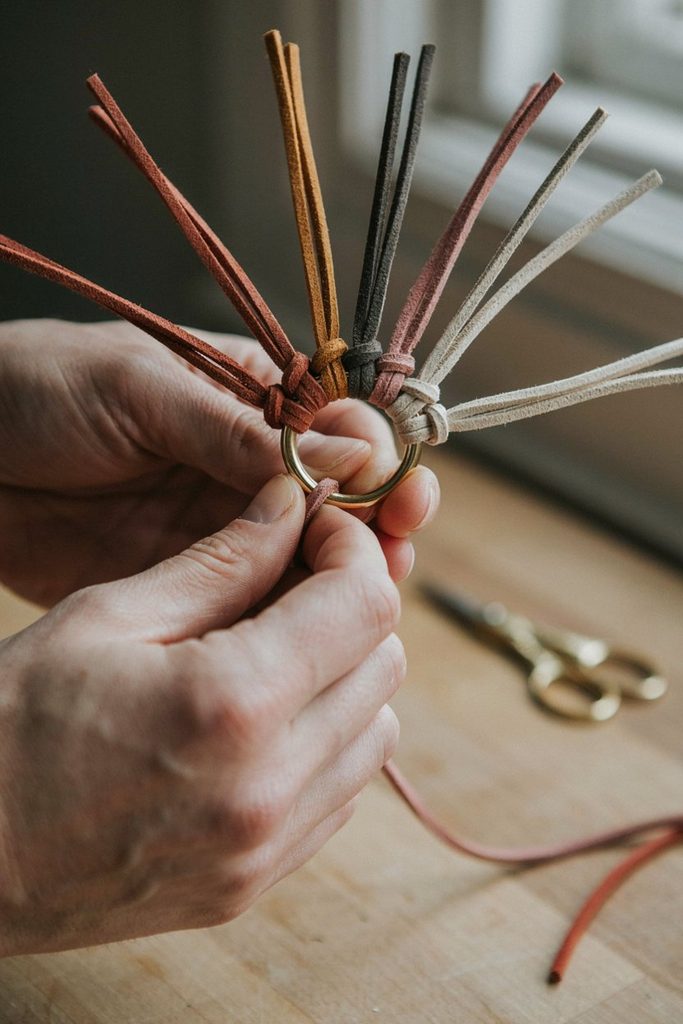
Every pattern below builds from this same core method, learn it once and you can make all six.
1. Prepare the cords. Cut your macramé cords to equal lengths, giving yourself a few extra inches beyond what you think you’ll need. Slightly longer cords help when forming knots at the base or trimming for a neat finish.
2. Attach cords to the dowel or ring. Using lark’s head knots, attach each cord evenly around your wooden dowel or metal ring. Spread the cords evenly to avoid leaning once hung, and gently tug each cord after knotting to confirm nothing slips.
3. Knot the sides. Work downward with square knots or spiral knots, keeping spacing consistent. Pause occasionally to check the width, wide enough for your cushion to fit snugly, not so loose it sags.
4. Secure the base. Gather all cords neatly at the bottom and tie a strong, double knot. Leave a fringe for a boho look or trim for a polished finish.
5. Mount the hammock, following the safety guidance above, and add your cushion once it’s securely tested.
1. The Classic Round Basket
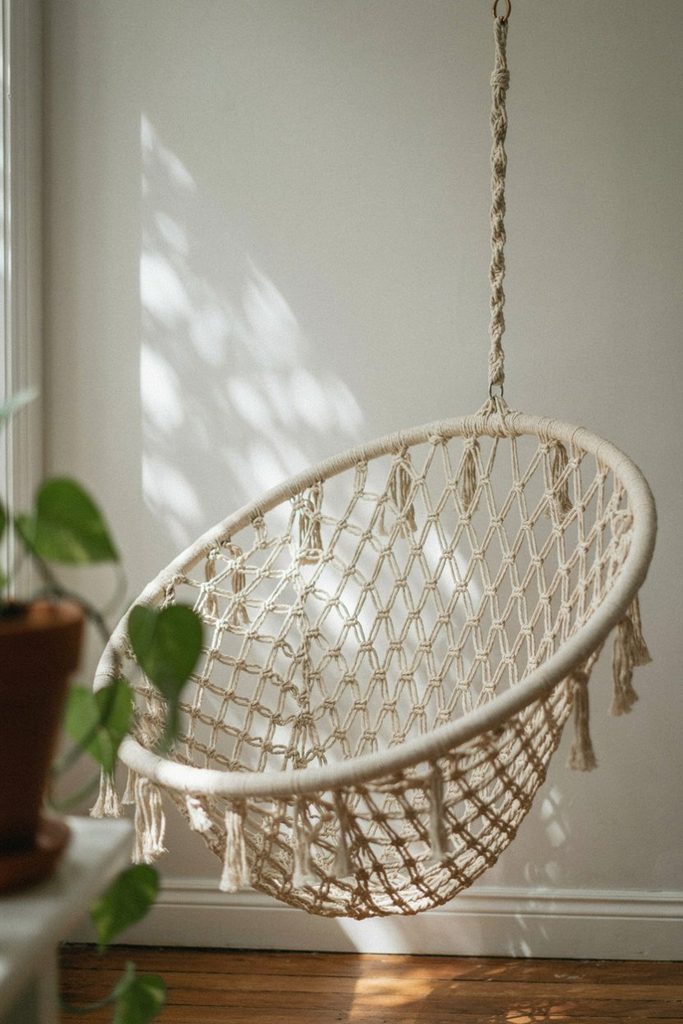
The most traditional shape, and the best starting point if this is your first macramé project.
Use a round metal ring as your base rather than a dowel, this naturally encourages an even, circular spread of cords.
Knot straight down in consistent square knots, row after row, keeping the same spacing throughout so the basket curves inward evenly rather than pulling to one side.
As you near the bottom, the natural pull of gravity plus your knotting will start forming the rounded bowl shape on its own, you don’t need to force a curve, just keep tension consistent.
This shape works especially well for cats who like to curl up tightly into a ball, the rounded sides naturally cradle a curled-up body better than a flat-bottomed shape would.
Approximate build time: 2-3 hours for a first attempt, faster once you’re comfortable with the base technique.
2. The Oval Lounger
A slightly stretched version of the round basket, giving cats more room to lie out fully rather than curling.
Start with a wooden dowel instead of a round ring, the straight line of a dowel naturally creates an elongated base rather than a circular one.
Keep your sides shallower than the classic round basket, roughly two-thirds the depth, so the finished shape reads as a stretched-out lounger rather than a deep bowl.
Space your knot rows slightly wider apart than the round basket pattern too, this keeps the sides looser and more open, better suited to a sprawled-out cat than a curled one.
This is a great second pattern to try once you’ve made the round basket, since it uses the same core knots, just a different base shape and spacing.
Approximate build time: 2-3 hours, similar to the round basket.
3. The Cocoon (Snug Pattern)
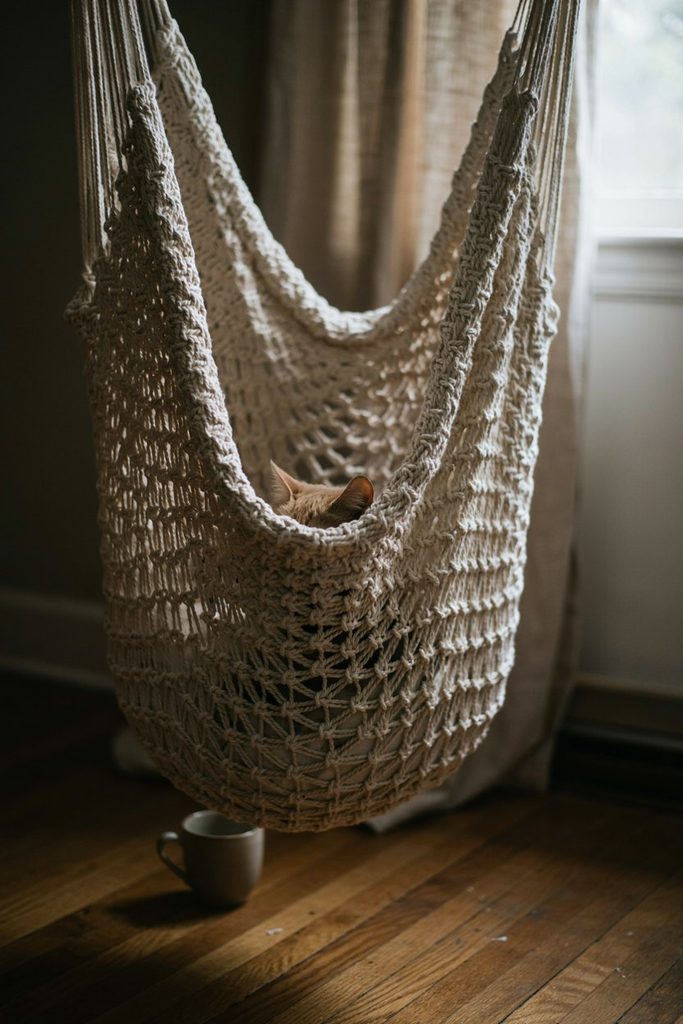
Built for shy or anxious cats who prefer an enclosed, den-like feel over an open perch.
Use the same round ring base as the classic basket, but knot your rows noticeably closer together, roughly half the spacing you’d use for the round basket, and continue several rows deeper than usual before securing the base.
The tighter spacing and extra depth together create walls that rise higher around the cat rather than a shallow, open bowl, more like a covered nest than a lounging basket.
Because the walls sit higher, this pattern uses more cord than the other basket shapes, plan for roughly 20-25% more cord length than the classic round basket to avoid running short partway through.
Approximate build time: 3-4 hours, the tighter knotting takes longer than the more open patterns.
4. The Open Perch
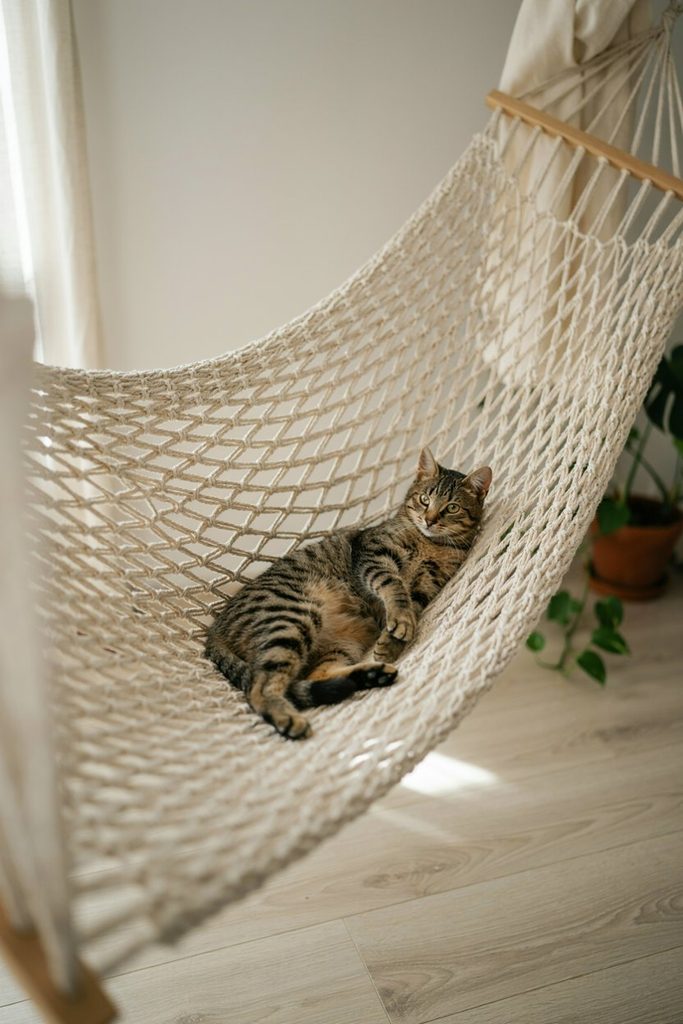
Ideal for cats who like to sprawl out and watch the room from an elevated vantage point rather than hide away.
Use a wider ring or dowel than the other patterns, this is the one shape where going a size up on your base genuinely changes the feel of the finished piece.
Space your knots noticeably looser than any of the other patterns, and keep the depth shallow, just enough rows to form a flat, stable bottom rather than a bowl. The goal is a flat, wide platform with just enough raised edge to keep bedding in place, not deep sides.
Because this pattern uses less cord per row and fewer rows overall, it’s actually one of the faster patterns to complete despite using the widest base.
Approximate build time: 1.5-2 hours, the quickest of the six patterns.
5. The Two-Tier Hammock
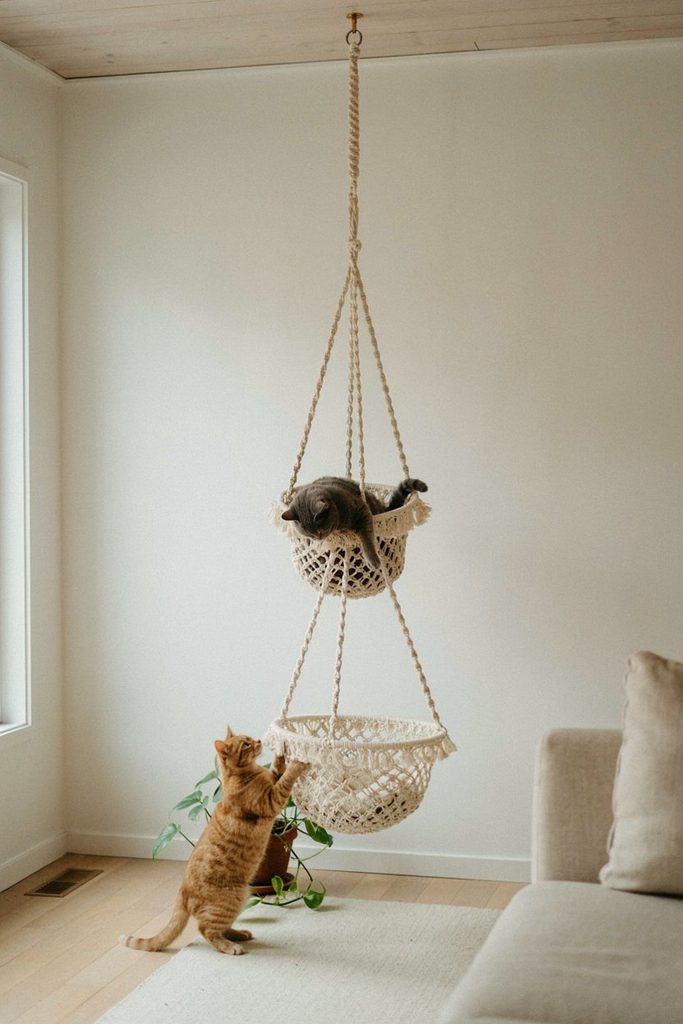
Gives multi-cat households options, or lets one cat choose between a higher lookout spot and a lower cozy spot.
Make two smaller hammocks using either the round basket or open perch pattern above, sized down slightly so each one uses less cord individually.
Instead of mounting each one separately, extend the top cords of the lower hammock upward and attach them to the same central mounting point as the upper hammock, using a longer connecting cord section between the two knotted baskets.
Stagger the height so there’s a clear gap between them, generally 12-18 inches, enough room for a cat to comfortably access the lower tier without its head brushing the upper one.
This pattern requires extra attention to the weight-safety guidance above, since a single mounting point is now supporting two hammocks. Size your hardware accordingly, and test each tier’s stability independently before combining them.
Approximate build time: 4-5 hours total, since you’re essentially building two hammocks plus the connecting section.
6. The Woven-Back Hammock
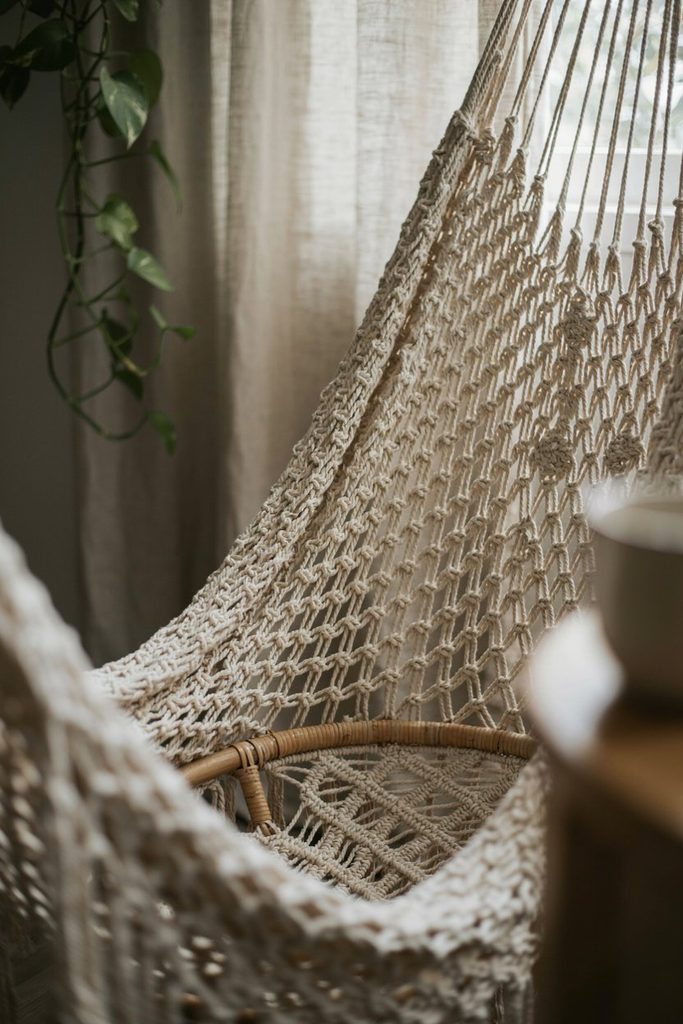
A more advanced, decorative pattern for once you’re comfortable with the base technique and want something with a more finished, tapestry-like look.
Build the main basket using the classic round or oval pattern first. Once the basket itself is complete, add a woven panel behind it using alternating half-hitch knots worked horizontally across a subset of the hanging cords, rather than continuing straight down.
This creates a flatter, woven backing section that sits behind the cat rather than fully enclosing them, purely decorative, but it gives the piece a noticeably more polished, boutique look than the plain basket shapes.
This pattern is entirely aesthetic rather than functional, the woven back doesn’t add structural support, so don’t skip or reduce your base basket knotting to make room for it.
Approximate build time: 4-5 hours, the additional weaving step takes real time to get looking clean and even.
Tips for Success and Styling
Placement is key. Hang the hammock near a sunny window, quiet corner, or a spot your cat already loves. Cats are creatures of habit, this makes them more likely to use it right away.
A soft cushion or folded blanket inside makes it extra cozy. Washable fabrics are a bonus for easy cleaning. A small toy or a bit of catnip can help make it irresistible on the first try.
From a styling perspective, macramé adds a natural, boho vibe. Leave a slight fringe for a relaxed look or trim neatly for a more modern touch.
Variations to Try Once You’ve Made Your First One
- Cord color and texture, natural cotton for a soft boho vibe, or brighter colored cords for a playful touch matching your decor
- Seasonal cushions, soft fleece in winter, a lighter cotton cover in summer
- A matching set if you have multiple cats, same pattern in different colors so each cat has their own spot
Frequently Asked Questions
How much weight can a macramé hammock actually hold? It depends heavily on your cord thickness, knot density, and mounting hardware, there’s no single universal number. This is exactly why the safety section above matters more than any pattern choice, always test with your own body weight before trusting it with your cat.
Will my cat actually use it? Most cats are drawn to elevated, enclosed spots naturally, but every cat is different. Placing it somewhere your cat already likes to nap, and adding a familiar blanket or a bit of catnip, meaningfully improves the odds of a quick adoption.
How often should I check the hardware? A quick tug-test every couple of months is a good habit, more often if your cat is particularly active or if more than one cat uses it.
Is macramé cord safe if my cat chews on it? Plain cotton cord is generally considered pet-safe if chewed occasionally, but if your cat is a heavy chewer, keep an eye on the fringe and trim any loose strands that could become a snagging or swallowing risk.
More to Explore
- Step-by-Step Macramé Patterns & Tutorials for Beginners
- 12 Free and Easy to Make Macramé Tote Bag Tutorials
- How to Crochet a Jumbo Plush Turtle: Step-by-Step Tutorial
- 5 Free Monstera Crochet Patterns You’ll Want to Make This Weekend
Final Thoughts
Making a macramé cat hammock is a rewarding project that combines DIY creativity with a cozy gift for your furry friend. With just a few simple supplies, some patience, and a genuine focus on secure mounting, you can create a stylish, elevated spot that your cat will adore.
When the hammock is secure, comfortable, and placed somewhere your cat already loves, they tend to use it almost immediately. It becomes more than just a resting place, it’s a little throne that adds personality and charm to your home.
Whichever of the six patterns you start with, this project is a genuinely fun way to bring comfort and style to both your cat and your space. Your kitty will thank you with naps, purrs, and maybe even a little judging from above.




How can I find the directions for these cat hammocks? I have 11 rescue kitties who would love them.
Ill leave a link to it