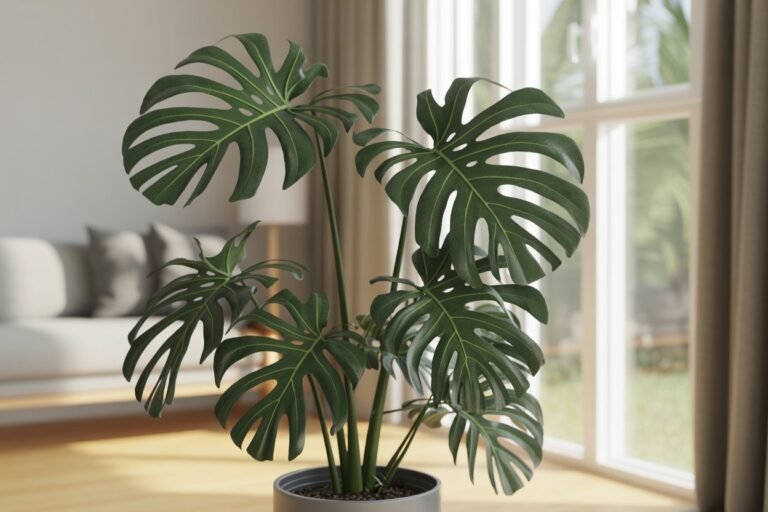
10 Indoor Plants That Bring Positive Energy to Your Home
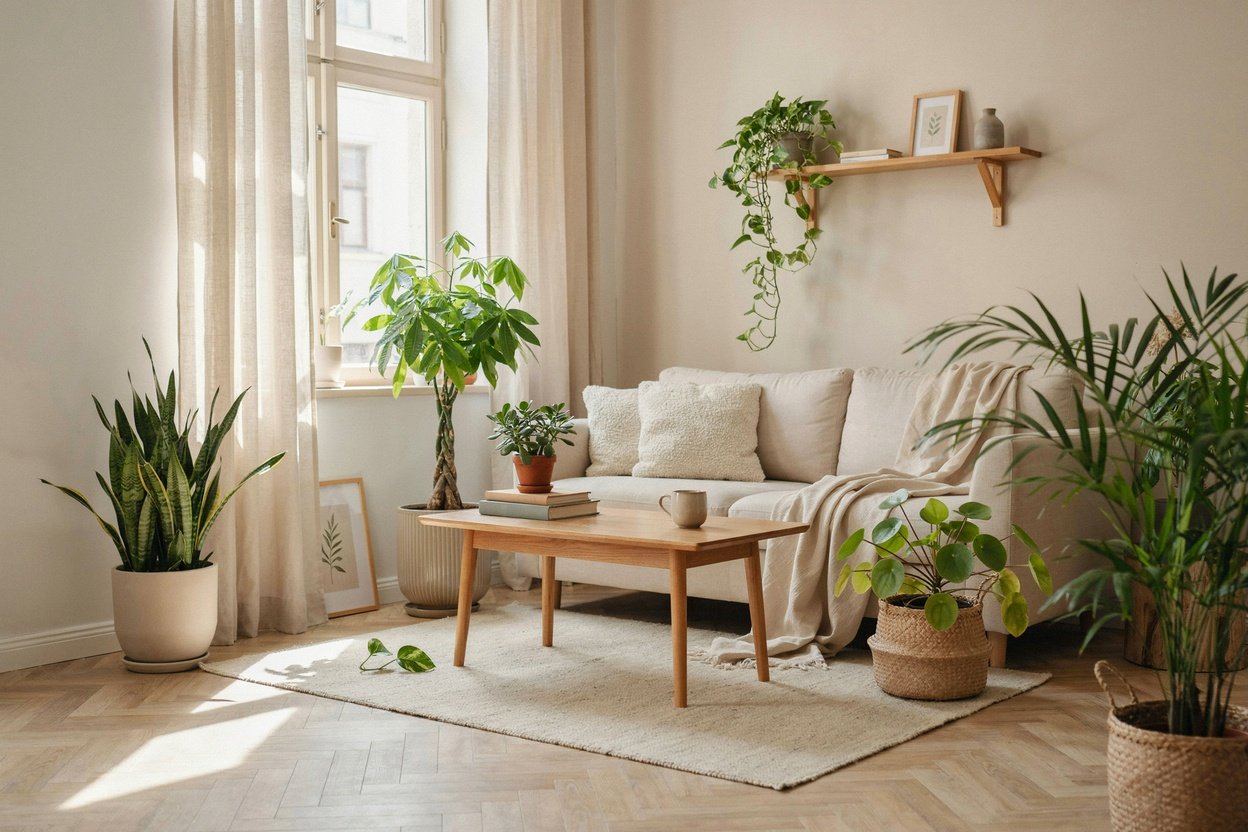
There’s a particular kind of corner in almost every home that just feels a little flat. The light is fine, the furniture is where it should be, but the space doesn’t have any life in it. Almost every time I’ve fixed a corner like that, the answer was a plant, not a new lamp or a different rug.
Something green and growing changes how a room feels in a way that’s hard to explain until you’ve seen it happen.
Plants have been tied to luck, prosperity, and good energy for centuries, especially in feng shui and in traditions across Asia where certain plants are gifted specifically to wish someone well.

I love that part of it. But I also want to be straight with you about what’s tradition and what’s proven, because that matters more than a big claim: there’s no evidence that a plant gives off “energy” in any measurable way.
What is real is that greenery tends to make a space feel calmer, that looking after something living gives your day a small, steady routine, and that a healthy plant simply looks good. Whether you call that positive energy or just a nicer room is up to you.
The ten plants below are the ones traditionally linked with luck, growth, and calm, and every one of them is easy enough for a beginner.
For each one you’ll find what it symbolizes, exactly how to keep it alive, the problems you’re most likely to run into, and a pet-safety note, because that last part is something a lot of plant lists skip.
What “Positive Energy” Actually Means for Plants
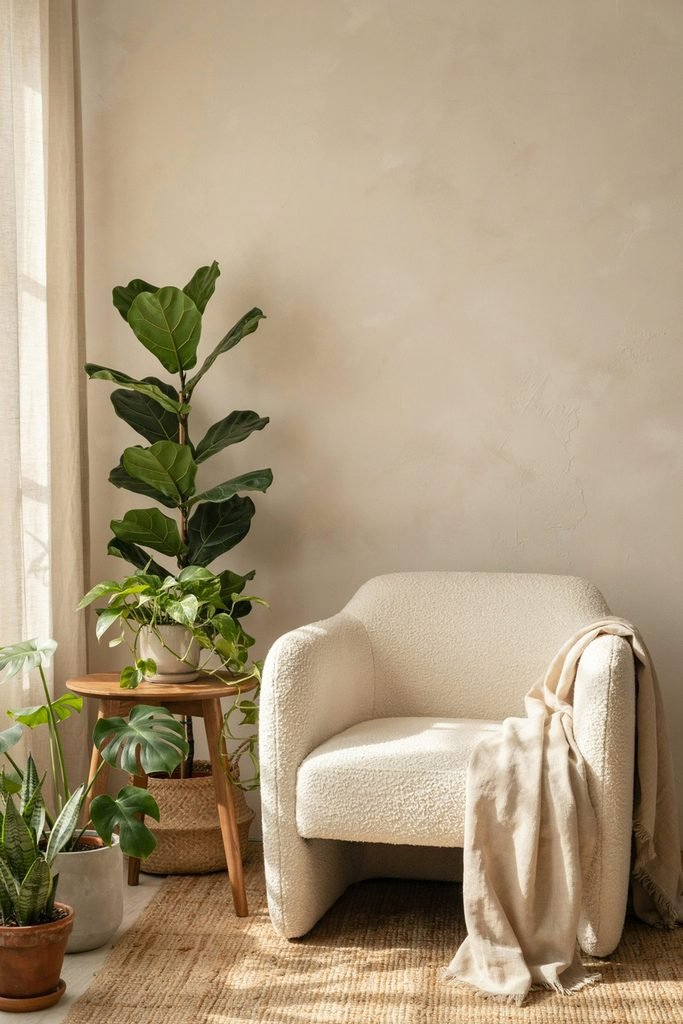
In feng shui, energy is called chi, and plants are considered a way to bring healthy, growing chi into a room.
Rounded, soft leaves are said to feel welcoming, upward-growing plants are linked with growth and progress, and certain plants have specific meanings: wealth, protection, friendship, calm.
Whether or not you follow feng shui, the practical takeaway is useful. A plant that’s thriving makes a room feel cared for.
A plant that’s drooping or dying does the opposite, and honestly, that’s probably where the old advice to avoid neglected plants comes from.
So the real rule for bringing good energy into your home with plants is simple: pick something you can keep alive.
Quick Comparison: Which Plant Fits Your Home?
If you just want to find your match fast, start here, then read the full write-up for the ones that catch your eye.
| Plant | Light | Watering | Pet-safe? | Difficulty |
|---|---|---|---|---|
| Jade Plant | Bright, some direct sun | When soil is fully dry | No | Easy |
| Chinese Money Plant | Bright, indirect | When top 1-2 inches are dry | Yes | Easy |
| Lucky Bamboo | Bright, indirect | Change water weekly (or keep soil lightly moist) | No | Easy |
| Money Tree | Bright, indirect | When top 2 inches are dry | Yes | Easy |
| Bunny Ear Cactus | Brightest spot you have | When soil is completely dry | Not toxic, but the barbs hurt | Easy |
| Snake Plant | Low to bright | Every 2-3 weeks | No (mildly toxic) | Easiest |
| Peace Lily | Low to medium | When top inch is dry or leaves droop | No | Easy |
| Pothos | Low to bright | When top 2 inches are dry | No | Easiest |
| ZZ Plant | Low to bright | When soil is fully dry | No | Easiest |
| Areca Palm | Bright, indirect | Keep evenly moist | Yes | Moderate |
How to Choose Your First Plant
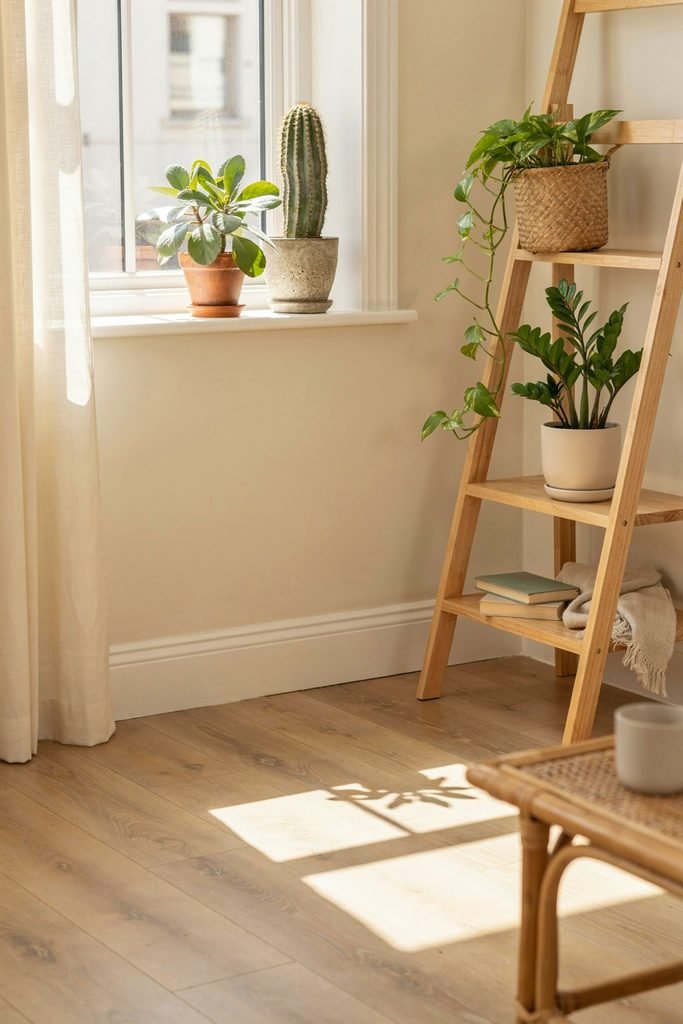
Before you fall for a plant because of its symbolism, answer three quick questions. They’ll narrow the list faster than anything else.
How much light does the spot actually get? Stand where the plant will go at midday. If you can comfortably read there without a lamp, it’s bright.
If it’s a dim corner or a north-facing window, stick to the snake plant, ZZ plant, pothos, or peace lily.
Do you tend to overwater or underwater? If you love to fuss over your plants, choose the ones that want to dry out, like the jade, snake plant, ZZ plant, or bunny ear cactus.
If you tend to forget, the peace lily is a good teacher, since it droops dramatically and tells you when it’s thirsty.
Do you have pets or small children? This is the question people skip. Jump to the pet notes before you buy, because six of the ten plants here are toxic if chewed.
1. Jade Plant
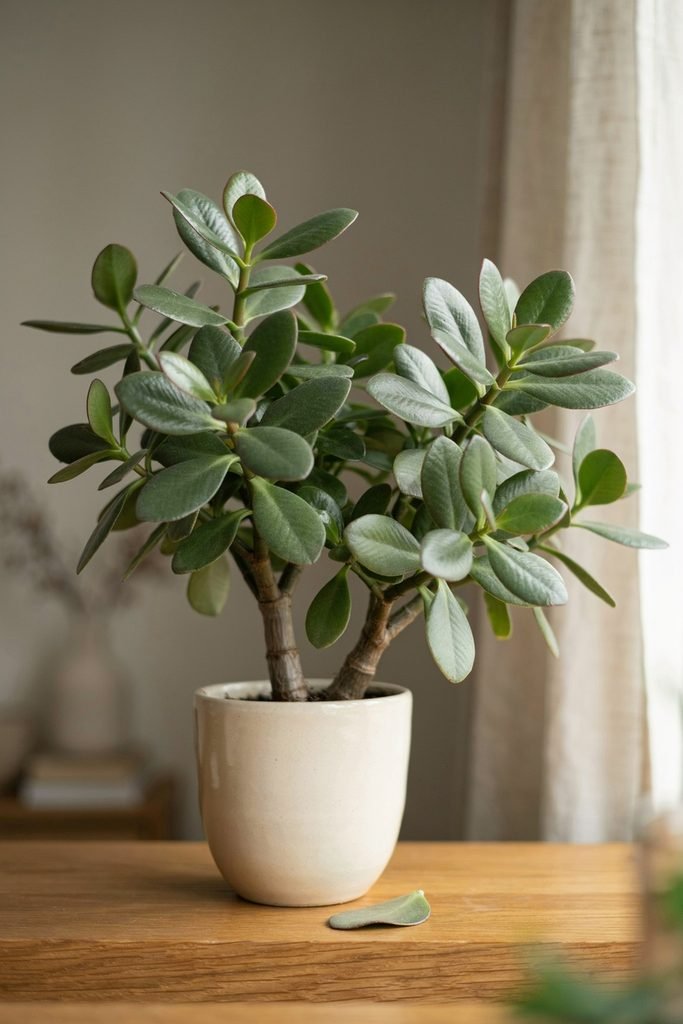
The jade plant is the classic “money plant.” Its thick, coin-shaped leaves are why it’s linked with wealth and good fortune, and it’s often given as a housewarming or new-business gift.
It’s also a plant that gets better with age, a jade can live for decades and slowly grow a thick, tree-like trunk.
Best for: sunny windowsills, entryways, and anyone who likes a plant that rewards patience.
Care
Give it bright light, ideally a few hours of direct sun from a south or west window. Water deeply, then let the soil dry out completely before watering again.
Jade stores water in its leaves, so overwatering is the most common way to lose one. Use a well-draining succulent or cactus mix and a pot with a drainage hole.
In winter, water even less, roughly once a month is often enough in a cool room.
Common Problems
Wrinkled, soft leaves usually mean it’s thirsty, while mushy, dropping leaves point to overwatering.
If the stems get long and stretched with wide gaps between leaves, it isn’t getting enough light.
A jade can also drop a few leaves when you move it to a new spot, which is normal and usually settles once it adjusts.
Pet Note
Jade plants are toxic to cats and dogs if chewed. Keep it out of reach.
2. Chinese Money Plant (Pilea)
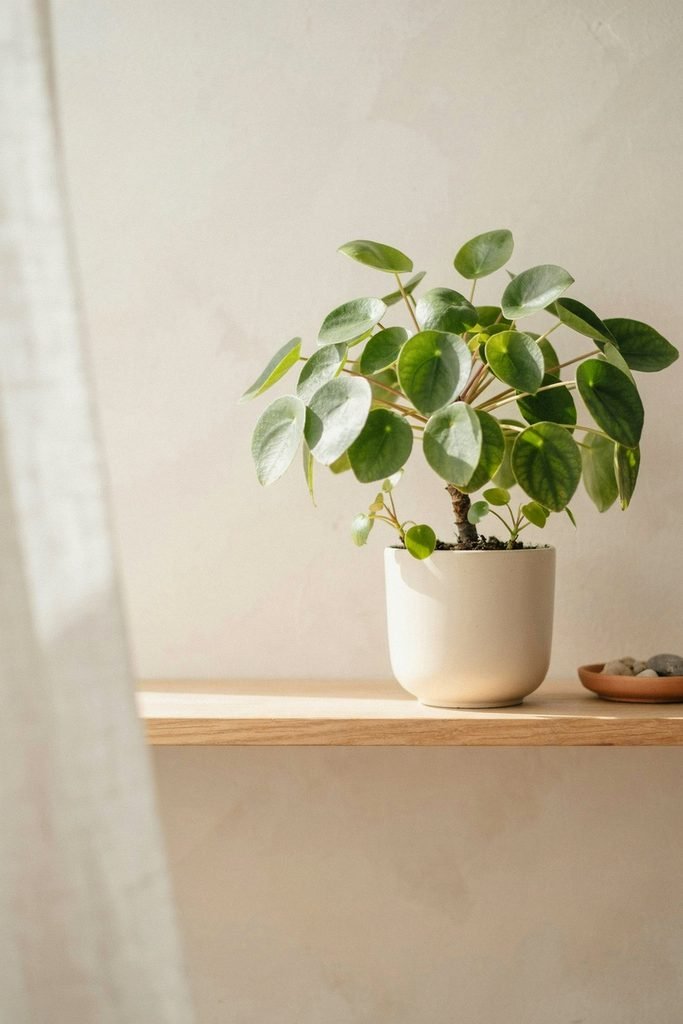
With its round, flat, coin-like leaves on long stems, the Chinese money plant is one of the most recognizable houseplants around, and it’s tied to prosperity too.
What I love most about it is that it’s a sharing plant: it sends up small baby plants, called pups, from the base, and you can pot them up and give them away.
Passing along a plant to a friend fits the spirit of good luck better than almost anything.
Best for: shelves, desks, and anyone who likes giving plants as gifts.
Care
Bright, indirect light works best. Rotate the pot every week or so, since the leaves lean toward the light and the plant can grow lopsided.
Water when the top inch or two of soil feels dry, and don’t let it sit in standing water.
How to Propagate the Pups
When a pup is a few inches tall and has grown its own small roots, slide a clean knife down between it and the mother plant and separate it with as much root as you can.
Pot it in fresh, well-draining soil, water lightly, and keep it in bright, indirect light. Within a few weeks it will start growing like a small copy of the parent.
Common Problems
Curling or cupping leaves usually mean too much direct sun or uneven watering. Leaves that look pale or leggy point to too little light.
If the lower leaves turn yellow and drop one at a time, that’s often just normal aging, but many yellow leaves at once usually means the soil has stayed too wet.
Pet Note
This is one of the pet-friendly plants on the list, generally considered non-toxic to cats and dogs.
3. Lucky Bamboo
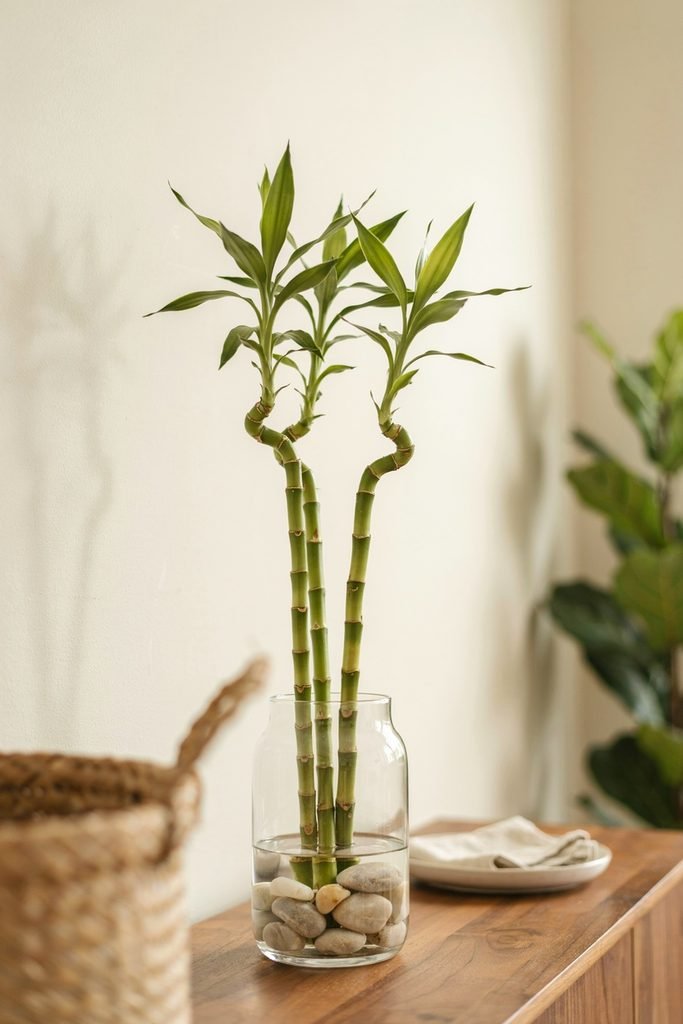
Lucky bamboo isn’t actually bamboo, it’s a type of Dracaena, but it earned its name and its place in feng shui as a symbol of luck and growth.
The number of stalks is said to carry meaning in some traditions, and the spiral and braided shapes make it look almost sculptural on a desk or shelf.
Best for: desks, bathrooms, and low-effort spaces where you want something tidy and upright.
Care
Keep it in bright, indirect light, direct sun can scorch the leaves. If it’s growing in water, change the water every week or two and use filtered or distilled water, since chemicals in some tap water can brown the leaf tips.
Keep the roots covered with water and the container clean. It also grows fine in soil kept lightly moist.
Common Problems
Brown leaf tips are almost always a water quality issue, so switch to filtered or distilled water.
Yellowing leaves can come from too much direct light or from a build-up of algae and bacteria in the water, so scrub the container when you change the water.
If an entire stalk turns yellow or mushy, it won’t recover, so cut it off at the base to protect the others.
Pet Note
Lucky bamboo is toxic to cats and dogs, so keep it on a high shelf if you have pets.
4. Money Tree
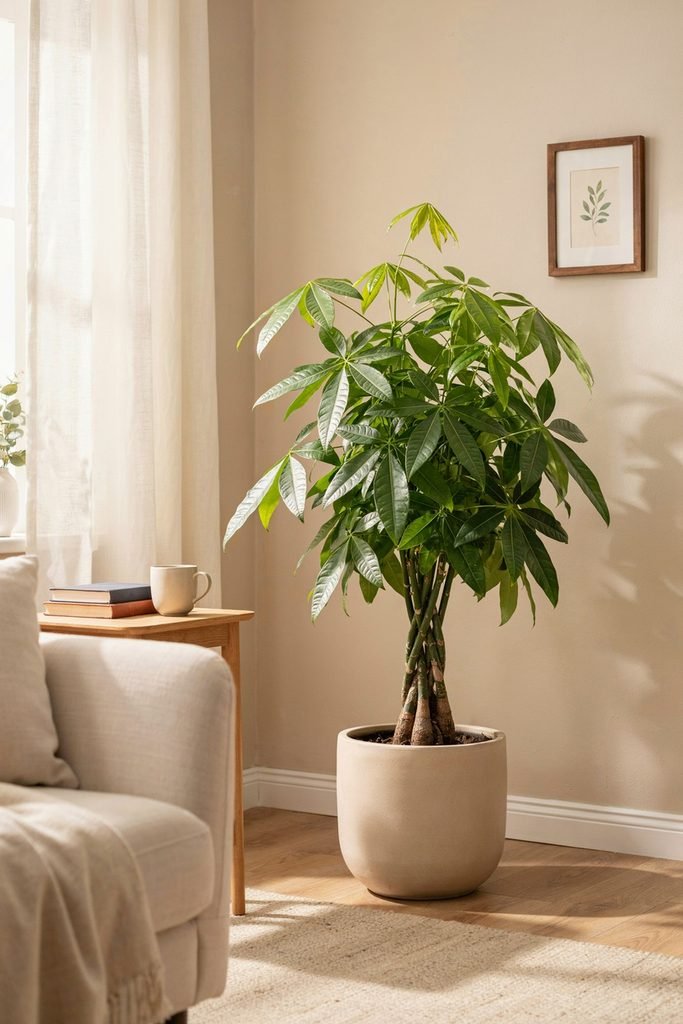
The money tree, usually sold with a braided trunk, is one of the most popular “luck” plants for good reason.
The braided trunk and fan-like leaves look great in a corner, and it’s traditionally given to wish someone financial success. It’s also one of the more forgiving larger plants.
Best for: living rooms, entryways, and filling an empty corner with something that looks intentional.
Care
Bright, indirect light and water when the top couple of inches of soil are dry. Skip the temptation to water on a schedule, since money trees dislike sitting in wet soil.
Turn it occasionally so it grows evenly, and keep it away from cold drafts.
Common Problems
Yellow leaves that drop are the classic sign of overwatering, so check that the pot drains freely and let the soil dry a little more between waterings.
Money trees also dislike being moved around, and it’s normal for one to drop a few leaves after a change of location. Pick a spot, give it time, and resist the urge to keep rearranging.
Pet Note
The money tree is generally considered non-toxic to cats and dogs, which makes it a good choice for pet households.
5. Bunny Ear Cactus
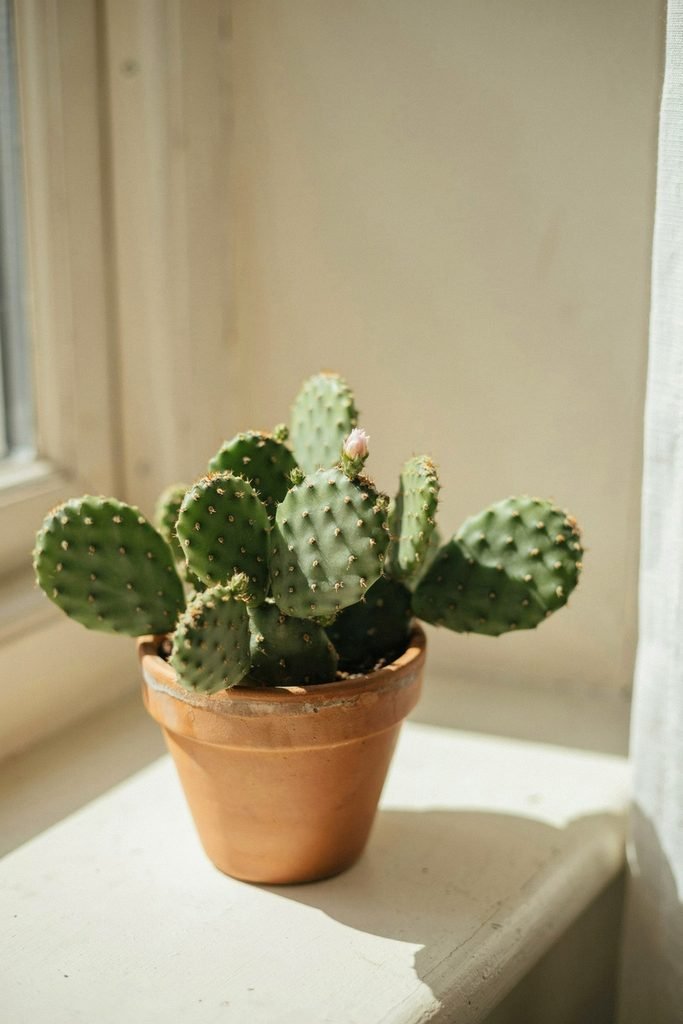
The bunny ear cactus, with its flat, paired pads that look like little ears, brings a playful energy to a sunny windowsill.
In plant symbolism, cacti are often associated with protection and resilience, and a cactus is a good fit for anyone who tends to forget to water.
Best for: the sunniest window in your home and forgetful waterers.
Care
Give it as much bright light as you can, a sunny south or west window is ideal. Water sparingly, only when the soil is completely dry, and even less in winter. Use a gritty cactus mix.
Common Problems
Shriveled, wrinkled pads mean it needs a drink. Soft, dark, or mushy patches at the base are rot from too much water, and that usually can’t be reversed, so act early by cutting back watering.
Pads that grow thin and stretched toward the window are asking for more light.
Handling Note
The soft, fuzzy dots on this cactus aren’t harmless. They’re clusters of tiny, hair-like barbs that can stick in skin and are annoying to remove.
Use tongs or thick gloves when you repot or move it, and keep it away from children and curious pets.
6. Snake Plant
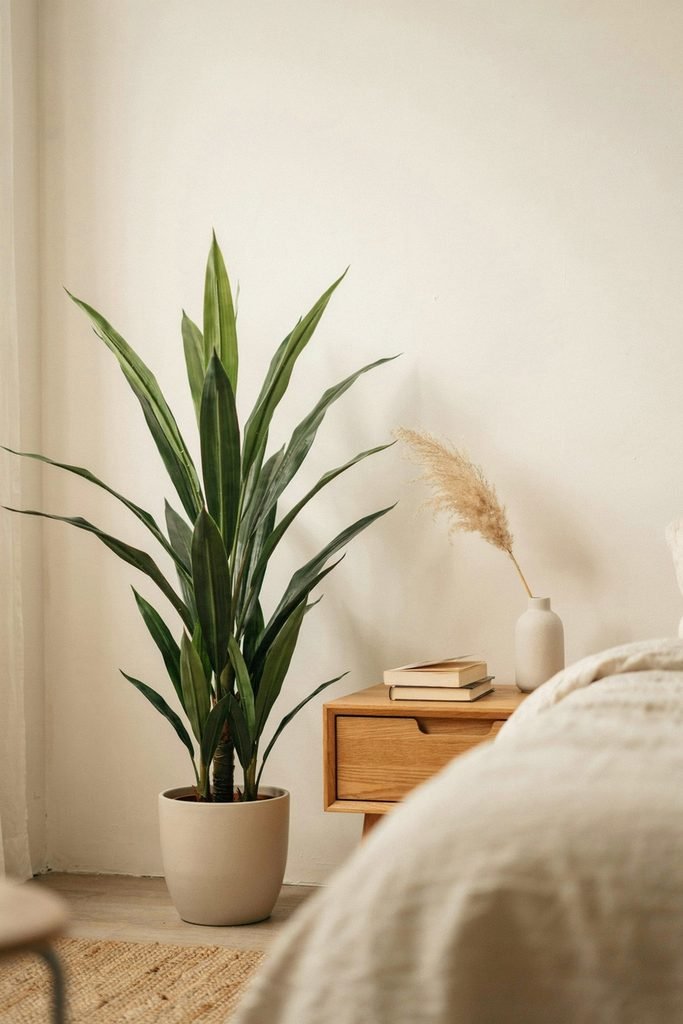
Snake plants are some of the toughest houseplants there are, and in feng shui their upright, sword-like leaves are associated with protection and strength.
They’re also famously tolerant of low light and irregular watering, so this is the one I’d hand to anyone who says they can’t keep plants alive.
Best for: bedrooms, low-light rooms, and total beginners.
Care
Bright to low indirect light both work. Water only when the soil has dried out, roughly every two to three weeks depending on your home, and less in winter. Overwatering is the main thing that can hurt it.
Common Problems
A soft, mushy base or leaves that fall over at the soil line mean rot from too much water. If that happens, unpot the plant, cut away any soft brown roots, and repot in dry, fresh soil.
Leaves that curl or wrinkle are thirsty. Slow growth in a dark room is normal and not a sign that something is wrong.
Pet Note
Snake plants are mildly toxic to cats and dogs if eaten. Keep them where pets can’t chew on them.
7. Peace Lily
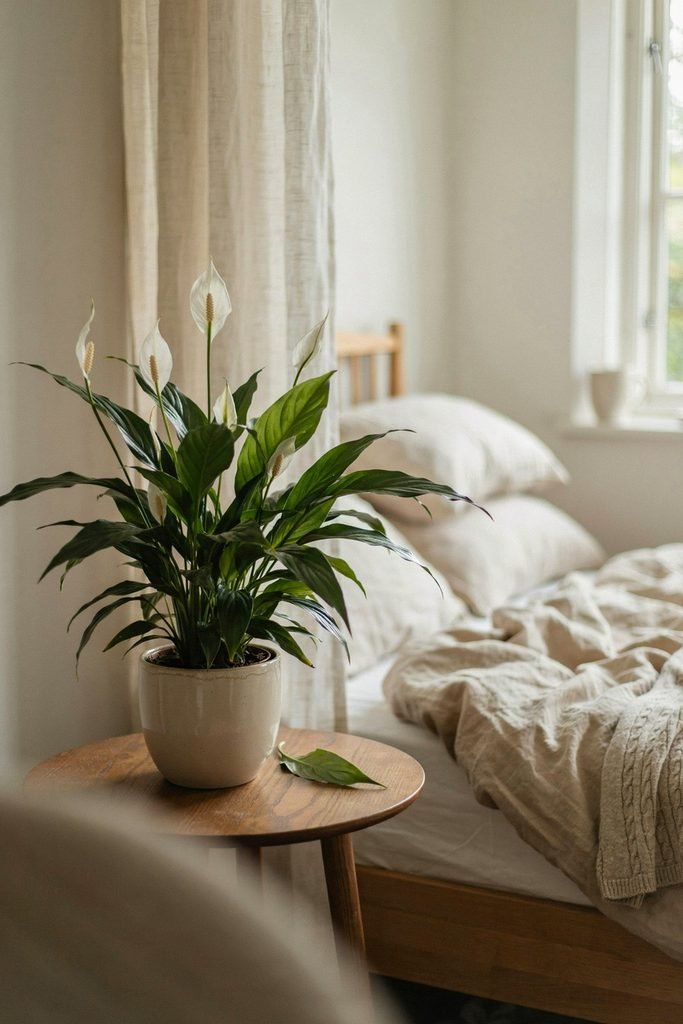
The peace lily is named for what it represents: calm and peace. Its glossy dark leaves and white blooms look elegant, and it’s one of the few plants that clearly tells you when it needs water, since it droops dramatically when thirsty and perks back up soon after a drink.
Best for: bedrooms, bathrooms, and dim corners where you still want something that flowers.
Care
Medium to low indirect light is fine. Water when the top inch of soil is dry, or when the leaves start to droop slightly. Direct sun can scorch the leaves.
Wipe the leaves with a damp cloth now and then to keep them glossy.
Common Problems
If it isn’t blooming, it usually needs more light, so move it closer to a bright window without putting it in direct sun.
Brown leaf tips often come from dry air or from minerals in tap water, and letting water sit out overnight or using filtered water can help. Yellow leaves are often a sign of too much water.
Pet Note
Peace lilies are toxic to cats and dogs, and to people if chewed, because they contain calcium oxalate crystals that irritate the mouth. Keep them out of reach.
8. Pothos
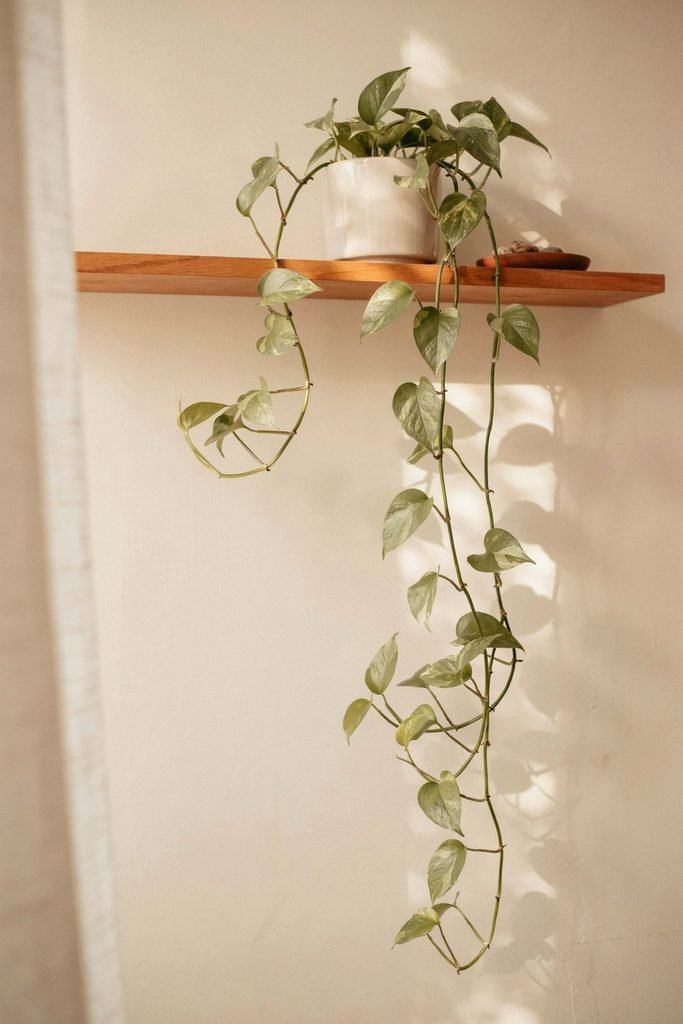
Pothos is often called the friendliest houseplant, and it’s frequently listed as a lucky plant in feng shui because its trailing vines grow quickly and keep going.
It’s very hard to kill, it roots in a glass of water, and it’s easy to propagate into new plants to share.
Best for: shelves, hanging planters, and any room where you want soft, trailing greenery.
Care
It tolerates low light but grows fastest in bright, indirect light. Water when the top couple of inches of soil are dry. It bounces back from being forgotten better than most plants.
How to Propagate Pothos
Cut a vine just below a node, the small bump on the stem where a leaf meets it, so that each cutting has at least one node and a leaf or two.
Place the cutting in a glass of water, keep it in bright, indirect light, and change the water every week.
Roots usually show up within a few weeks, and once they’re a couple of inches long, you can pot the cutting in soil.
Common Problems
Yellow leaves usually point to overwatering, while pale, small leaves and long bare stretches of vine mean it needs more light.
Trimming a leggy vine encourages fuller growth, and you can root the trimmings for free plants.
Pet Note
Pothos is toxic to cats and dogs if chewed. Trailing vines are easy for pets to reach, so hang it high.
9. ZZ Plant
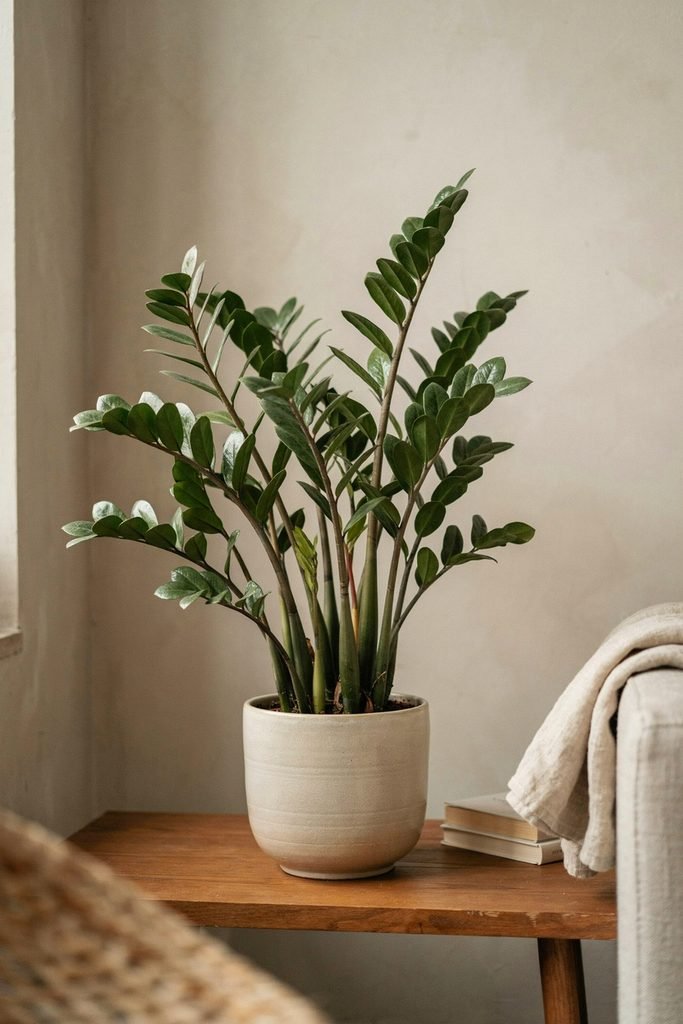
The ZZ plant has glossy, deep green leaves that look almost artificial, and it’s often called the eternity plant or linked with growth and prosperity because it keeps growing with almost no attention.
It stores water in thick underground rhizomes, so it handles low light and long gaps between waterings very well.
Best for: offices, dim rooms, and people who travel often.
Care
Low to bright indirect light all work. Water only when the soil is fully dry, and go easy in winter. Overwatering is what harms it.
Common Problems
Yellowing leaves and a soft, squishy base mean too much water, so let it dry out thoroughly and check that the pot drains.
A ZZ plant grows slowly, so don’t worry if you don’t see new stems for a while. When it does grow, new shoots often come up thick and pale green before darkening.
Pet Note
ZZ plants are toxic to cats and dogs if eaten, and the sap can irritate skin, so wash your hands after handling it.
10. Areca Palm
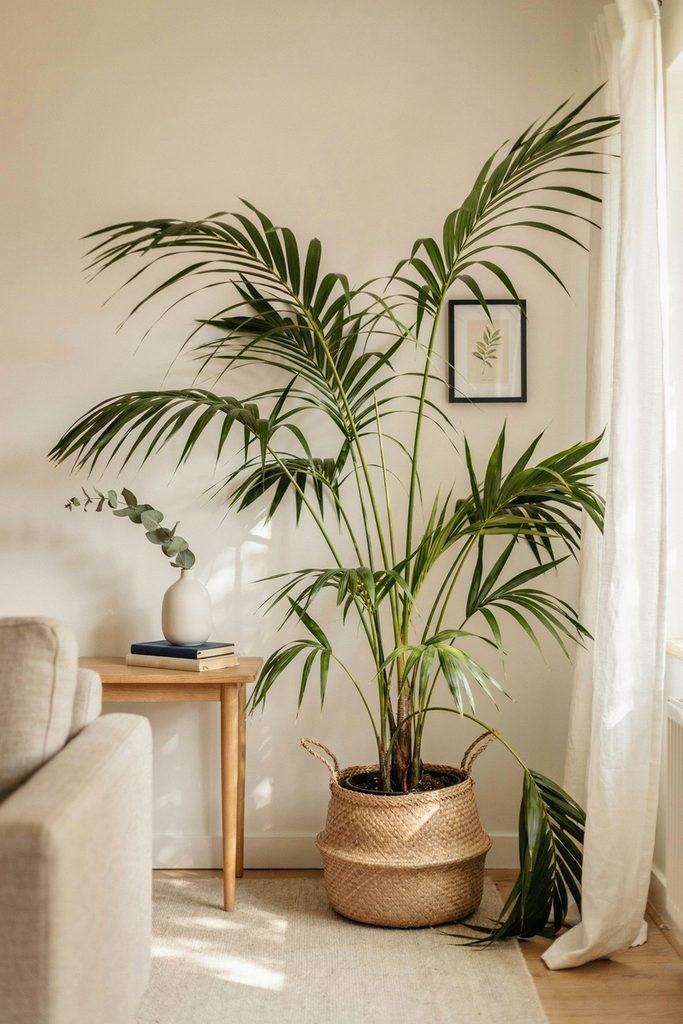
The areca palm brings a soft, feathery, tropical look that fills a large empty corner beautifully.
In feng shui it’s considered a lively, life-giving plant, often placed in living rooms and entryways to make a space feel welcoming.
Best for: big, bright living rooms and people ready to give a plant a little more attention.
Care
It wants bright, indirect light and evenly moist soil, but not soggy. It’s less forgiving than the others on this list, especially with dry air and direct sun, so it’s better for people who are ready to pay a little more attention.
Common Problems
Brown, crispy leaf tips usually come from dry air, direct sun, or minerals in tap water.
Dry indoor air, especially in winter, can also invite spider mites, which show up as fine webbing and speckled leaves, so wipe the fronds down regularly and check the undersides.
Avoid cutting the top of the stems, and only remove fronds that have fully browned.
Pet Note
Areca palms are generally considered non-toxic to cats and dogs.
Where to Put Each Plant
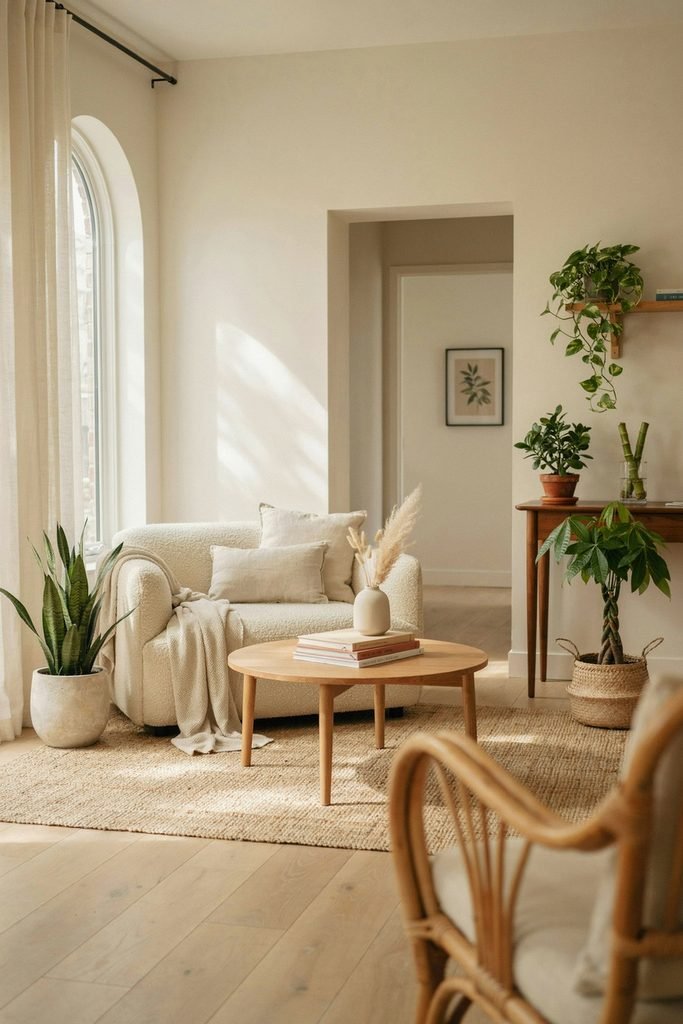
Placement matters as much as picking the right plant, and it’s simpler than feng shui makes it sound.
Living room: Larger plants like the areca palm, money tree, or snake plant fill empty corners and make the room feel finished.
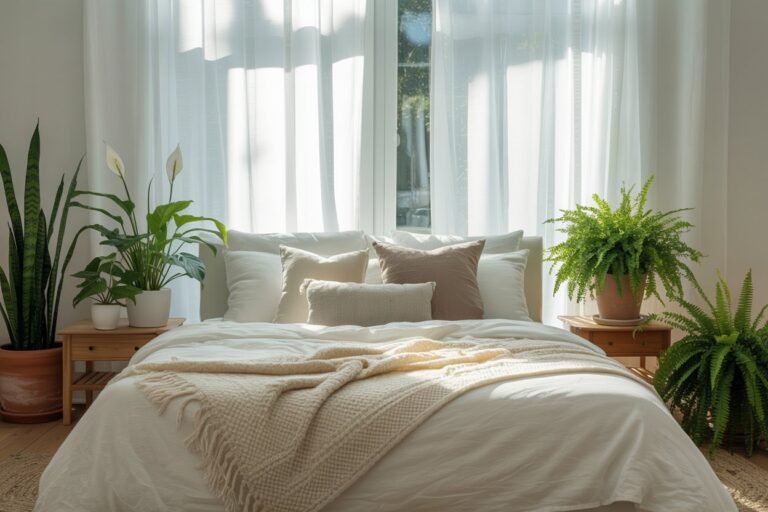
Bedroom: Calmer, low-maintenance plants like a snake plant, peace lily, or pothos suit a bedroom. My guide to the best bedroom plants goes deeper on this.
Entryway: A money tree or jade plant near the door fits the traditional idea of welcoming good fortune in.
Desk or office: Lucky bamboo, a small jade, or a pilea keep a workspace looking alive without taking up much room.
Low-light rooms: ZZ plants, snake plants, and pothos are your best choices. I’ve listed more in my post on the best indoor plants for dark rooms.
How to Style Your Plants So They Look Intentional
A healthy plant is half the effect, and the way you present it is the other half.
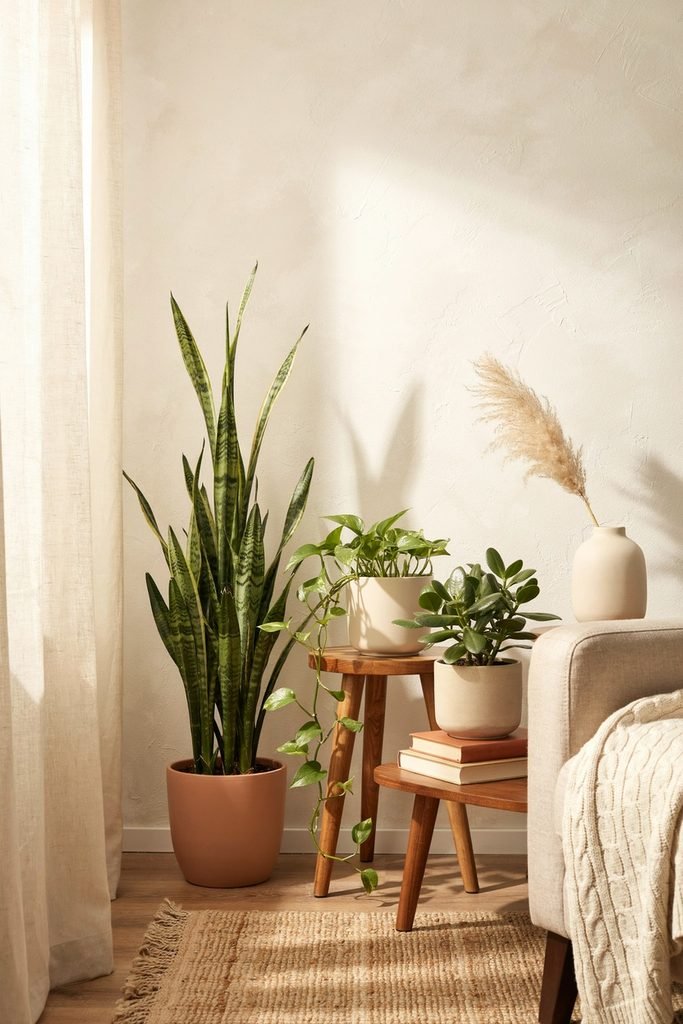
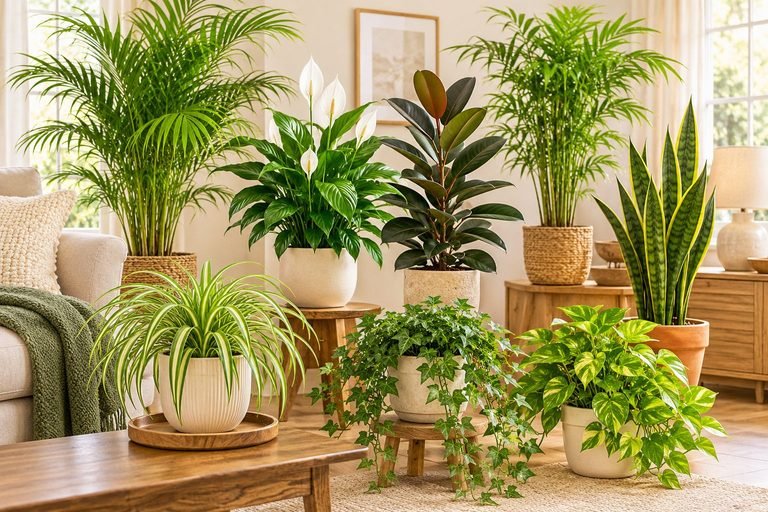
Vary the height. Group two or three plants at different heights rather than lining them up evenly. A tall snake plant on the floor with a pothos on a shelf and a small jade on a table looks layered and deliberate.
Repeat one material. Choose a pot color or texture, like terracotta, matte white, or woven baskets, and repeat it across several plants so a mixed collection feels cohesive.
Use a cachepot. If you love a decorative pot without a drainage hole, keep the plant in its plain nursery pot and set that inside the decorative one. Lift it out to water and let it drain before returning it.
Look for planters secondhand. Thrift stores are full of ceramic pots and baskets that suit plants beautifully, and my post on thrifted house plant decor ideas shows how to make them look expensive.
Basic Care That Applies to Every Plant
Check the soil before you water. Overwatering kills far more houseplants than underwatering does. Push a finger into the soil and only water when it’s dry at the depth that plant prefers.
Always use a pot with drainage. If you love a decorative pot without a hole, keep the plant in a plain nursery pot inside it and take it out to water. My DIY Air Dry Clay Mini Pots Tutorial shows how to make small planters for succulents like the jade or bunny ear cactus.
Give light before anything else. Most plant problems trace back to too little or too much light. Watch how the sun moves through your space before choosing a spot.
Dust the leaves. A quick wipe with a damp cloth helps the plant absorb light and keeps it looking fresh.
A Simple Seasonal Care Routine
Plants don’t need the same things all year, and adjusting a little with the seasons prevents a lot of common trouble.
Spring and summer: This is the growing season. Plants drink more, grow faster, and can use a light feeding. Use a balanced houseplant fertilizer at half the strength on the label, roughly once a month.
Fall: Growth slows down as the days get shorter. Start watering a little less often and stop fertilizing.
Winter: Most plants rest. Water less than you think you need to, keep them away from cold windows and heating vents, and don’t fertilize. Succulents like the jade and bunny ear cactus need the least water of all in winter.
When and How to Repot
Most of these plants are happy in the same pot for a year or two. Repot when roots are growing out of the drainage hole, the plant is top-heavy and tipping, or water runs straight through without soaking in.
Choose a pot only one to two inches wider than the current one. A pot that’s too big holds extra wet soil around the roots, which is a fast route to rot.
Use a fresh mix that suits the plant, a gritty cactus mix for the jade and bunny ear cactus, and a standard well-draining potting mix for the rest. Spring is the best time, since the plant is about to grow.
What to Do About Pests
A few small pests turn up on almost everyone’s houseplants at some point, and they’re easy to handle when you catch them early.
Fungus gnats: Tiny flies hovering around the soil are a sign that the soil is staying too wet. Let it dry out more between waterings, and use sticky traps to catch the adults.
Spider mites: Fine webbing and speckled leaves, especially on the areca palm, point to mites. Wipe the leaves down, rinse the plant in the shower, and keep the air a little more humid.
Mealybugs: White, cottony clusters on stems and under leaves can be dabbed off with a cotton swab dipped in rubbing alcohol. Isolate the plant from your others until they’re gone.
Keeping Plants and Pets Safe Together
Six of the ten plants here are toxic if chewed, and it’s worth knowing what to do before there’s a problem.
Keep the toxic ones, the jade, lucky bamboo, snake plant, peace lily, pothos, and ZZ plant, on high shelves, in hanging planters, or in rooms your pets can’t get into.
If you have a determined climber or chewer, the safest choice is to stick to the pet-friendly plants: the Chinese money plant, money tree, and areca palm.
If your pet does chew a plant, remove any plant material from their mouth, note which plant it was, and call your vet or a pet poison hotline right away. Take a photo of the plant or bring a piece with you so they can identify it.
Mistakes to Avoid
Buying a plant the light can’t support. A sun-loving jade in a dark corner will struggle, no matter how lucky it’s supposed to be. Match the plant to the light you actually have.
Watering on a fixed schedule. Homes, seasons, and plants all differ. Check the soil instead of the calendar.
Ignoring pets. Several of the plants on this list are toxic to cats and dogs. If you have pets, choose the pet-friendly ones or keep the others well out of reach.
Repotting into a much bigger pot. More soil means more moisture sitting around the roots. Go up just an inch or two.
Keeping a struggling plant out of guilt. If a plant is clearly failing, try moving it to better light or repotting it, or replace it. A thriving plant is what makes a space feel good.
Frequently Asked Questions
Do these plants really bring good luck or positive energy? That’s tradition and symbolism, not something science has measured.
What’s real is that living plants can make a home feel calmer, and caring for one gives you a small, steady routine.
If the symbolism makes the plant more meaningful to you, that’s a perfectly good reason to enjoy it.
Do these plants purify the air? You’ll often see this claim, but the effect of a few houseplants on the air in a normal home is very small. I’d choose a plant for how it looks and how it makes your space feel, not for air cleaning.
Which plant is best for a total beginner? The snake plant, ZZ plant, and pothos are the hardest to kill.
If you tend to overwater, choose one of those or a succulent like the jade, and be strict about letting the soil dry between waterings.
Which of these are safe for cats and dogs? The Chinese money plant, money tree, and areca palm are generally considered non-toxic.
The jade, lucky bamboo, snake plant, peace lily, pothos, and ZZ plant are all toxic if chewed, so keep those out of reach. If your pet eats a plant, call your vet or a pet poison hotline.
Which plants work in a room with almost no natural light? The ZZ plant, snake plant, and pothos handle low light best, and the peace lily tolerates it too.
None of them will grow quickly in a truly dark room, so consider a small grow light if a space gets no daylight at all.
How often should I fertilize? Once a month during spring and summer is plenty, using a balanced houseplant fertilizer at half the strength on the label. Skip it in fall and winter, when growth slows.
Why are my plant’s leaves turning yellow? The most common cause is overwatering. Check that the pot drains, feel the soil before watering, and let it dry out further between drinks. A few older lower leaves turning yellow now and then is normal.
Can I gift these plants? Yes, that’s a big part of the tradition. The Chinese money plant is especially good for sharing because it produces baby plants you can pot up and give away.
If you like the idea of turning plants into a small business, see my post on starting a plant flipping side hustle.
Final Thoughts
You don’t need to believe in feng shui to get something out of a good plant. A green, growing thing near a window changes how a room feels, and looking after it gives you a small reason to slow down each day.
Start with one plant that suits the light you have, keep it alive for a few months, and add another when you’re ready.
A home doesn’t need a jungle to feel warm, it just needs a few things growing well.
More Plant Ideas to Try: