Your Complete Winter Emergency Kit Guide: Prep on a Budget

Winter weather can be unpredictable. One day, everything seems normal, and the next, heavy snow, freezing temperatures, icy roads, or a power outage can make everyday life much more difficult.
The good news is that preparing for winter emergencies doesn’t have to cost a fortune. You don’t need to buy an expensive survival kit or fill your home with supplies you may never use.
With a little planning, you can put together a practical winter emergency kit using items you already own and a few affordable essentials.

In this guide, I’ll walk you through what to include in your winter emergency kit, how to prepare your home and car for cold weather, and how to prioritize your spending so you can get prepared without stretching your budget.
Whether you’re preparing for a winter storm, an unexpected power outage, a roadside emergency, or a few days when getting to the shops isn’t possible, this checklist will help you focus on what matters most.
What Is a Winter Emergency Kit?

A winter emergency kit is a collection of essential supplies that helps you stay safe, warm, hydrated, and informed during cold-weather emergencies.
Depending on where you live, winter emergencies can include snowstorms, ice storms, freezing rain, power outages, heating failures, and dangerous driving conditions. Even a relatively short disruption can become stressful if you don’t have basic supplies on hand.
Your kit doesn’t need to be complicated. It should contain enough essentials to help your household manage until normal services return or you can safely get the supplies you need.
For most households, it’s helpful to prepare three separate kits:
- A home emergency kit: Supplies for staying at home during a storm or power outage.
- A car emergency kit: Items that help if your vehicle breaks down or you become stranded in cold weather.
- A grab-and-go kit: A portable bag containing essential supplies if you need to leave home quickly.
You can build these kits gradually instead of buying everything at once. Start with the basics, then add items based on your household, climate, and budget.
1. Start With the Winter Emergency Kit Essentials

Before spending money on extra gadgets or specialized equipment, focus on the supplies your household would genuinely need during an emergency.
Drinking water
Water should be one of your first priorities. Keep drinking water available for everyone in your household, including pets.
A common emergency-planning guideline is to store at least one gallon of water per person per day for drinking and basic sanitation, where practical. A three-day supply is a useful starting point, although your needs may be higher depending on your household and circumstances.
If you’re preparing for several people, calculate your needs before buying bottled water. Clean, food-safe containers may be a more affordable option if you can safely fill and store them.
Keep stored water in a cool location away from chemicals, and follow the container manufacturer’s storage recommendations.
Nonperishable food
Choose foods that can be stored safely without refrigeration and require little or no preparation.
Useful options include:
- Canned beans and vegetables
- Canned fish or meat
- Crackers
- Peanut butter or other shelf-stable spreads
- Dried fruit and nuts
- Granola bars
- Shelf-stable milk
- Ready-to-eat meals
- Foods suitable for babies or household members with specific dietary needs
Remember that some emergency foods require a manual can opener. Keep one with your supplies.
If you expect to lose power, eat refrigerated and frozen food safely according to food-safety guidance. Never assume food remains safe simply because it looks or smells normal.
Flashlights and spare batteries
A flashlight is much more useful than you might realize when the power goes out at night.
Keep at least one reliable flashlight in an easy-to-reach place, with spare batteries if needed. A battery-powered lantern can also help illuminate a room without requiring everyone to rely on phone flashlights.
Check the batteries periodically and make sure you know where the lights are stored.
First-aid supplies
A basic first-aid kit helps you deal with minor injuries while you wait for assistance or until you can safely reach medical care.
Consider including:
- Adhesive bandages in different sizes
- Sterile gauze and medical tape
- Antiseptic wipes
- Disposable gloves
- Small scissors
- Tweezers
- A digital thermometer
- Personal medications
- A basic first-aid instruction guide
Include any supplies your household regularly needs. Check expiration dates and replace used items.
For prescription medications, ask your pharmacist or healthcare professional how to maintain an appropriate emergency supply.
Phone chargers and power banks
Your phone can help you receive weather alerts, contact relatives, access emergency information, and request assistance.
Keep a charged power bank with your emergency supplies. If you already own one, use it rather than buying another solely for your kit.
Charge your devices before severe weather arrives, and consider keeping a charging cable in your emergency bag.
You can also save important contact numbers and local emergency information somewhere accessible if your phone battery runs out.
2. Winter Clothing and Warmth Supplies
Staying warm is one of the biggest priorities during cold weather, particularly if your heating system stops working.
You may already own most of the clothing and bedding you need. Before buying specialized winter gear, gather your existing supplies and identify any genuine gaps.
Warm blankets
Keep extra blankets somewhere easy to reach.
Wool blankets and suitable insulated blankets can be useful, but ordinary clean blankets you already own are a good place to start.
Store them in a dry location so they are ready when needed.
Hats, gloves, and scarves
Cold-weather accessories help protect exposed skin and reduce heat loss.
Your winter emergency kit can include:
- Warm hats or beanies
- Insulated gloves or mittens
- Scarves or neck warmers
- Thick socks
- Thermal base layers
- An extra sweater or fleece
Pack spare clothing in a waterproof bag if you are keeping it in your car.
Warm socks and extra footwear
Wet feet can become uncomfortable quickly in cold weather. Keep dry socks available and use sturdy footwear appropriate for the conditions.
If you live somewhere that regularly experiences snow and ice, consider whether your household needs insulated, waterproof boots or footwear with better traction.
If you already have suitable footwear, there’s no need to buy a new pair just for your emergency kit.
Emergency blankets
Compact emergency blankets are lightweight and can be useful additions to a car or grab-and-go kit.
However, they are not a replacement for proper winter clothing, dry layers, shelter, or a reliable source of safe warmth.
Treat them as supplementary equipment rather than your main cold-weather protection.
3. Prepare for a Winter Power Outage
A power outage can affect lighting, heating, cooking, refrigeration, communications, and access to important services.
Preparing for one doesn’t necessarily mean buying a generator. In many households, the most useful first steps are having warm clothing, safe lighting, food, water, and a plan.
Battery-powered lighting
Keep flashlights or battery-powered lanterns available.
Avoid relying on candles as your primary emergency lighting. Open flames can start fires, especially when people are moving around in dark rooms or when blankets and other combustible materials are nearby.
If you already own rechargeable lights, charge them before severe weather arrives.
A safe heating plan
Think about what your household will do if your normal heating system stops working.
If possible, identify a safe place to go, such as a relative’s home or an official warming center, should your home become dangerously cold.
Never use a barbecue, charcoal grill, camp stove, or outdoor gas heater inside your home or garage to heat the space. These devices can produce deadly carbon monoxide.
Portable generators must be operated outdoors, far from doors, windows, and vents, following the manufacturer’s safety instructions. Never run a generator inside a home, garage, or enclosed area.
Fuel-burning heaters should only be used indoors when they are specifically designed and approved for indoor use, and only according to their instructions. Carbon monoxide alarms are important safeguards, but they do not make unsafe heating methods acceptable.
If your home becomes too cold to remain in safely, leave for a safer location rather than attempting improvised heating.
Keep essential supplies together
Store the supplies you are most likely to need in one accessible place.
A sturdy plastic storage box, a shelf in a utility cupboard, or a clearly labeled container can work well. You don’t need a specially branded emergency storage system.
Keep flashlights, batteries, first-aid supplies, charging equipment, and emergency contacts together so you can find them quickly.
Protect your pipes
If freezing temperatures are expected, take steps to reduce the risk of frozen pipes.
Insulate exposed pipes where appropriate, seal drafts around areas where pipes enter the home, and follow local guidance for your plumbing system during severe cold.
Know where your main water shutoff valve is located in case a pipe bursts. If you’re unsure how to protect your particular plumbing system, contact a qualified professional.
4. Build a Winter Car Emergency Kit

Winter driving can become dangerous when roads are icy, visibility is poor, or a vehicle breaks down far from assistance.
Even if you don’t usually travel long distances, keeping a small emergency kit in your car can be helpful during colder months.
Essential car emergency supplies
Consider packing:
- Warm blanket
- Hat, gloves, and spare socks
- Flashlight and spare batteries
- Phone charging cable and charged power bank
- Drinking water
- Nonperishable snacks
- First-aid kit
- Reflective warning triangle or other appropriate roadside warning equipment
- High-visibility vest
- Basic tool kit
- Jumper cables or a suitable jump starter
- Ice scraper and snow brush, where relevant
- Small shovel, if you regularly drive in snowy conditions
- Traction aids appropriate for your vehicle and local conditions
- Paper map or written emergency contacts
- Essential personal medications
Choose supplies that suit your vehicle and the winter conditions where you drive. A driver in a region with frequent heavy snow may need different equipment from someone who experiences occasional frost.
Keep warm clothing in the vehicle
Don’t assume that the coat you’re wearing will be enough if you need to wait outside or remain in a cold vehicle.
Pack spare gloves, socks, a hat, and an extra warm layer in a waterproof bag. This is particularly useful if your clothing becomes wet.
Check your vehicle before winter
Emergency supplies are important, but vehicle maintenance matters too.
Before winter weather arrives, check:
- Tire condition and pressure
- Battery health
- Windshield wipers
- Washer fluid suitable for expected temperatures
- Headlights and brake lights
- Antifreeze or coolant levels
- Heating and defrosting systems
- Fuel or battery range
If you drive an electric vehicle, consider how cold temperatures may affect its range and charging needs.
During severe winter weather, avoid unnecessary travel. Check official road and weather information before leaving, and tell someone your route if conditions are concerning.
If you become stranded, stay with your vehicle when it is safe to do so and follow local emergency guidance. If you must run the engine for warmth, ensure the exhaust pipe is clear of snow and debris, and follow vehicle safety guidance to reduce carbon monoxide risk.
5. Create a Budget-Friendly Winter Food Supply
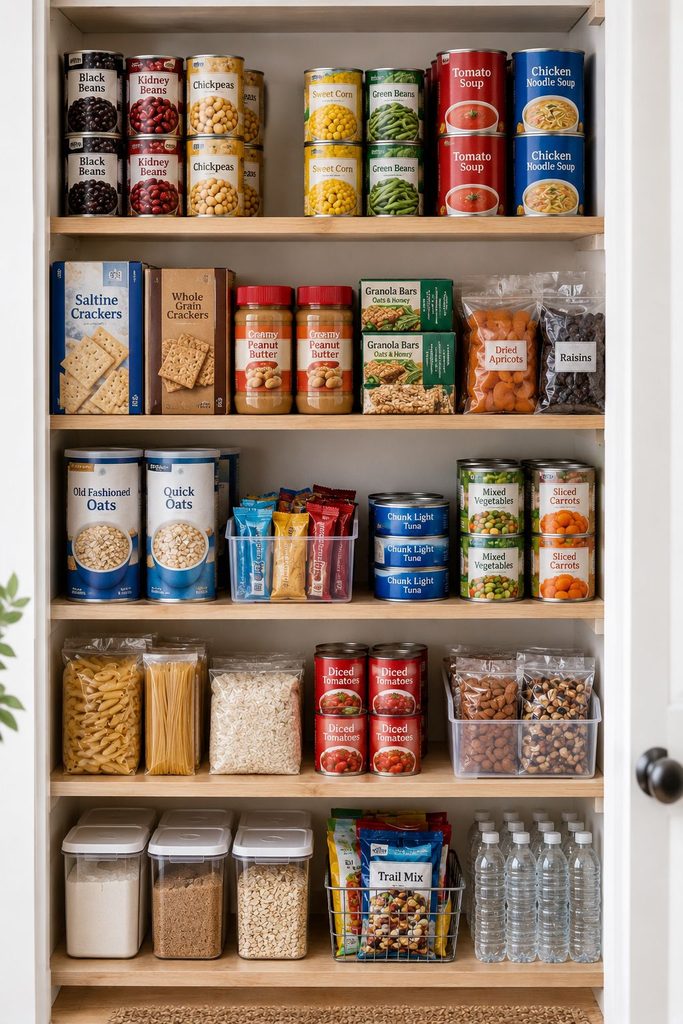
You don’t have to buy expensive freeze-dried emergency meals to prepare for a winter storm.
A practical food supply can be built around familiar groceries that your household already eats. This reduces waste because you can rotate the supplies into normal meals.
Buy foods you already use
Start by checking your pantry.
You may already have canned vegetables, rice, pasta, oats, beans, crackers, cooking oil, and shelf-stable foods that can contribute to an emergency food supply.
Make a list of what you have before shopping. Then purchase a few missing items each week instead of buying everything at once.
Prioritize easy-to-eat foods
During a power outage, you may not be able to use your usual cooking appliances.
Choose some foods that are ready to eat or require minimal preparation. Examples include canned foods with pull tabs, crackers, nut butter, dried fruit, and shelf-stable snacks.
Keep food suitable for children, older adults, and anyone with allergies or dietary restrictions.
Don’t forget manual equipment
A manual can opener, reusable eating utensils, and a small supply of disposable plates or cups can make an outage easier to manage.
You don’t need to buy a large collection of disposable products. Start with a small, practical supply and use what you already own.
Store food properly
Keep emergency food in a cool, dry place and follow the storage instructions on the packaging.
Check expiration dates and rotate supplies regularly. Use older items first and replace them during your normal grocery shopping.
This simple habit helps prevent food waste and keeps your emergency supplies useful.
6. Personal Hygiene and Sanitation Supplies
A winter emergency can make ordinary routines harder, especially if water service is interrupted or you cannot get to the shops.
Keep a small supply of basic hygiene products with your emergency items.
Useful supplies include:
- Toilet paper
- Tissues
- Hand soap
- Hand sanitizer
- Toothbrushes and toothpaste
- Wet wipes
- Menstrual products
- Diapers and baby wipes, if needed
- Incontinence products, if needed
- Trash bags
- Paper towels
- Personal hygiene products your household regularly uses
If you have limited storage space, prioritize the items your household uses most often.
Store hygiene products in a sealed container to protect them from moisture and pests.
7. Don’t Forget Your Pets
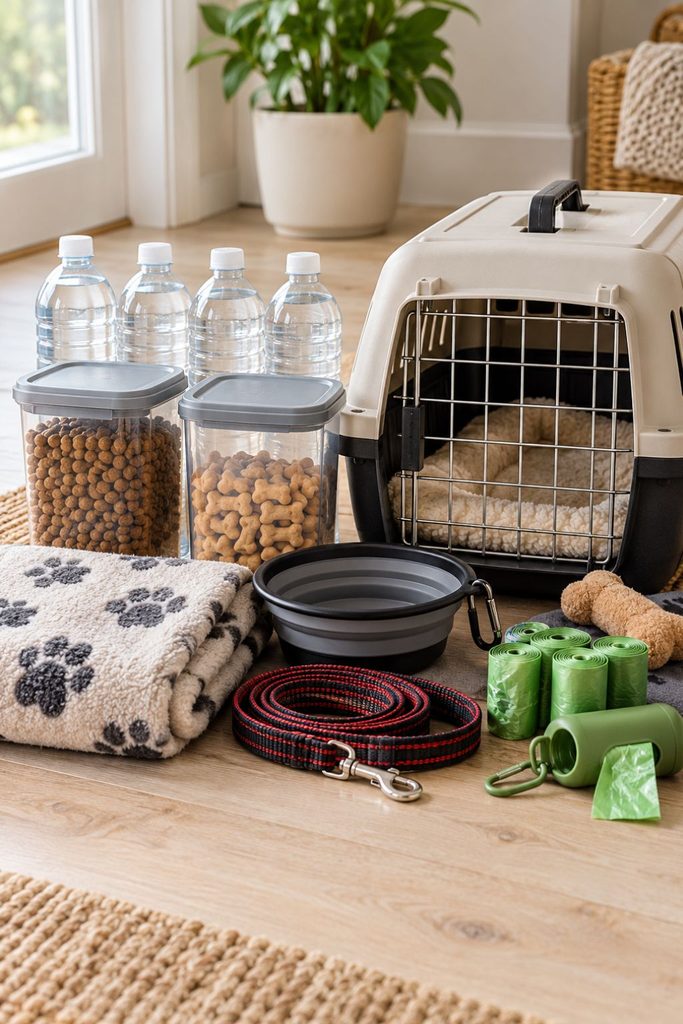
Pets need emergency supplies too. If you have animals at home, set aside a small kit for them rather than assuming your regular supplies will be enough.
Include:
- Several days of pet food, as practical
- Drinking water
- Food and water bowls
- Leash, harness, or secure carrier
- Waste bags or litter supplies
- Any essential medications
- Copies of vaccination and identification records
- A blanket or familiar bedding
- Contact details for your veterinarian
If your pet has special dietary or medical needs, plan around those requirements.
Keep pets indoors during severe cold whenever possible, and follow veterinary guidance for animals that are especially sensitive to low temperatures.
If you may need to evacuate, identify pet-friendly accommodation or emergency shelters in advance.
8. Prepare a Grab-and-Go Emergency Bag
Your home emergency supplies are useful if you can remain at home, but sometimes leaving quickly is the safest option.
A grab-and-go bag should be light enough to carry and contain the essentials you would want if you had to leave home unexpectedly.
What to pack
- Identification and copies of important documents
- Emergency contact list
- Essential medications
- Phone charger and power bank
- Water and ready-to-eat snacks
- A change of clothes
- Warm layers suitable for the climate
- Basic hygiene supplies
- Small first-aid kit
- Flashlight
- Keys and a small amount of emergency cash, if practical
- Essential supplies for children or pets
Keep copies of important documents protected from moisture. You can also store secure digital copies, but don’t rely entirely on a phone or internet connection.
Place the bag somewhere accessible and make sure everyone in the household knows where it is.
If you already have a backpack or overnight bag, use it. There’s no need to purchase a special emergency bag unless your current one doesn’t meet your needs.
9. How to Build a Winter Emergency Kit on a Tight Budget

The easiest way to overspend on emergency preparation is to buy everything at once without checking what you already own.
Instead, build your kit in stages.
Step 1: Shop your home first
Before buying supplies, check your cupboards, bathroom, linen storage, and car.
Look for spare blankets, flashlights, batteries, warm socks, unopened hygiene products, canned food, reusable containers, and charging cables.
Set aside items that are in good condition and suitable for emergency use.
Step 2: Make a list of genuine gaps
Write down what you have and what you still need.
Separate essential supplies from optional extras. Water, food, medications, safe lighting, communication equipment, and appropriate warmth should come before decorative storage containers or expensive survival gadgets.
Step 3: Buy a few items each week
If your budget is limited, spread purchases over several shopping trips.
For example, one week you might focus on water and shelf-stable food. The next week, you could purchase missing first-aid supplies. Later, you might add spare batteries or a power bank.
This approach makes preparation more manageable and helps you avoid putting unnecessary pressure on your finances.
Step 4: Use affordable storage
A clean, sturdy cardboard box can work for dry supplies stored indoors. A lidded plastic container may be more appropriate where moisture is a concern.
Reuse suitable bags and containers you already have.
The goal is to keep everything organized, dry, accessible, and easy to check.
Step 5: Avoid buying duplicate equipment
Before purchasing a second flashlight, charger, or first-aid kit, check whether you already have one that works.
Test existing equipment rather than assuming it is ready for use.
Spend money on replacing broken, expired, or unsuitable items first.
Step 6: Rotate supplies
Emergency preparation isn’t finished once the kit is assembled.
Use and replace shelf-stable foods before they expire, check batteries, recharge power banks, and update medications and contact information as needed.
Adding a reminder to your calendar can make this routine easier.
10. What to Buy First: A Simple Emergency Kit Priority List
If you’re starting from scratch, use this order to guide your spending. Adjust it to your climate, household, and local emergency advice.
| Priority | Supplies to focus on |
|---|---|
| First | Drinking water, ready-to-eat food, essential medications, first aid, safe lighting |
| Second | Warm clothing, blankets, phone charging equipment, hygiene supplies |
| Third | Car emergency supplies, pet supplies, manual can opener, extra batteries |
| Fourth | Additional comfort items, spare equipment, specialized cold-weather tools |
This is a starting point, not a universal ranking. If you live somewhere with frequent heavy snow, safe vehicle equipment and suitable winter clothing may be immediate priorities. If your household depends on powered medical equipment, reliable backup power and a professional emergency plan are especially important.
Don’t delay essential preparations while waiting to afford every item on the list.
11. Make a Winter Emergency Plan for Your Household
Supplies are only part of being prepared. A simple plan helps everyone know what to do if the weather becomes dangerous.
Know where to find important information
Save the contact details for local emergency services, utility providers, healthcare professionals, and relatives who may be able to help.
Know where your flashlight, first-aid kit, medications, water, and emergency bag are stored.
Decide where you would go
If your home becomes too cold or unsafe to remain in, identify a suitable alternative before an emergency occurs.
This could be a relative’s home, a trusted neighbor’s home, or an official warming center or emergency shelter.
Check local resources ahead of time so you are not searching for options during a storm.
Plan for children and vulnerable household members
Consider the needs of young children, older adults, people with disabilities, and anyone who requires regular medical support.
Make sure their medications, mobility aids, communication needs, and essential supplies are included in your plan.
If anyone relies on electricity for medical equipment, speak with their healthcare provider and utility company about backup arrangements.
Check on neighbors when safe
Severe cold can be especially dangerous for people who live alone or have difficulty getting supplies.
If conditions allow, check in with vulnerable neighbors or relatives. Do not put yourself in danger by traveling through unsafe weather.
Keep emergency information accessible
A printed contact list can be useful if your phone is unavailable or its battery runs out.
Include important numbers, a household meeting point, and any instructions relevant to your family.
12. Common Winter Emergency Kit Mistakes to Avoid
You can have plenty of supplies and still be unprepared if important details are overlooked.
Here are a few common mistakes worth avoiding.
Buying too much before checking what you own. You may already have blankets, canned food, flashlights, and suitable storage containers. Take inventory first.
Forgetting essential medications. Include the medications and medical supplies your household relies on, and check them regularly.
Keeping all supplies in one difficult-to-reach place. Your car kit, home kit, and grab-and-go bag serve different purposes. Store them where you can access them safely.
Ignoring pets and children. Their food, clothing, medications, comfort items, and other needs should be part of your plan.
Assuming a power bank will always be charged. Check it periodically and recharge it after use.
Relying on unsafe heating methods. Never use outdoor cooking equipment or generators indoors. Have a safe plan for finding warmth if your normal heating system fails.
Forgetting to check expiration dates. Food, batteries, medications, and some first-aid products need periodic attention.
Waiting until a storm is already approaching. Severe weather can cause crowded shops, supply shortages, and dangerous travel. Prepare gradually while conditions are still manageable.
13. Your Complete Winter Emergency Kit Checklist
Use this checklist to review your supplies. You don’t need to buy every item immediately; start with the essentials and mark what you already have.
Home emergency supplies
- Drinking water
- Shelf-stable food
- Manual can opener
- Flashlights or battery-powered lanterns
- Spare batteries
- Charged power bank
- Phone charging cables
- First-aid kit
- Essential medications
- Warm blankets
- Hats, gloves, and warm socks
- Hygiene products
- Trash bags
- Emergency contact list
- Important documents protected from moisture
Winter car kit
- Warm blanket
- Spare warm clothing
- Flashlight
- Phone charger or power bank
- Drinking water and nonperishable snacks
- First-aid kit
- High-visibility vest
- Appropriate roadside warning equipment
- Jumper cables or suitable jump starter
- Ice scraper and snow brush, where needed
- Small shovel or suitable traction aids, where needed
- Essential medications
- Paper map or emergency contact information
Grab-and-go bag
- Identification and important document copies
- Essential medications
- Water and snacks
- Warm clothing
- Basic hygiene supplies
- Phone charger and power bank
- Flashlight
- First-aid supplies
- Emergency contact list
- Essential supplies for children or pets
Pet emergency supplies
- Pet food
- Drinking water
- Bowls
- Leash, harness, or carrier
- Medications
- Identification and veterinary records
- Waste bags or litter supplies
- Familiar bedding or blanket
Frequently Asked Questions
What should be in a winter emergency kit?
A winter emergency kit should include drinking water, nonperishable food, first-aid supplies, essential medications, flashlights, spare batteries, phone charging equipment, warm clothing, blankets, and hygiene products. If you drive in winter conditions, prepare a separate car kit with roadside and cold-weather supplies.
How much should I spend on a winter emergency kit?
There is no single amount you need to spend. The cost depends on what you already own, the size of your household, and the weather conditions where you live. Start by gathering existing supplies, identify the most important gaps, and buy essentials gradually as your budget allows.
How many days of emergency supplies should I keep?
A three-day supply of essential food, water, and other necessities is a common starting point for emergency planning. You may need more if you live in a remote area, experience frequent severe winter weather, or expect disruptions to last longer. Follow local emergency management recommendations.
What foods are best for a winter emergency kit?
Choose shelf-stable foods your household already enjoys, such as canned beans, canned vegetables, crackers, nut butter, dried fruit, granola bars, and ready-to-eat meals. Include a manual can opener and account for allergies, dietary needs, and any special requirements.
What should I keep in my car during winter?
Useful supplies include warm clothing, a blanket, a flashlight, a charged power bank, drinking water, snacks, a first-aid kit, suitable roadside warning equipment, and tools appropriate for your vehicle and local weather. If snow and ice are common, you may also need an ice scraper, snow brush, shovel, or suitable traction aids.
How often should I check my winter emergency kit?
Review your kit every few months and before the winter season begins. Replace used supplies, check expiration dates, inspect equipment, recharge power banks, and make sure stored clothing and blankets remain dry.
Do I need a generator for winter emergencies?
Not every household needs a generator. Before investing in one, consider the likelihood of outages, your heating system, your medical needs, and the availability of safe alternative shelter. If you do use a generator, it must operate outdoors, away from doors, windows, and vents, according to the manufacturer’s safety instructions.
What if I live somewhere that rarely gets snow?
You can still prepare for cold weather, power interruptions, heavy rain, or unexpected travel delays. Focus on the risks most relevant to your location rather than purchasing specialized snow equipment you are unlikely to need.
What is the most important item in a winter emergency kit?
There is no single item that meets every emergency need. Drinking water, essential medications, food, safe warmth, lighting, and a way to receive information are all important. Prioritize the supplies that protect your household’s immediate health and safety.
Final Thoughts
Preparing for winter emergencies doesn’t have to be expensive or overwhelming. The most effective approach is to start with the essentials, make use of what you already own, and add missing supplies gradually.
Begin with drinking water, shelf-stable food, medications, first-aid supplies, reliable lighting, phone charging equipment, and suitable clothing and blankets. Then build out your car kit, grab-and-go bag, and household emergency plan based on the conditions where you live.
Most importantly, don’t wait until a storm is on the way to start preparing. A little planning now can help you feel more confident and make it easier to protect your household when winter weather disrupts your normal routine.
You don’t need a perfect emergency kit overnight. You just need to take the first step, make a plan, and keep improving it as your budget allows.