
17 Smart Ways to Use Corner Space in Your Home
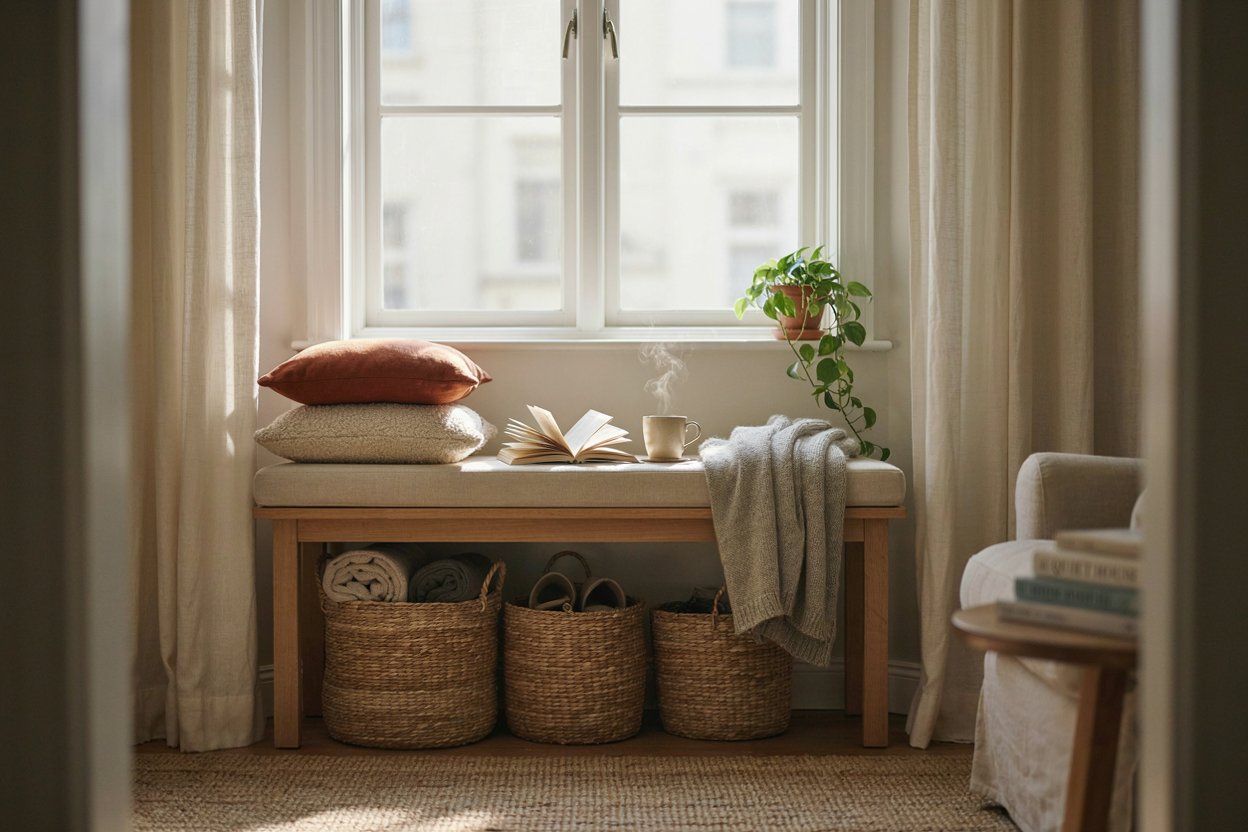
Corners are the most overlooked square footage in most homes. They’re awkward, easy to ignore, and usually left empty because furniture is built for straight walls, not right angles.
I used to have three completely dead corners in my own house before I actually sat down and thought about what each one could be doing instead of nothing. One behind my living room door collected nothing but dust.
One in my bedroom somehow became a place to drop laundry I hadn’t dealt with yet. One in my entryway made every arrival home feel a little chaotic, because there was nowhere for anything to actually land.
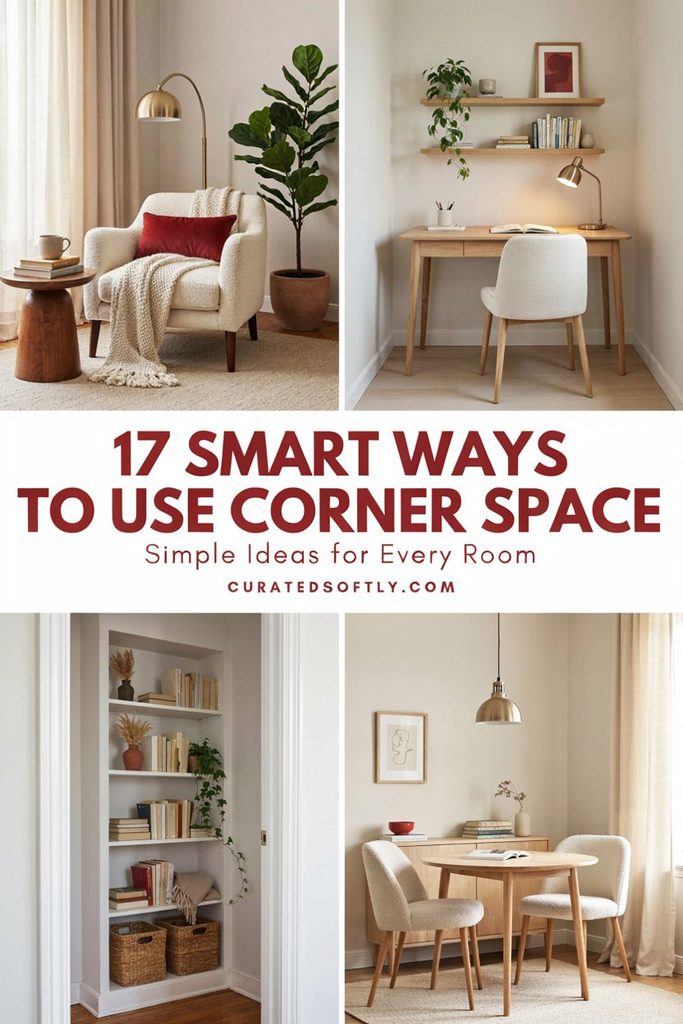
What I’ve found, working through corner after corner in my own place and helping friends rethink theirs, is that the best corner solutions almost always do two things at once. Storage plus seating. Display plus function.
A workspace that also anchors the room. A corner that only does one job is a corner that’s still half-wasted. I’ve also learned that the actual execution matters more than the idea itself.
The same “corner bookshelf” concept can look either intentional or like an afterthought, depending on the materials, the styling, and a handful of small decisions I’ll walk through for each idea below.
This isn’t just a list of concepts. For every idea here, I’m including what you’d actually need to build it, roughly what it costs to attempt, and how I’d style it so it looks finished rather than like furniture that happened to end up in a corner.
If you’re tackling this room by room, my laundry room decor ideas and home gym design ideas both lean heavily on corner solutions specific to those spaces, worth a look once you’ve got the general principles down here.
Before You Start: How to Actually Evaluate a Corner
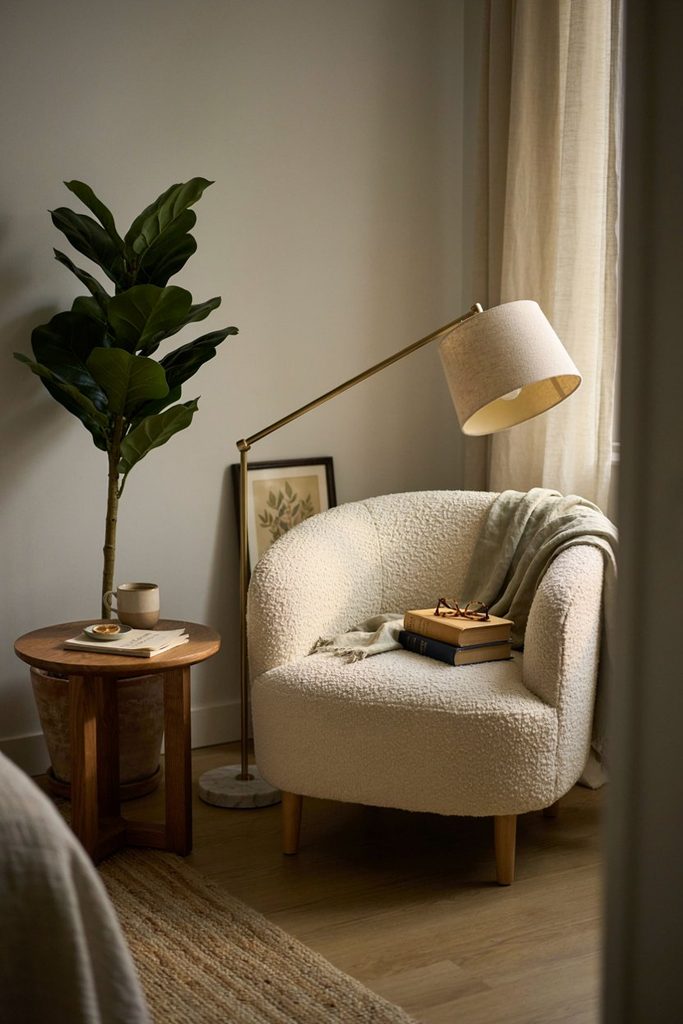
Every corner in your home is a little different, and treating them all the same is the fastest way to end up with a solution that doesn’t actually fit the space. Before picking an idea off this list, I’d walk through a few things first.
Measure the actual usable depth, not just the wall length. A corner might look spacious from across the room. But once you account for door swing, existing outlets, baseboard heaters, or a window that starts too low, the real usable footprint can be a lot smaller than it appears.
I’ve measured a corner, gotten excited about a built-in bench idea, and then realized a window sill sat exactly where the seat back needed to go.
Think about sightlines, not just square footage. A corner near a main walkway or a doorway gets seen constantly, which makes it worth a bit more visual polish.
A corner tucked behind a door or in a rarely-used room can lean more purely functional. It’s not doing double duty as something guests will actually notice.
Decide whether you want built-in or freestanding before you shop. Built-in solutions, custom benches, fitted desks, maximize every inch of a corner’s actual shape, but they’re a bigger commitment in cost and time.
Freestanding pieces, a chair, a shelf, a plant stand, are lower-risk and easier to change your mind about later, which matters if you’re not fully sure yet what a specific corner needs.
Consider the room’s existing traffic pattern. A corner solution that juts out even a few extra inches into a walkway will get bumped into constantly and start to feel like a mistake within weeks, no matter how good the idea looked in a photo.
With that groundwork in place, here’s the actual list, organized by room, with what you’d need and how I’d style each one.
Living Room and Family Space Corners
1. A Built-In Style Corner Bench With Storage
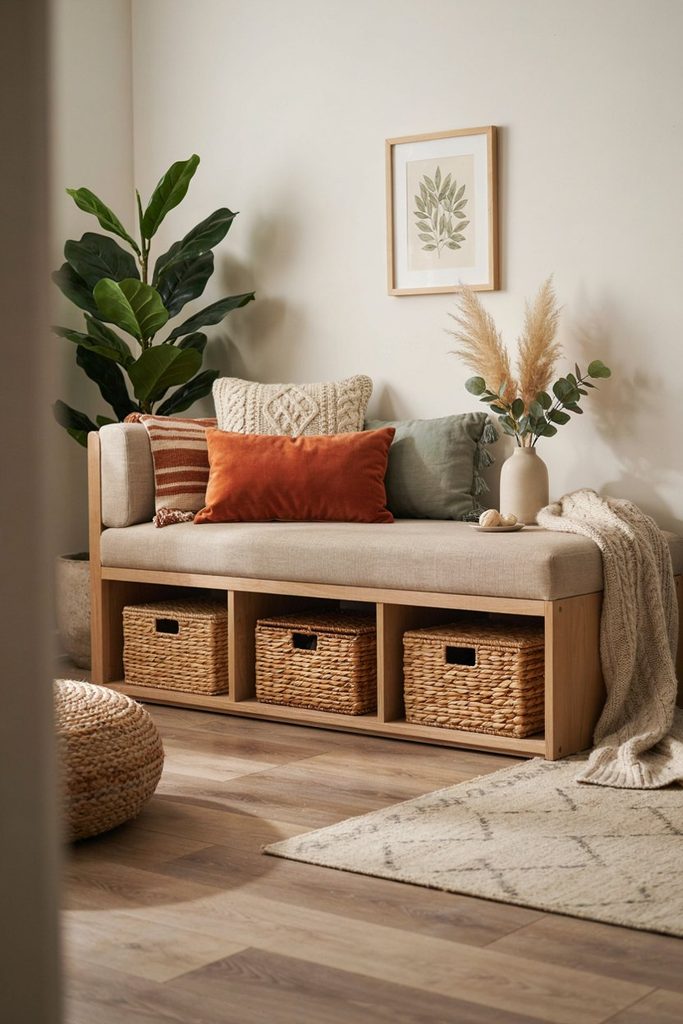
An L-shaped bench, built or bought, fits into a corner with cushions on top and open cubbies or drawers underneath. It turns dead space into genuine seating plus a real storage solution.
This works especially well in a corner near a window, where the bench doubles as a window seat.
What You’ll Need:
- A pre-made corner bench unit sized to your space, or plywood and cubby-style shelving units if building custom
- A cushion cut to fit the bench’s exact dimensions, ideally in a removable, washable cover
- 4 to 6 woven baskets sized to fit the cubby openings
- Wall anchors if securing the bench to the wall for stability
How to Style It:
- Layer 3 to 5 pillows in varying sizes rather than a matched set, it reads as collected rather than store-bought
- Keep the baskets a consistent material and tone even if the pillows vary, that visual anchor keeps the whole thing from looking cluttered
- Add one low-profile item on top of the cushion, like a folded throw, so the surface doesn’t look untouched
- Assign each basket a category, blankets, games, remotes, so the storage stays functional over time, not just on move-in day
2. A Corner Bookshelf, Floor to Ceiling
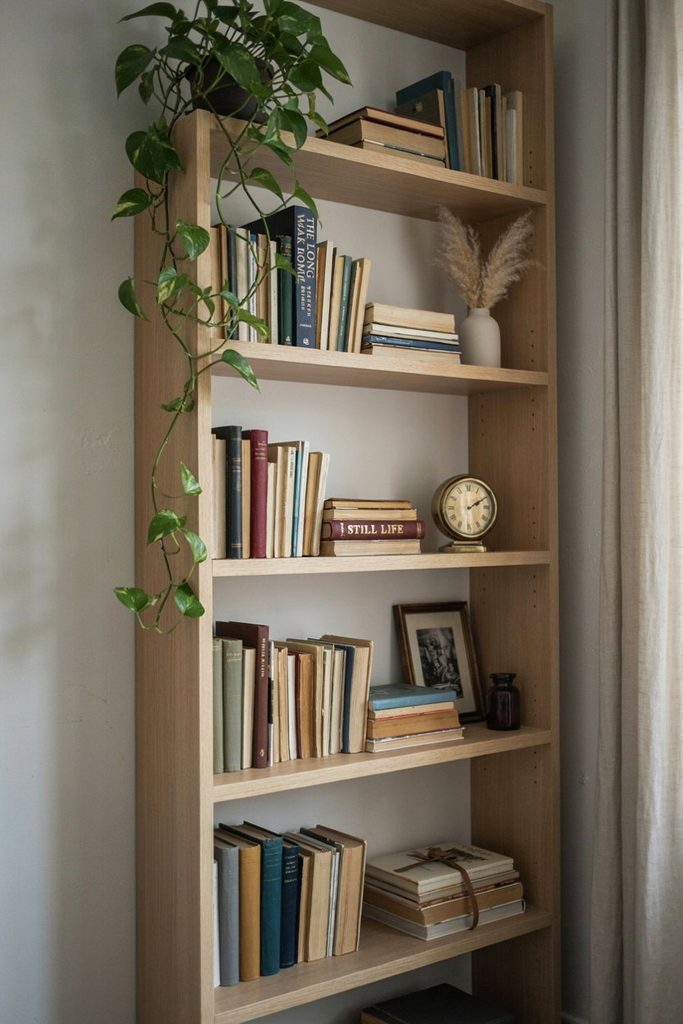
Vertical space is a corner’s biggest advantage. A tall, narrow bookshelf built specifically for a corner uses height that a standard rectangular bookshelf against a flat wall never can.
Floating corner shelves, stacked in a rising diagonal, are a lighter-feeling alternative if a full bookshelf feels too heavy for the room.
What You’ll Need:
- A corner-specific bookshelf unit, measured against your actual ceiling height
- Or 4 to 6 floating shelf brackets and boards if going the floating route
- Wall anchors rated for your specific wall type and the intended weight load
- A level, to keep floating shelves visually consistent as they stack upward
How to Style It:
- Don’t fill every shelf edge to edge, leave visible breathing room on at least half the shelves
- Mix books stacked flat with books upright, all-vertical spines read as more utilitarian than intentional
- Add one or two small objects per shelf, a plant, a small frame, a candle, so it doesn’t read as a wall of spines
- Group by color loosely rather than strictly if you want a more curated, editorial look
3. A Reading Nook Built Around a Single Chair
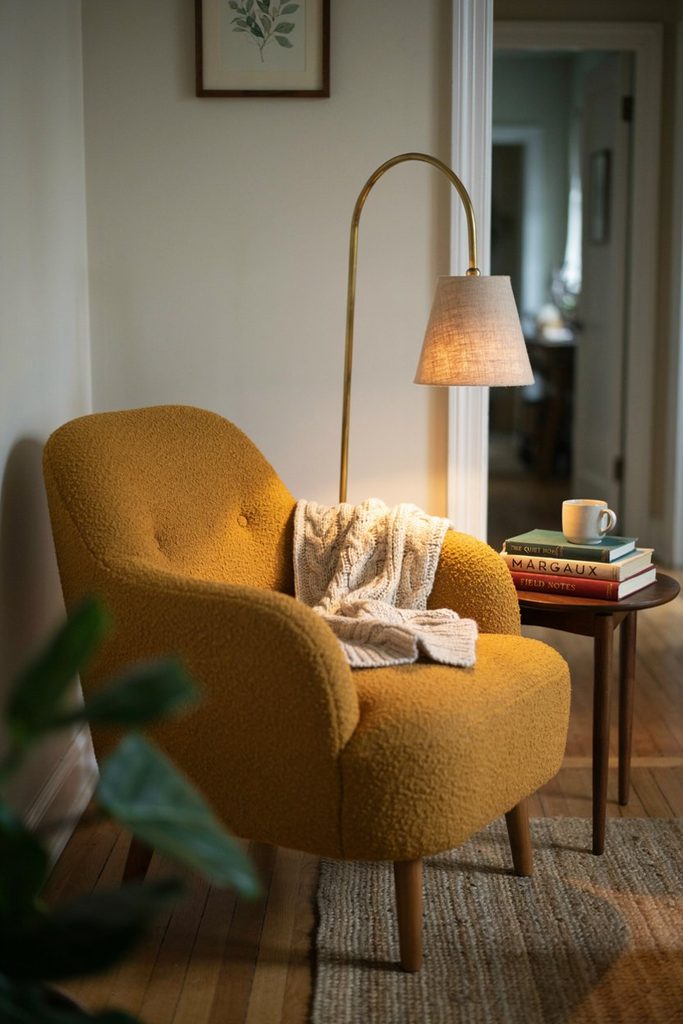
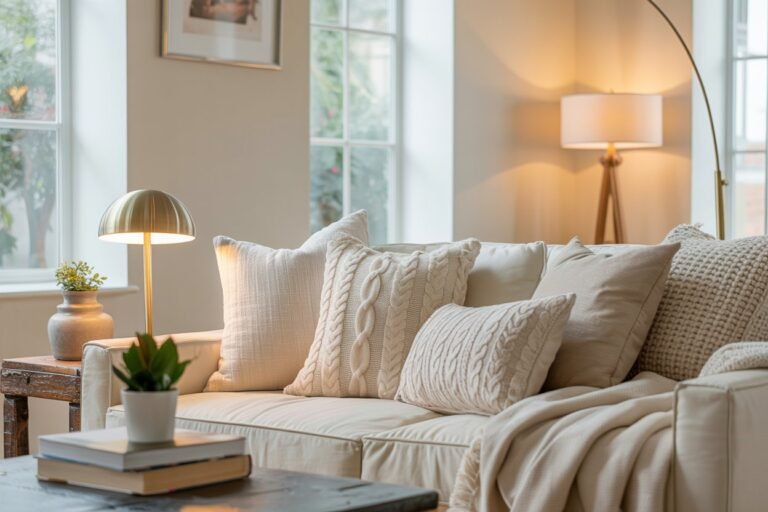
One comfortable chair, angled into the corner, with a small side table and a floor lamp, creates a genuinely inviting reading spot.
It turns space that would otherwise sit empty into something you’ll actually use. The trick is committing to the corner fully rather than half-using it.
What You’ll Need:
- One accent chair sized appropriately for the corner’s actual depth
- A small side table, wide enough to hold a drink and a book comfortably
- A floor lamp with a warm-toned bulb rather than a cool white one
- A throw blanket and at least one accent pillow
How to Style It:
- Angle the chair slightly rather than squaring it perfectly into the corner, a small angle makes the whole setup feel more intentional
- Drape the throw casually over one arm rather than folded flat
- Stack 2 to 3 books on the side table rather than leaving it completely bare
- Position the lamp slightly behind and to the side of the chair, not directly overhead, for better reading light without glare
4. A Corner Media Stand for an Angled TV Setup
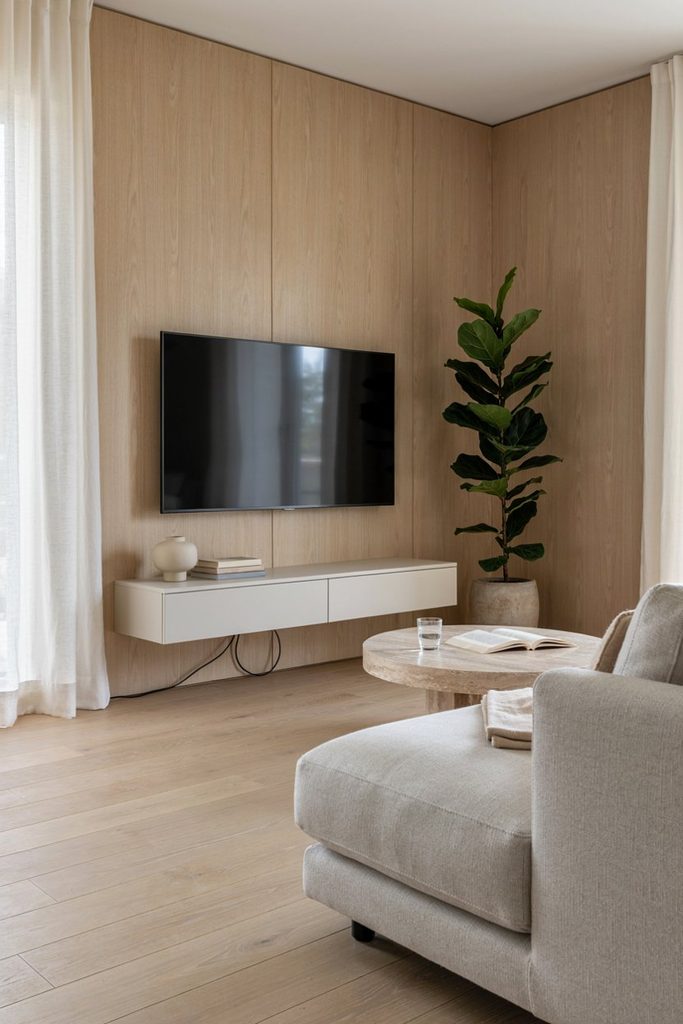
In smaller living rooms, mounting a TV in a corner and angling the seating toward it can open up significantly more usable floor space than a flat-wall setup, especially in a room where the layout is already tight.
What You’ll Need:
- A corner-specific TV mount or a corner media console sized to your television
- Cable management clips or a cord cover to route wiring along the angled wall
- A power strip mounted or hidden behind the console, not left visibly dangling
How to Style It:
- Keep visible cords to an absolute minimum, this setup lives or dies on how clean the corner looks
- Add a small basket or tray beside the console for remotes so the surface doesn’t collect loose clutter
- If shelving is built into the console, style it the same way as the bookshelf above, mixed heights, a little breathing room
Bedroom Corners
5. A Corner Vanity or Small Desk
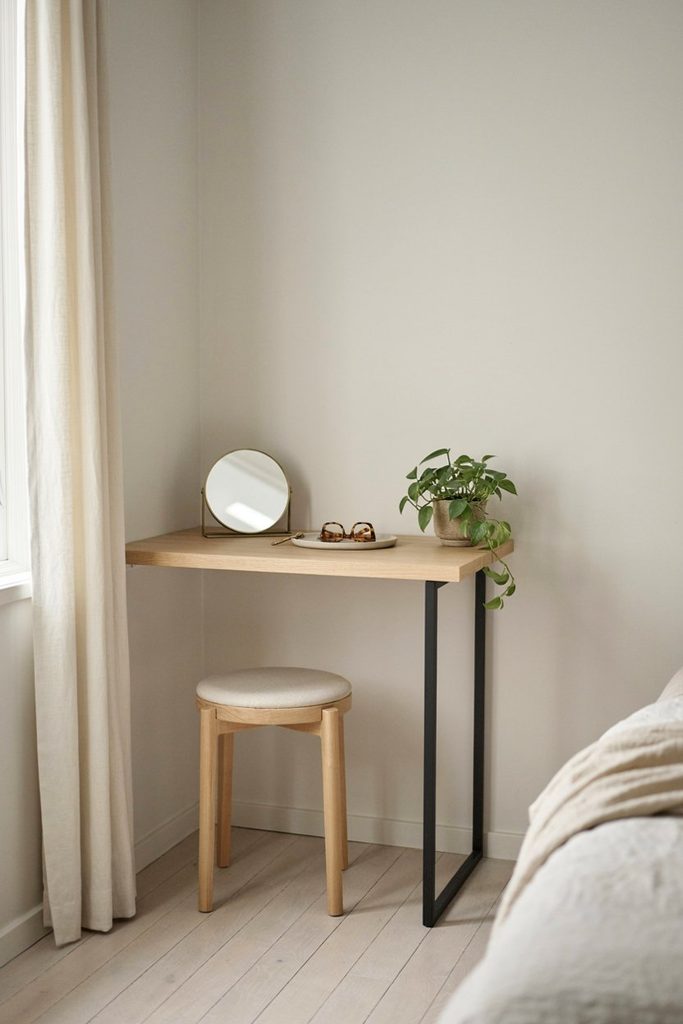
A slim, corner-fitted desk or vanity gives you a dedicated spot for getting ready or working from home without eating into the room’s main floor space.
What You’ll Need:
- A corner-fitted desk or vanity table sized to the available depth
- A stool or slim chair that tucks fully under when not in use
- A small mirror, tabletop or wall-mounted, if using it as a vanity
- A small lamp if the corner doesn’t get much natural light
How to Style It:
- Keep the surface mostly clear, one small tray for daily essentials and one small plant or candle is enough
- A corner desk gets visually busy fast if it becomes a catchall, so build in a drawer or basket for anything that isn’t decorative
- Choose a chair finish that matches your existing bedroom hardware, drawer pulls, lamp bases, for a cohesive look
6. A Freestanding Full-Length Mirror, Angled Into the Corner
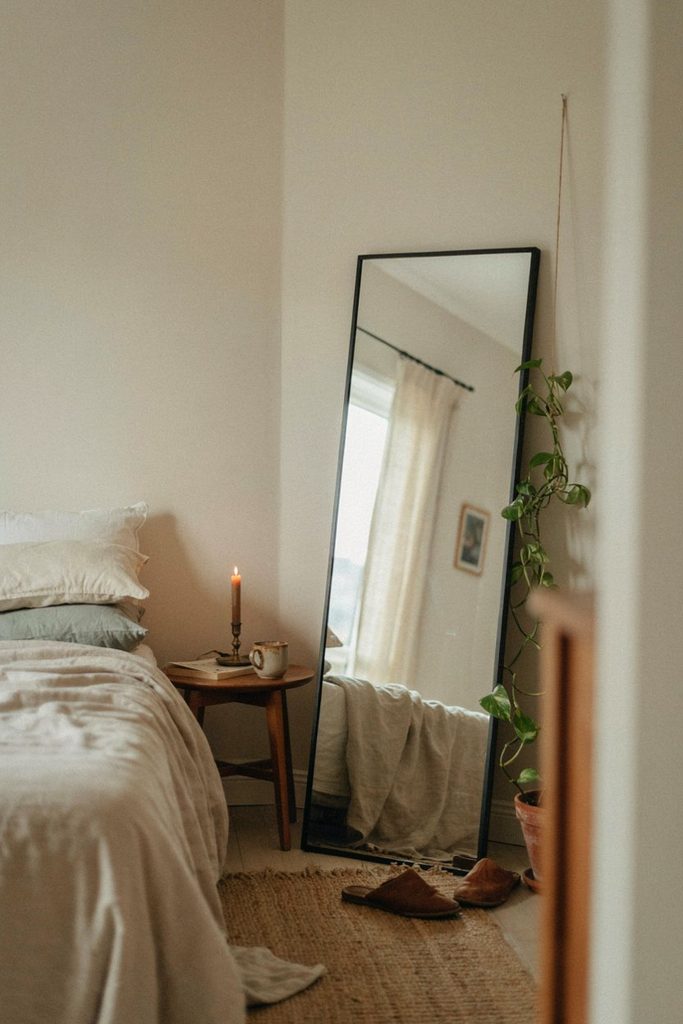
Placed diagonally rather than flat against a wall, a full-length mirror in a corner bounces light across the room. It can make a small bedroom feel noticeably larger.
What You’ll Need:
- A freestanding, leaning-style full-length mirror
- A frame finish that matches your room’s existing metal or wood tones
- Optional: a small anti-tip strap if you have kids or pets in the home
How to Style It:
- Lean it at a natural angle rather than propping it perfectly upright, a slight lean looks deliberate rather than accidental
- Position it to reflect a window or an attractive part of the room, not a blank wall, so the reflection adds visual value
- Keep the floor space directly in front of the mirror clear, it should feel usable, not decorative-only
7. A Corner Reading Chair With a Floor Lamp
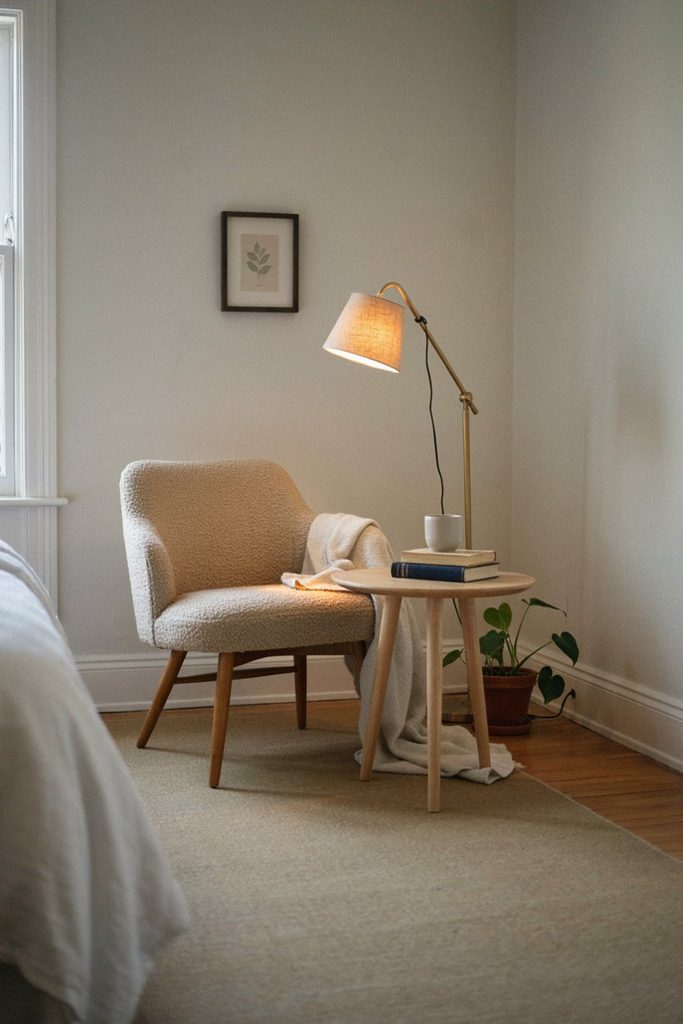
The bedroom version of the living room reading nook, this works particularly well in a room too small for a separate sitting area.
What You’ll Need:
- A slim accent chair sized to the bedroom’s available space
- A floor lamp
- A small round side table, if space allows
How to Style It:
- Keep the palette quieter than a living room version, since it’s competing visually with the bed
- Stick to one or two soft textures, a knit throw, a velvet cushion, rather than layering several
- Choose a chair fabric or finish that complements, rather than matches exactly, your bedding
8. A Tall Corner Plant Grouping
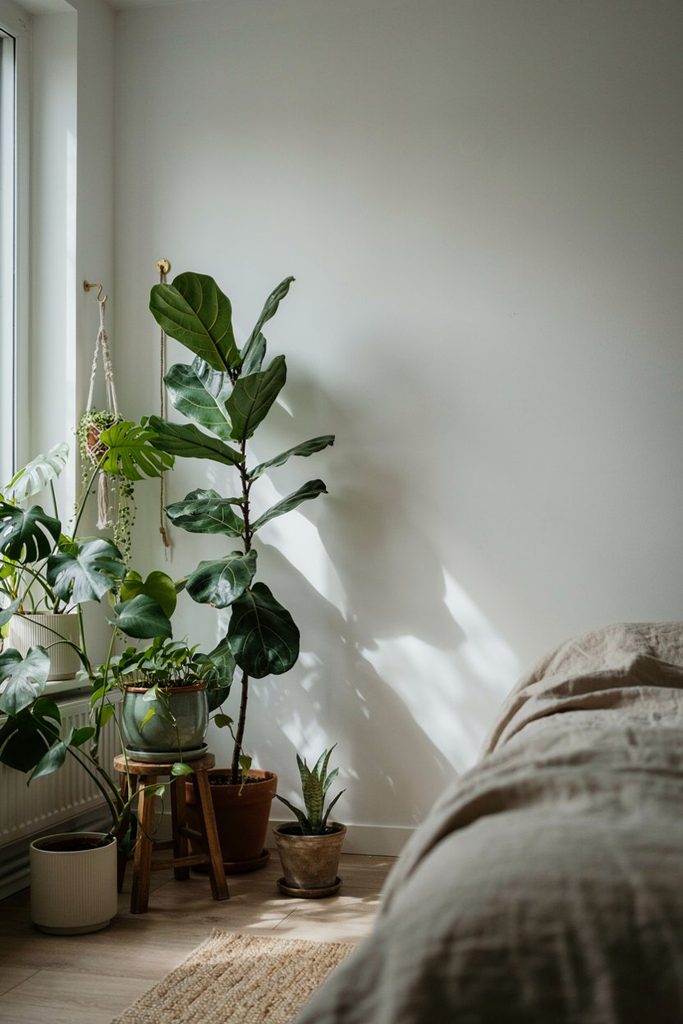
A cluster of plants at varying heights, anchored by one tall floor plant, softens a sharp, empty corner and adds genuine life to a bedroom without requiring any furniture or structural changes at all.
What You’ll Need:
- One tall floor plant, like a fiddle leaf fig or snake plant, suited to the room’s actual light level
- 2 to 3 smaller plants at varying heights
- A plant stand or small stool to help vary the heights
- A watering can or misting bottle kept nearby for easy upkeep
How to Style It:
- Cluster in odd numbers, three tends to look more natural and intentional than two or four
- Vary the pot materials slightly, terra cotta, woven, ceramic, rather than matching every pot exactly
- Rotate the grouping every few weeks so all sides of each plant get even light exposure
Home Office and Workspace Corners
9. A Custom-Fit Corner Desk
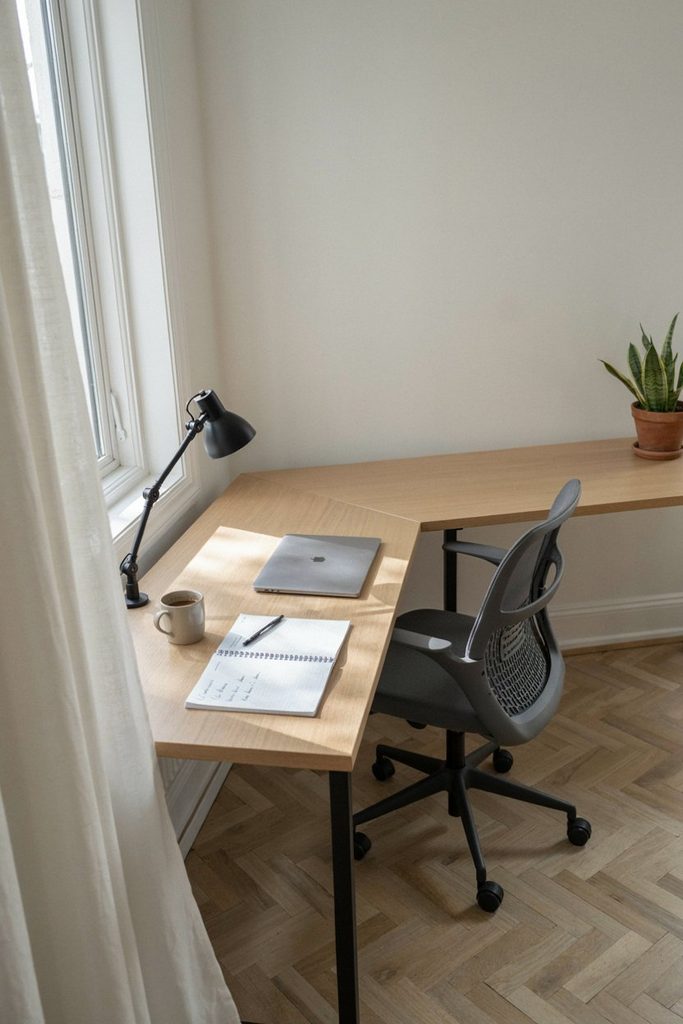
A desk built specifically to follow the angle of a corner maximizes usable surface area. A standard straight desk pushed into a corner never quite manages the same efficiency.
What You’ll Need:
- A corner-specific desk unit, measured and sized against your actual wall dimensions before buying
- An ergonomic chair that matches the desk’s height
- Cable management for monitor, charger, and any other cords
How to Style It:
- Anchor one side of the L-shape with a task lamp and the other with a small plant or stacked books, this visually balances the space
- Keep the desktop itself mostly clear during styling photos or daily use, clutter reads immediately in a corner this visible
- Add one small personal object, a framed photo or a small print, to keep the space from feeling purely utilitarian
10. A Wall-Mounted Organization Station
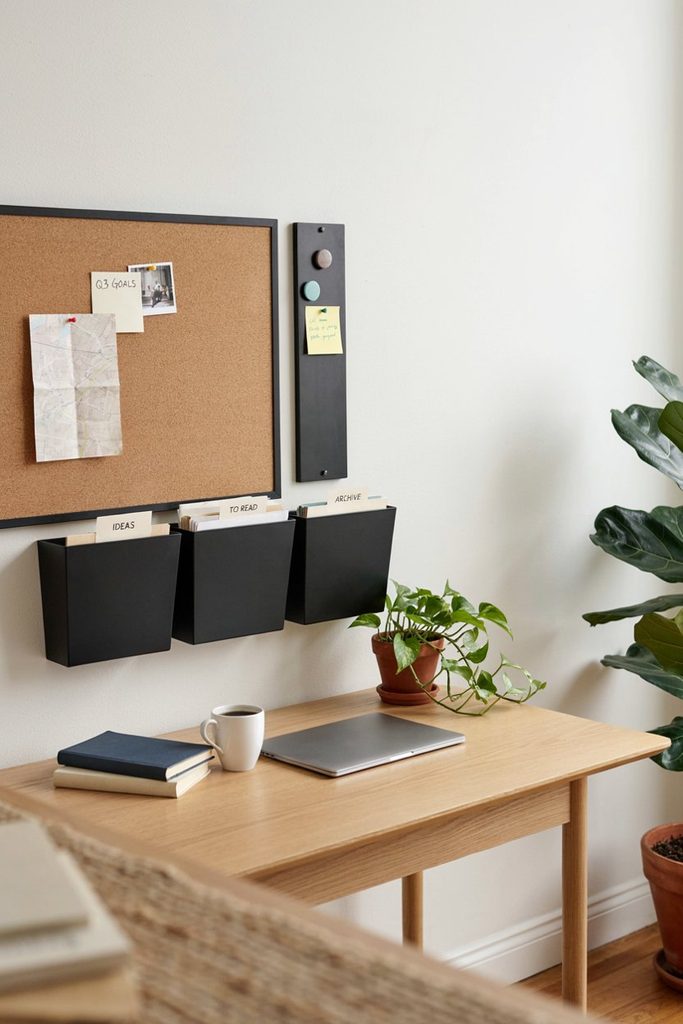
Cork boards, magnetic panels, small filing pockets, and a calendar, mounted directly on the wall above a corner desk, turns vertical space into functional command-center storage.
What You’ll Need:
- A cork or magnetic board
- Wall-mounted file pockets
- A calendar or planner insert
- Matching frames or hardware in one consistent finish
- Wall anchors appropriate for the combined weight of everything mounted
How to Style It:
- Pick one metal tone, black, brass, or matte white, and keep every piece of hardware in that same tone
- Mismatched finishes are the fastest way to make an organization wall look chaotic instead of curated
- Leave a small amount of open cork or magnetic space for rotating notes, rather than filling every inch permanently
11. A Corner Filing and Storage Tower
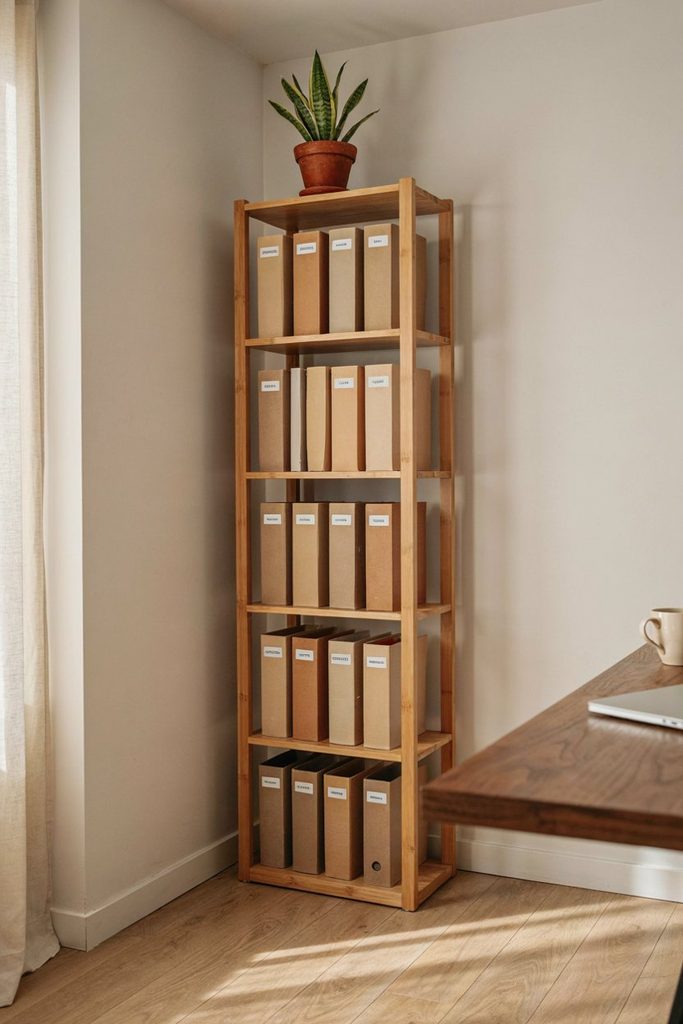
A narrow, tall storage unit, fitted into the corner beside a desk, keeps paperwork and supplies contained without eating into your actual workspace.
What You’ll Need:
- A corner-fit storage tower or narrow filing cabinet
- Labeled folders or bins for the interior
- A label maker or simple written tags for consistency
How to Style It:
- Keep the top surface of the tower clear, or styled with just one object, a small plant or a framed photo
- Don’t let it become extra flat storage space, that’s how corners end up cluttered again within a month
- Group folders by frequency of use, most-accessed items in the most reachable drawer or shelf
12. A Floating Corner Shelf as a Micro-Workspace
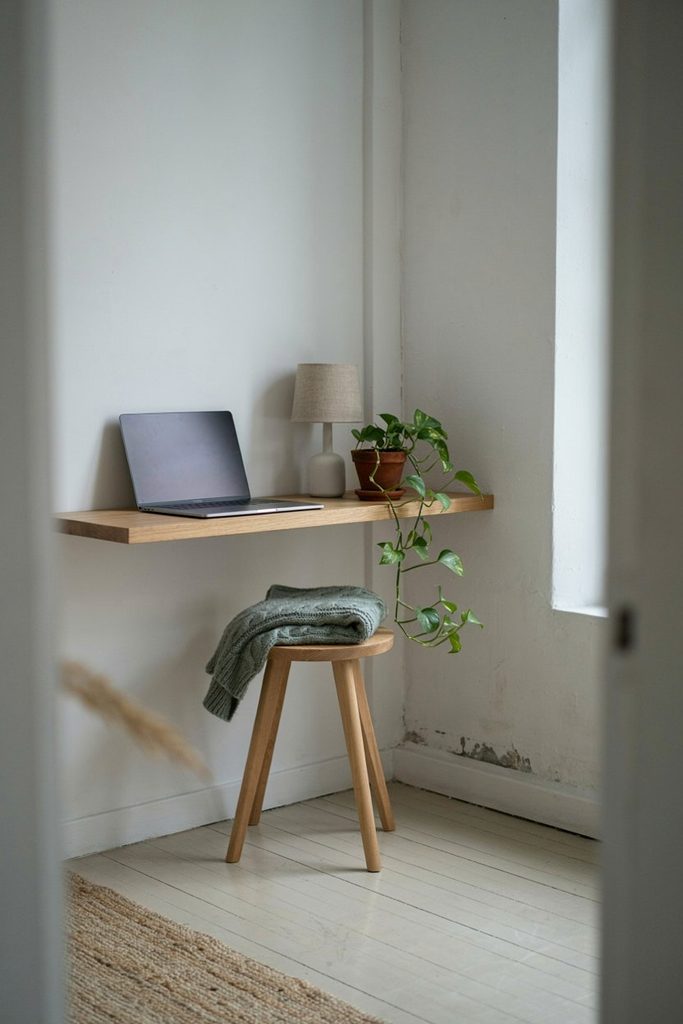
For genuinely tight spaces, a single floating shelf mounted at desk height, fitted into a corner, can hold a laptop and a small lamp.
What You’ll Need:
- One deep floating shelf, rated to hold laptop weight plus some margin
- Heavy-duty wall anchors
- A small stool that tucks under when not in use
- A compact lamp sized to the shelf’s depth
How to Style It:
- A single small lamp and one small plant is really all this surface can handle visually before it starts looking cramped
- Choose a stool that can be pushed fully out of sight when not in use, so the space can revert to open floor easily
- Mount a small hook or two beside the shelf for headphones or a bag, keeping the surface itself clear
Entryway and Mudroom Corners
13. A Corner Drop Zone With Hooks and a Bench
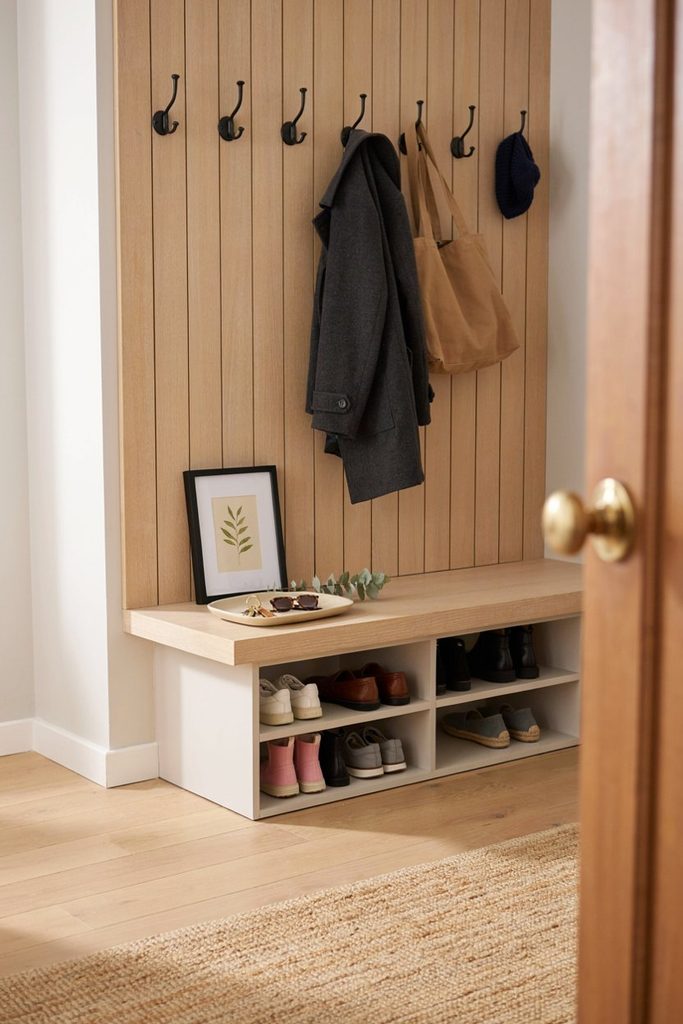
Coat hooks mounted above a small corner bench, ideally with a shoe storage cubby underneath, turns an entryway corner into a genuine drop zone.
What You’ll Need:
- 4 to 6 wall hooks
- A small bench sized to the corner
- A shoe cubby or basket underneath
- A small tray or dish for keys and loose items
How to Style It:
- Assign each hook a household member if multiple people use the space, it keeps the drop zone functional rather than a jumble
- Keep one small tray on the bench specifically for keys and mail, so loose items don’t spread across the surface
- Choose hooks in a finish that matches your front door hardware for a more pulled-together first impression
14. A Corner Umbrella and Boot Stand
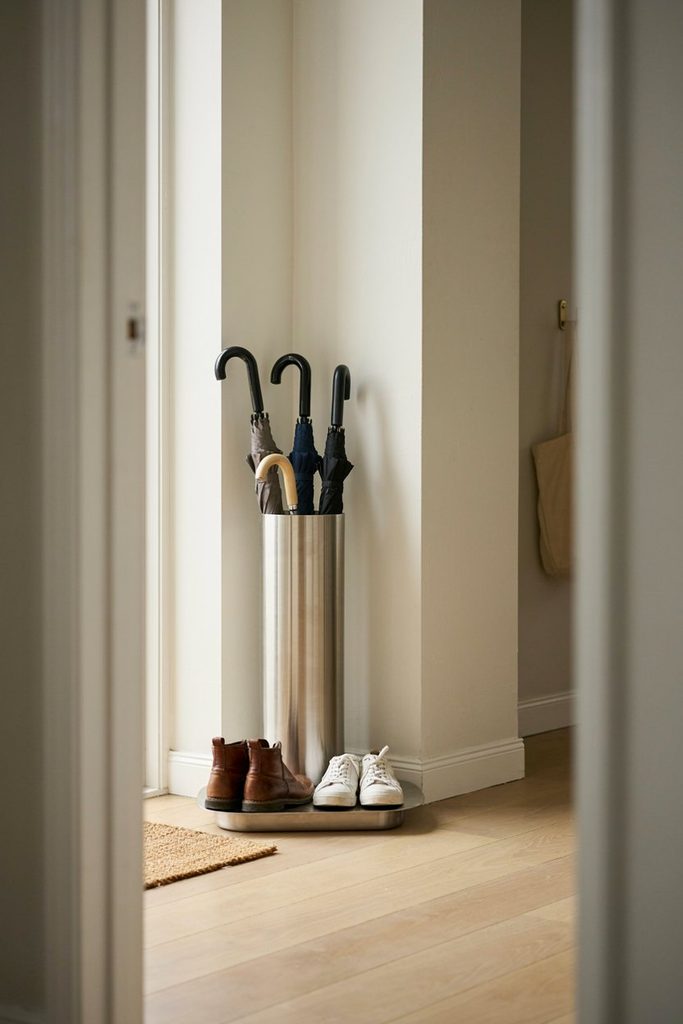
A tall, narrow stand specifically for wet-weather gear, tucked into an entryway corner, keeps umbrellas and boots contained and off the floor in the middle of the room.
What You’ll Need:
- A tall umbrella stand
- A boot tray, ideally waterproof or easy to wipe down
- A small mat underneath both, to protect flooring from drips
How to Style It:
- Choose a stand and tray in the same material family, metal with metal, woven with woven, so the pairing looks chosen rather than mismatched
- Keep the number of umbrellas visible to 2 or 3 max, more than that starts to look like overflow storage
- Empty and wipe the tray regularly, this is a genuinely functional piece and needs upkeep to stay looking intentional
15. A Corner Gallery Wall
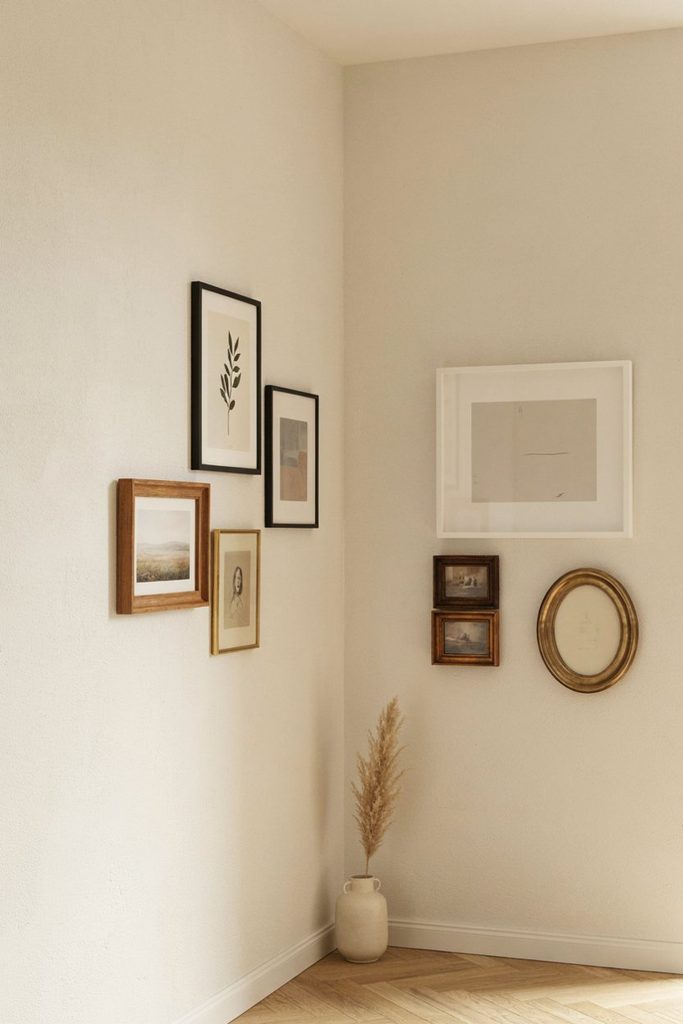
Wrapping a small gallery of framed art or photos around the inside angle of a corner adds personality to an entryway without needing much actual floor space. It’s an underused alternative to confining everything to one flat wall.
What You’ll Need:
- 5 to 9 frames in varying sizes
- Picture hanging hardware appropriate for your wall type
- A paper template kit or painter’s tape to plan the layout before committing to nail holes
How to Style It:
- Plan the full layout on the floor first, then transfer it to the wall using painter’s tape as a guide
- Wrap frames around the actual corner angle, not stopping at the edge, this is what makes it read as a deliberate corner feature
- Mix frame finishes intentionally, 2 to 3 consistent tones rather than one uniform set or a completely random mix
Kitchen and Dining Corners
16. A Corner Banquette for Dining
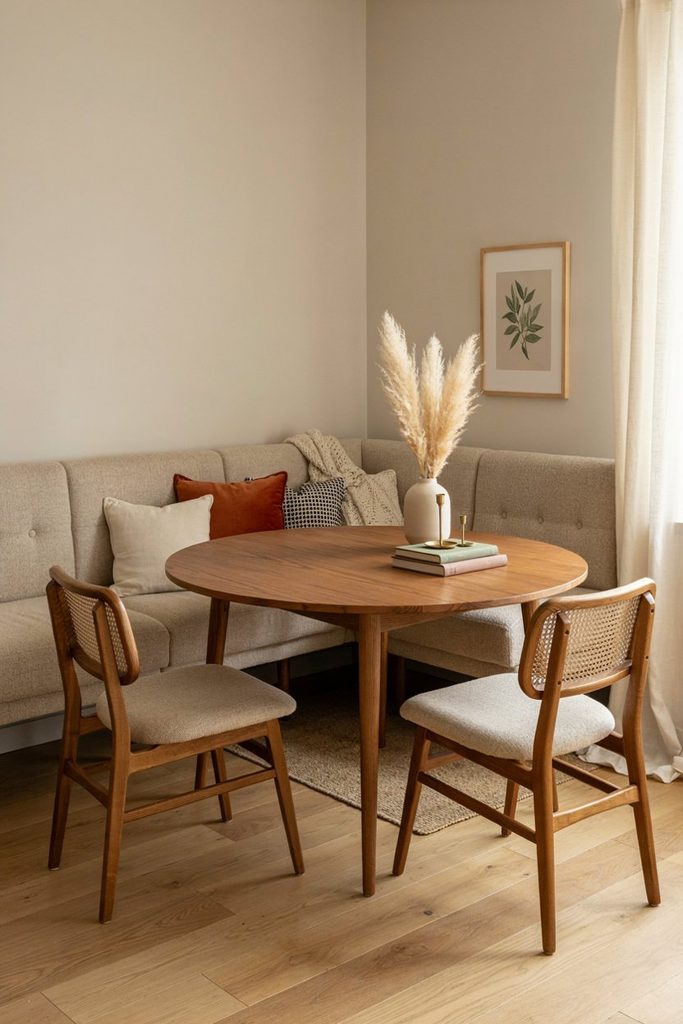
An L-shaped bench seat built into a dining corner, paired with a table and a couple of chairs on the open side, seats more people in less space. A standard four-chair table setup just can’t match that efficiency.
What You’ll Need:
- A built or pre-made corner banquette sized to your space
- A table sized to leave comfortable legroom on all sides
- 2 chairs for the open side of the table
- A cushion cut to the bench’s exact shape, in a durable, wipeable fabric
How to Style It:
- Add a few throw pillows in a durable, easy-to-clean fabric given the kitchen context
- Keep the table centerpiece low enough that it doesn’t block sightlines across the table
- Build in lift-up seating if possible, the hidden storage underneath is genuinely valuable in a kitchen
17. A Corner Plant Shelf Near a Window
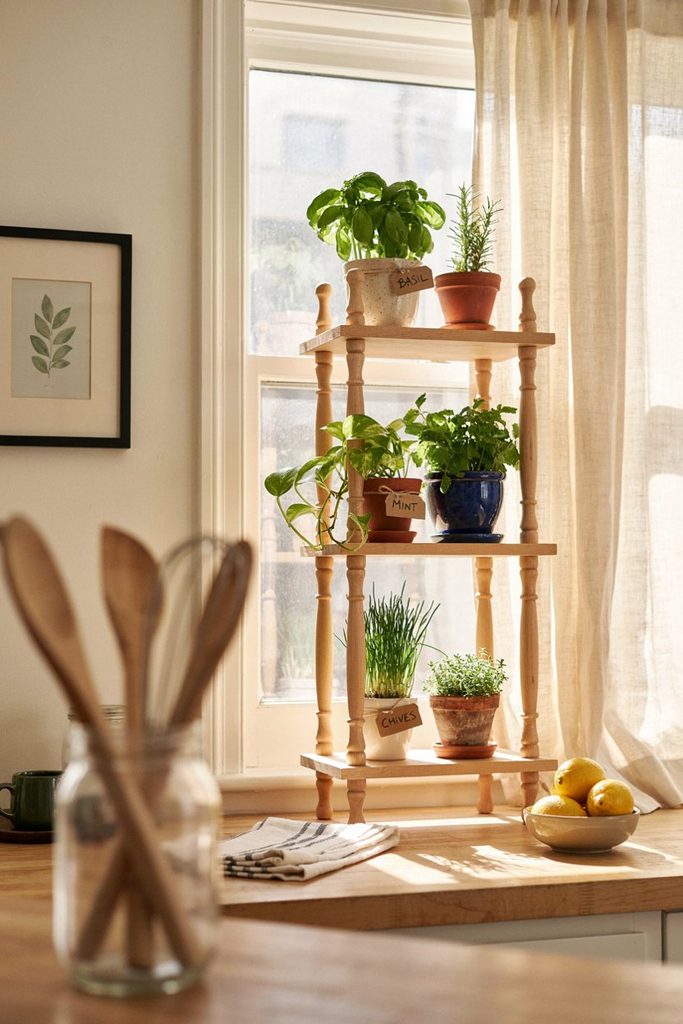
A small tiered shelf or a single well-placed plant stand, positioned in a kitchen corner that gets good natural light, is one of the simplest ways to bring some life into a kitchen without giving up counter or cabinet space.
What You’ll Need:
- A tiered plant stand or a couple of wall-mounted shelf brackets
- 2 to 4 plants suited to your kitchen’s actual light levels
- Drip trays if placing directly above counters or flooring you want to protect
How to Style It:
- Herbs work especially well here if the light supports them, since the shelf becomes functional as well as decorative
- Vary pot heights slightly so the grouping doesn’t look flat from across the room
- Keep the plants closest to any heat source, like a stove, a bit further back to avoid stressing them
More Decor Ideas
How to Actually Choose the Right Corner Solution
Not every idea on this list fits every corner, and figuring out which one actually makes sense for your space comes down to a few honest questions.
What does this corner currently do, if anything? A corner that’s already collecting clutter needs a storage solution first, before anything decorative. A corner that’s just empty has more flexibility to become something purely enjoyable, like a reading nook or plant display.
How much daily traffic does this space get? A high-traffic entryway corner needs something durable and functional, hooks, a bench, real storage. A quiet bedroom corner has more room for something purely aesthetic, like a mirror or a plant grouping.
Custom-built or off-the-shelf? Corner-specific furniture, built-in benches, custom desks, genuinely maximizes the space better than anything off-the-shelf, but it’s a bigger investment. Floating shelves, freestanding mirrors, and plant groupings are far more affordable ways to start if you’re not ready to commit to something built-in.
Final Thoughts
The corners in your home are honestly some of the easiest wins available if you’re looking to add function or personality without a full renovation.
Start with the one that bothers you most, the one you walk past every day and think “I should really do something with that,” and work outward from there.


2 Comments