
Super Genius 10 Storage Solutions for Small Spaces
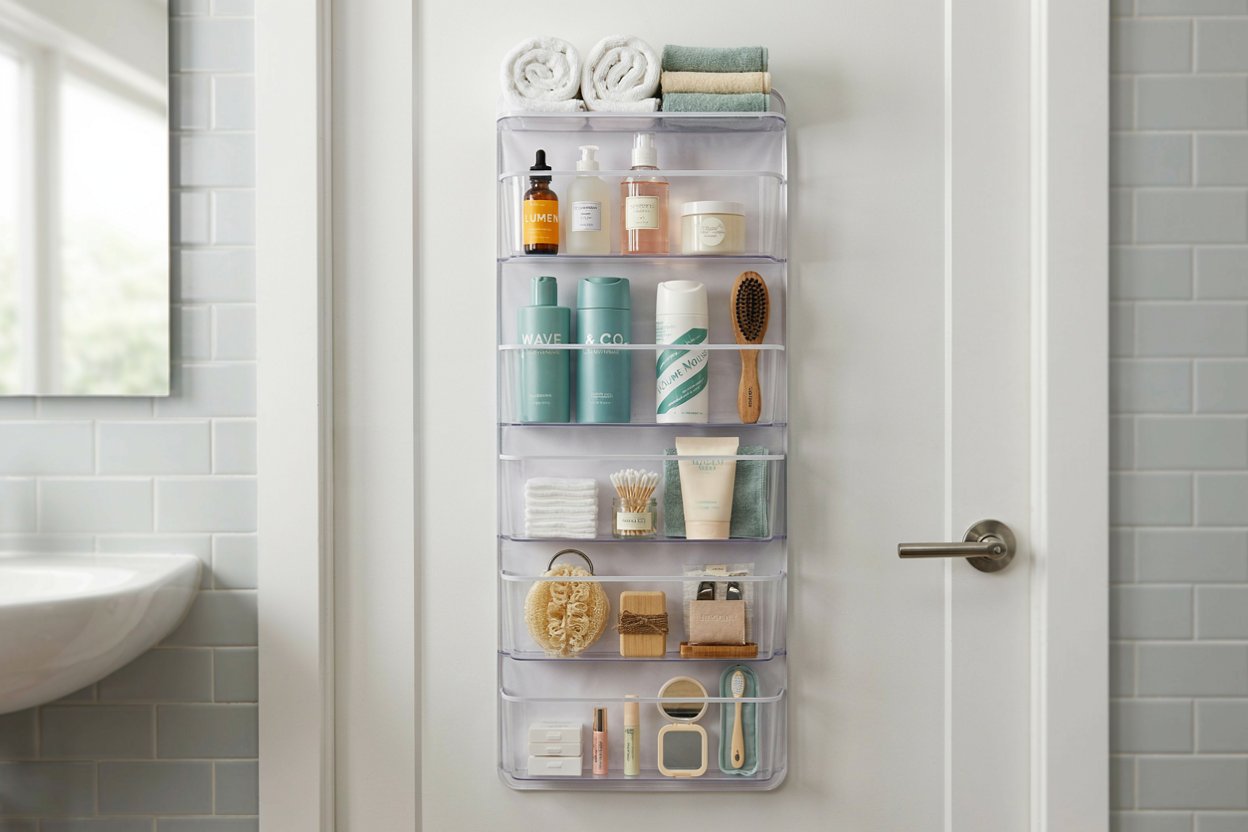
Small spaces don’t actually have less storage potential than big ones, they just have less obvious storage. Every small home I’ve lived in taught me the same lesson eventually. The wasted space isn’t usually the floor, it’s the back of a door, the gap under a sink, the six inches of dead air above a closet rod.
Once I started actually looking for that kind of space instead of just accepting a cluttered surface, I found more storage capacity than I expected in rooms I thought I’d already maxed out.
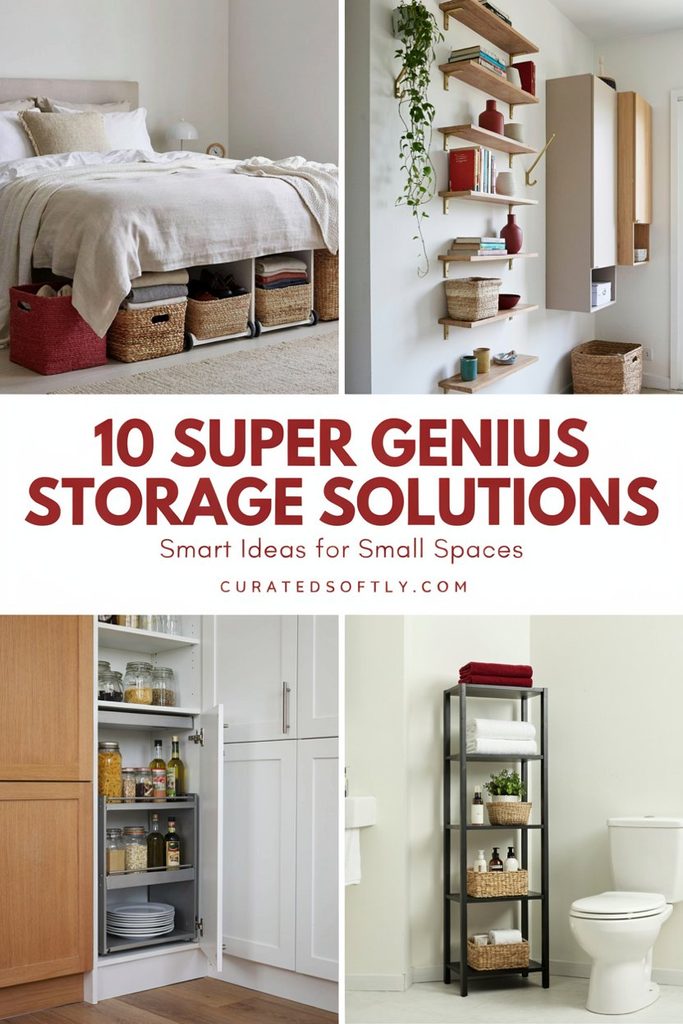
This list pulls from every room in the house on purpose. A bathroom door, a closet, an under-sink cabinet, a kitchen wall, they all have the same underlying problem, and most of the fixes below apply to more than one room even though I’ve grouped them by where they work best.
For each idea, I’m including what you’d actually need to pull it off and how to keep it looking intentional rather than like an organizing bin exploded.
If you want deeper, room-specific storage strategies beyond this whole-home overview, my guest bathroom ideas, laundry room decor ideas, and toy organization ideas each go much further into their specific spaces than this general list has room for.
Before You Start: How to Find Hidden Storage in Any Room
Most people scan a room for empty floor space and stop there. The real opportunities are almost always somewhere else.
Look at vertical space first, not floor space. Floor space in a small home is nearly always accounted for already. Wall space above furniture, the back of doors, and the top few feet of a closet are the areas most homes leave genuinely empty.
Measure before you buy anything. A storage solution that’s a half-inch too deep for a cabinet, or too tall for a shelf gap, becomes clutter itself. I’ve bought organizers that looked perfect online and simply didn’t fit the actual space once I got them home.
Match the storage type to how often you use the item. Daily-use items need to be visible and easy to grab. Occasional-use items can go higher, deeper, or further out of reach. Mixing these up is the most common reason a storage system stops getting used within a few weeks.
Don’t organize before you declutter. A beautifully organized system full of things you don’t actually need is still clutter, just prettier clutter. Every idea below works better once you’ve actually thinned out what’s going into it.
With that groundwork in place, here are 10 storage solutions worth trying, organized by where they work best.
1. An Over-the-Door Hanging Organizer
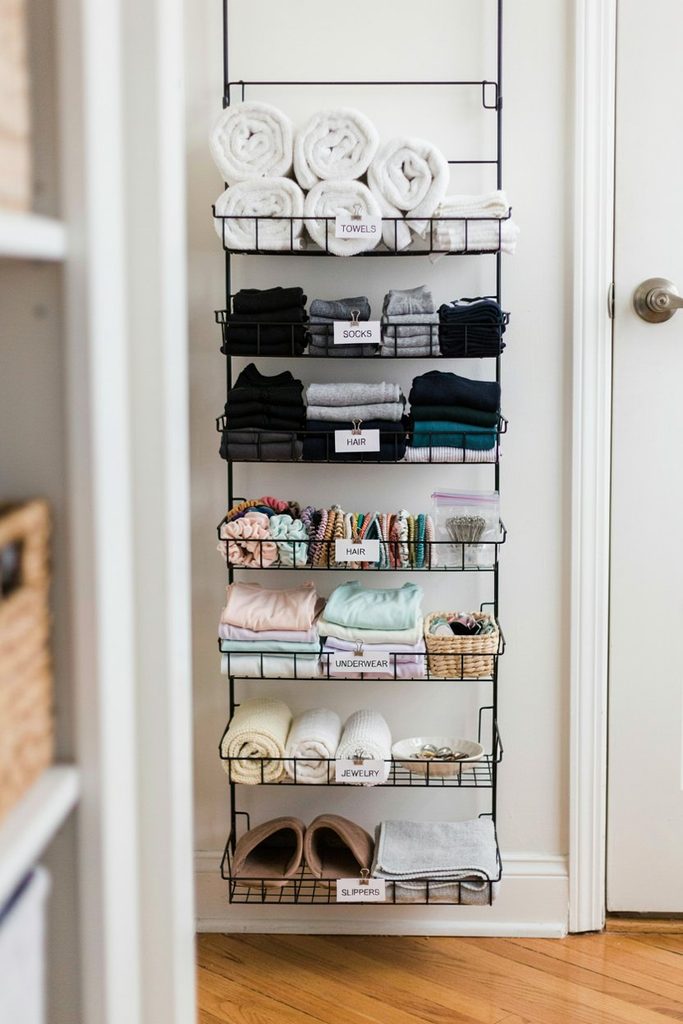
A multi-tiered wire or fabric organizer hung over the back of a bathroom or closet door turns genuinely wasted space into real storage, without a single screw or drilled hole.
What You’ll Need:
- An over-the-door organizer sized to your door’s actual thickness
- Command hooks as a no-damage alternative if the organizer doesn’t have its own door-hook hardware
- Small labels or bins if the organizer has open shelves rather than defined compartments
How to Use It Well:
- Assign each tier a category, toiletries, cleaning supplies, shoes, rather than letting items land wherever there’s room
- Put heavier items on lower tiers so the organizer doesn’t pull unevenly on the door
- Do a monthly check, over-the-door organizers are especially easy to overfill since they’re out of the way
2. Closet Rod Risers and Double-Hang Bars
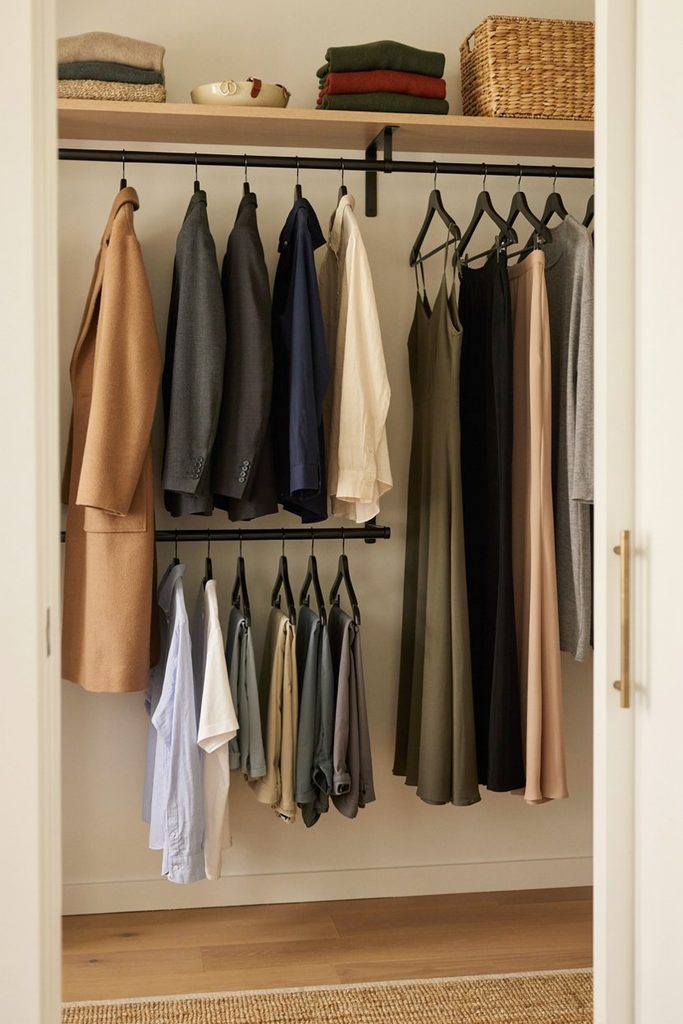
Adding a second hanging rod below your existing one, or a small tension riser that splits one section into two levels, roughly doubles your hanging storage in the exact same closet footprint.
What You’ll Need:
- A double-hang closet rod kit, or a tension-mounted riser bar if you don’t want to modify the existing rod
- A short step stool, since the upper rod will sit higher than a standard closet rod
How to Use It Well:
- Put shorter items, shirts, folded pants, skirts, on the double-hung section, and reserve full-length hanging for dresses and long coats on a single rod elsewhere
- Group by category on each level rather than mixing types, it keeps the closet genuinely functional, not just fuller
3. Under-Sink Pull-Out Drawers or Tiered Organizers
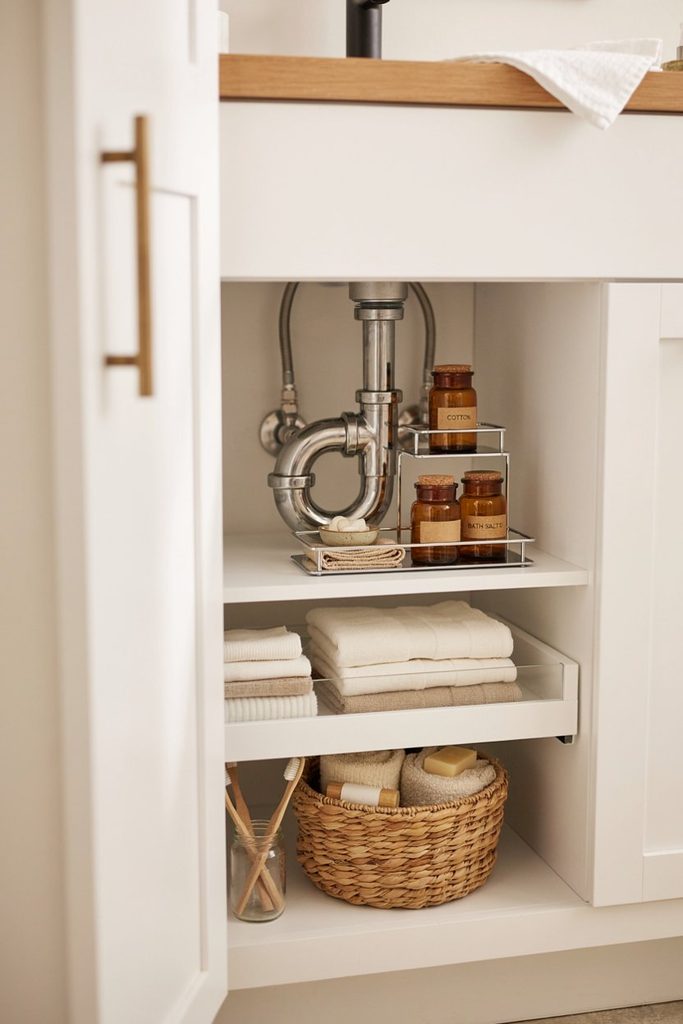
The cabinet under a bathroom or kitchen sink is almost always deeper than it looks useful, since the plumbing eats into the middle of the space.
Pull-out drawers or tiered risers work around the pipe instead of wasting the space behind it.
What You’ll Need:
- A pull-out drawer organizer or a tiered under-sink riser, measured against your specific pipe layout before buying
- Small bins or trays to subdivide the organizer further
- A turntable insert for anything round, bottles, sprays, that would otherwise get lost toward the back
How to Use It Well:
- Keep the items you reach for daily toward the front, and anything used only occasionally toward the back or higher tiers
- A turntable is worth the small investment here, digging through a static shelf under a sink is one of the most common small-storage frustrations
4. A Wall-Mounted Pegboard
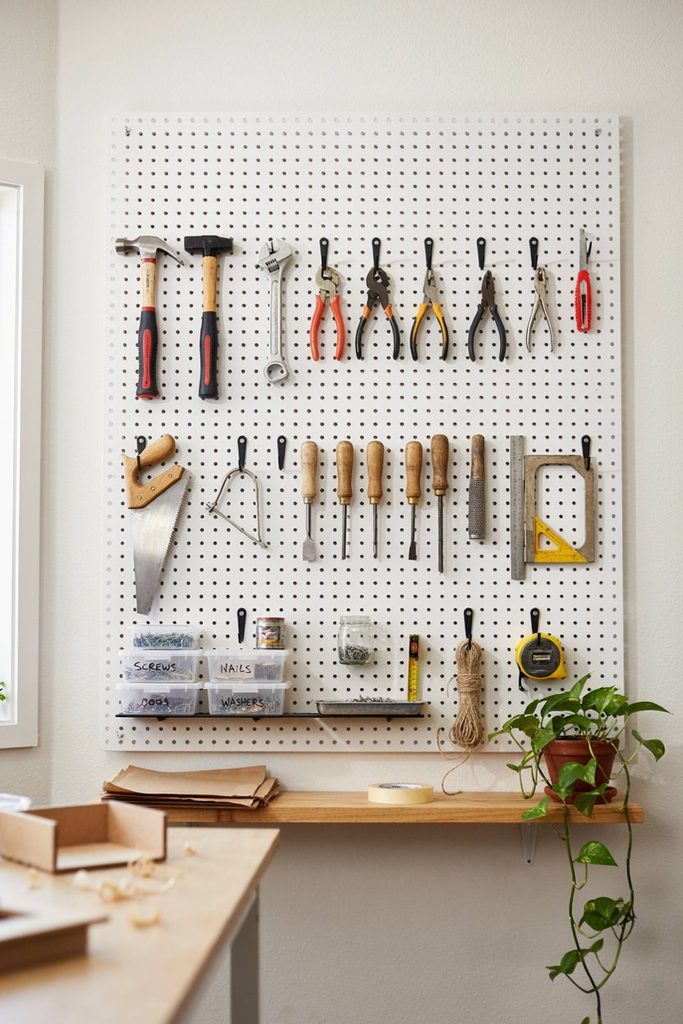
A pegboard mounted in a kitchen, craft space, or garage turns a flat, unused wall into fully customizable storage that can be rearranged as your needs change, unlike built-in shelving.
What You’ll Need:
- A pegboard panel sized to your available wall space
- Pegboard hooks, small shelves, and bins in a mix of sizes
- Wall anchors or a mounting frame appropriate for the pegboard’s weight once loaded
How to Use It Well:
- Trace an outline around each tool or item on the board itself, it keeps everything returning to the same spot and makes it obvious when something’s missing
- Leave a small amount of open pegboard space for future additions rather than filling every hole immediately
5. Stackable, Labeled Bins for Deep Cabinets
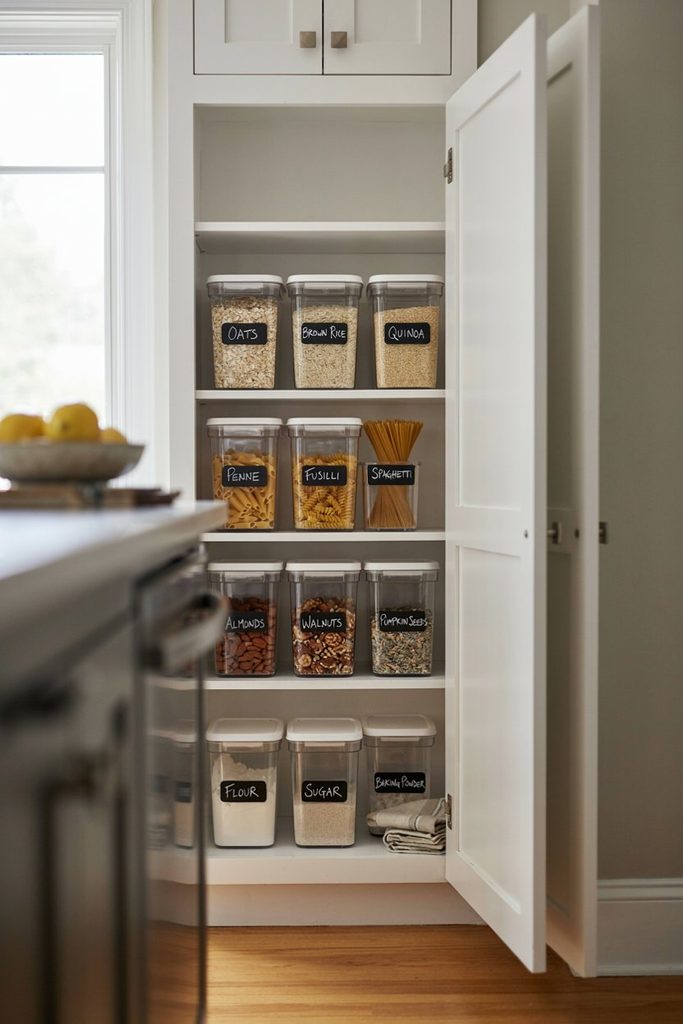
Deep cabinets, whether in a kitchen, pantry, or linen closet, tend to become a graveyard for whatever gets pushed to the back. Uniform, labeled, stackable bins fix this by making the whole cabinet legible at a glance.
What You’ll Need:
- Stackable bins in a consistent size and material, measured against your actual cabinet depth
- A label maker or a simple written tag system
How to Use It Well:
- Choose bins you can see into, either clear or open-top, for anything you need to identify quickly
- Pull the bin out to grab what’s inside rather than digging into it while it’s still on the shelf, this alone dramatically extends how long a system like this stays organized
6. A Slim Rolling Cart for Narrow Gaps
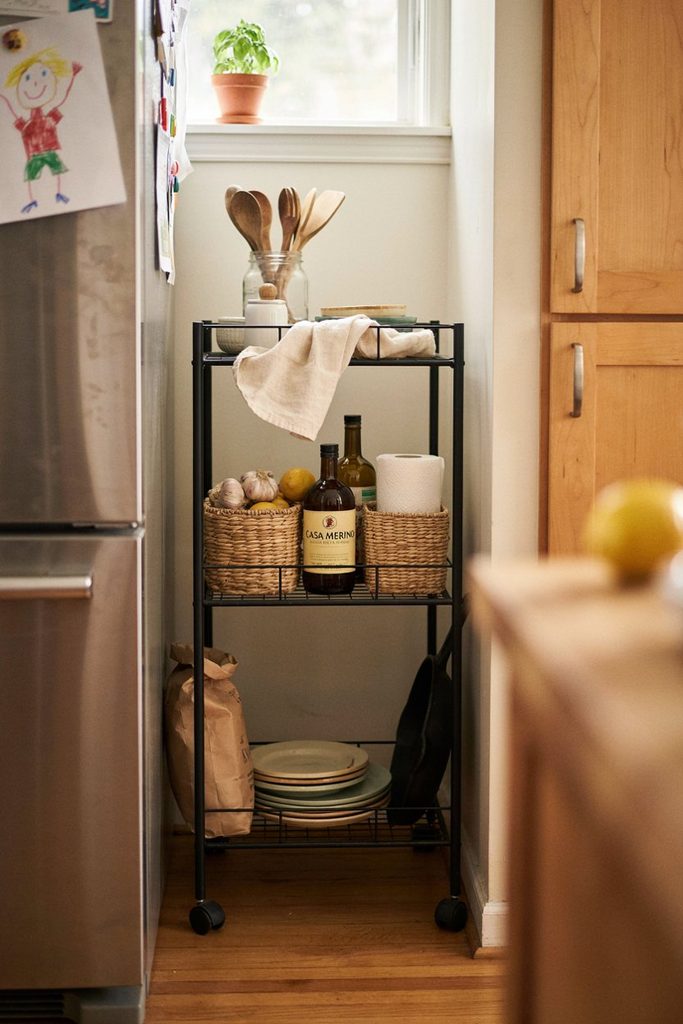
The narrow gap beside a refrigerator, a toilet, or a piece of furniture is usually written off as unusable, but a slim rolling cart is often built specifically to fit spaces like this.
What You’ll Need:
- A rolling cart measured carefully against the narrow gap’s exact width, with a little clearance to spare
- Small bins or baskets sized to the cart’s shelves
How to Use It Well:
- Use it for items you want mobile, cleaning supplies you’d bring room to room, craft supplies you’d wheel to a table, rather than static storage
- Keep the top tier for whatever you reach for most, it’s the easiest to access without bending
7. Vertical Wall-Mounted Shoe or Accessory Racks
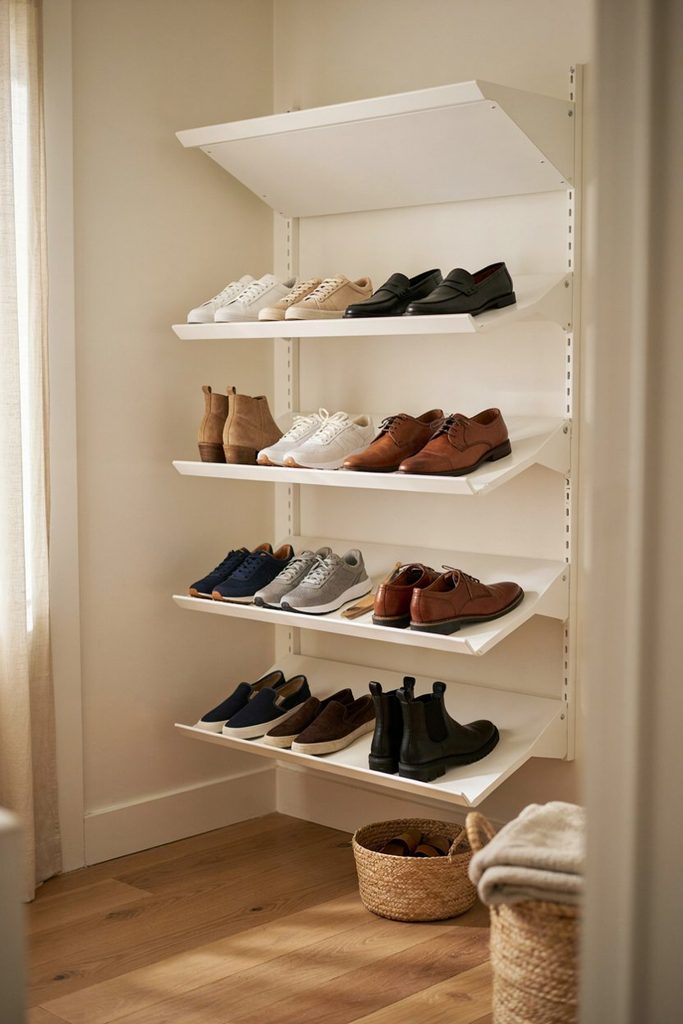
Floor-based shoe storage eats real square footage in a small closet or entryway. A wall-mounted rack claims vertical space instead, freeing up the floor entirely.
What You’ll Need:
- A wall-mounted shoe rack or a series of angled shelves
- Wall anchors rated for the combined weight of a full rack of shoes
How to Use It Well:
- Mount the rack at a height that keeps daily shoes reachable without a step stool, and reserve any higher shelving for occasional-use pairs
- Angle the shelves slightly if your rack allows it, angled storage displays shoes more clearly than flat shelving does
8. A Hanging Fabric Closet Organizer
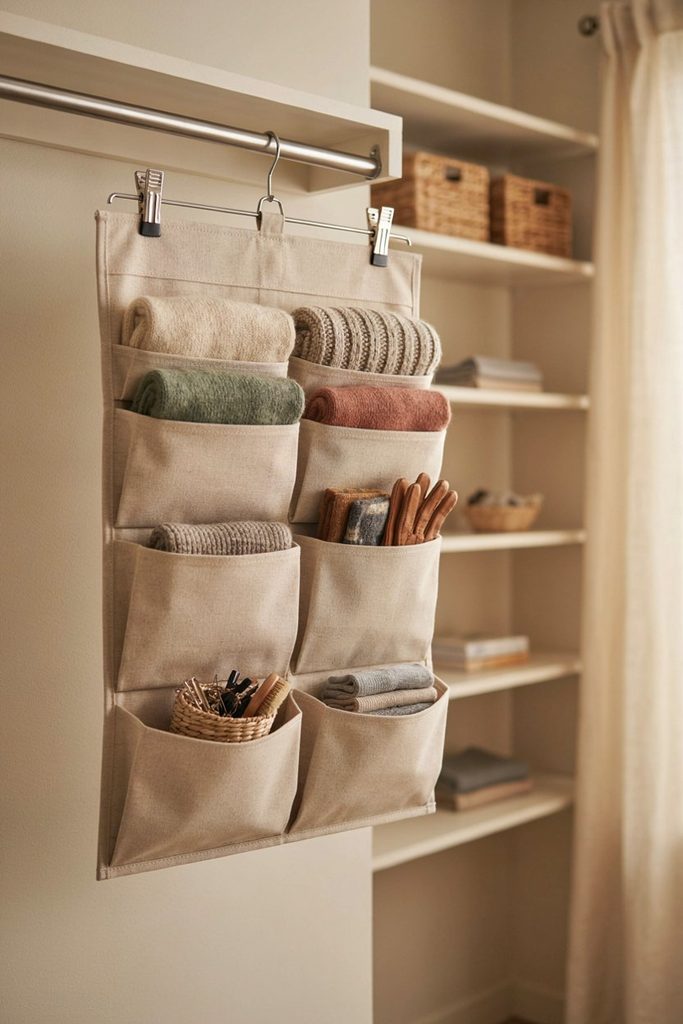
A hanging, multi-shelf fabric organizer, clipped over a closet rod, adds several shelves of soft storage in the exact footprint one hanger would normally take up.
What You’ll Need:
- A hanging fabric organizer sized to your closet’s hanging space
- Small fabric bins if the organizer’s shelves are open rather than divided
How to Use It Well:
- Use it for folded items, sweaters, workout clothes, accessories, rather than anything that needs to stay wrinkle-free
- Keep one hanging organizer per closet rather than several, more than one starts to compete with actual hanging space
9. Magnetic Strips for Metal Items
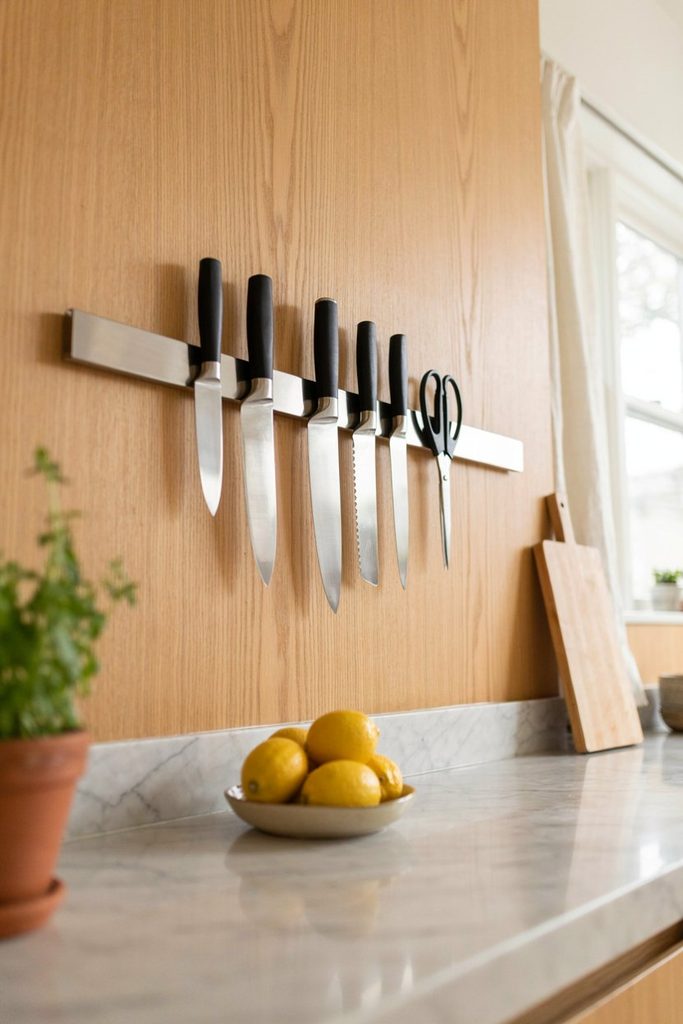
A magnetic strip mounted inside a cabinet door or on a kitchen wall holds knives, scissors, bobby pins, or small metal tools without needing a drawer or a container at all.
What You’ll Need:
- A magnetic knife strip or a smaller magnetic bar, depending on what you’re storing
- Wall anchors or adhesive mounting strips, depending on your wall type
How to Use It Well:
- Mount it somewhere genuinely out of a high-traffic path if you’re storing anything sharp
- Group similar items together on the strip, all the kitchen shears in one spot, all the bobby pins in another, rather than mixing categories
10. A Tiered Turntable for Cabinets and Pantries
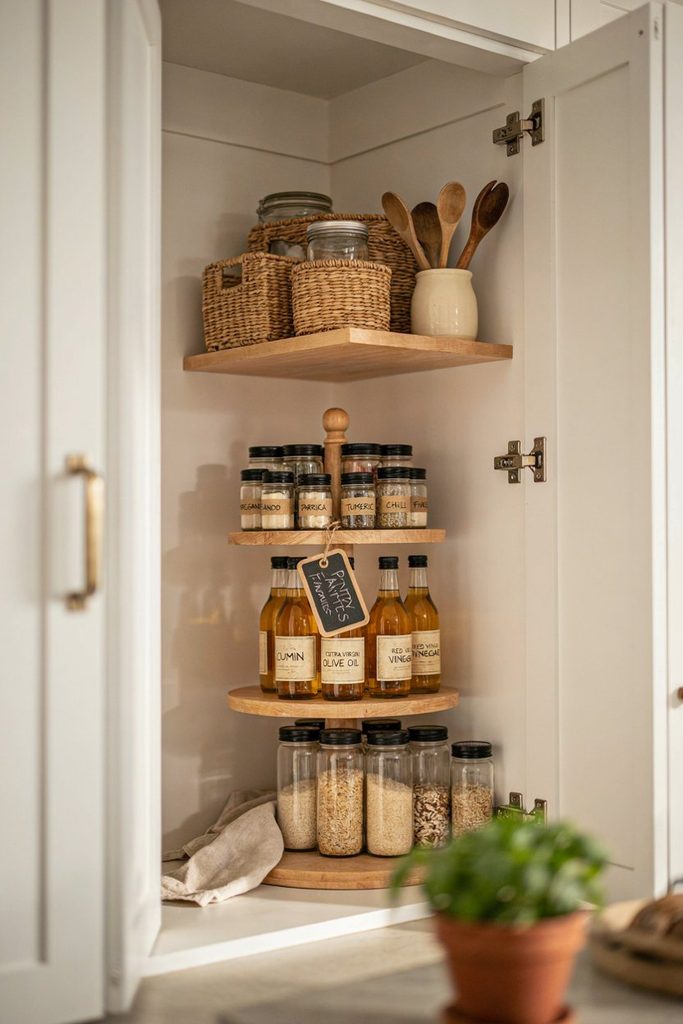
A simple turntable, sometimes called a lazy Susan, solves one of the most common small-storage complaints, digging through the back of a deep cabinet or corner pantry shelf to find one specific item.
What You’ll Need:
- A turntable sized to fit your specific shelf depth
- A tiered version if you want to double the storage on a single shelf level
How to Use It Well:
- Group by category on each turntable, oils on one, spices on another, so a single spin actually gets you to what you need
- Reserve turntables for the shelves you access most often, they’re less useful for genuinely rare, occasional items
How to Decide Which Ideas Are Worth It for Your Home
Not every idea on this list fits every space, and the honest answer to “which should I try first” depends on a few things.
Start with your most frustrating spot, not the easiest one. The cabinet you avoid opening, the closet you can never find anything in, that’s where a new system will actually get used and appreciated, rather than applied somewhere that wasn’t really a problem to begin with.
Rent-friendly first, if that applies to you. Over-the-door organizers, rolling carts, and magnetic strips with adhesive mounts require no permanent changes, which matters if you’re not planning to stay in a space long-term.
Budget for the spaces you use daily. A kitchen or closet you interact with every day is worth spending a bit more on for quality, durable storage. A rarely used cabinet can get by with a more basic solution.
Final Thoughts
None of these ideas require a renovation or a big budget, just an honest look at the space you actually have and a system that matches how you really use it.
Pick the one spot in your home that frustrates you most, start there, and let the rest of the list wait until you actually need it.



3 Comments