How To Start A Plant Flipping Side Hustle (Even If You’re Starting With One Plant)
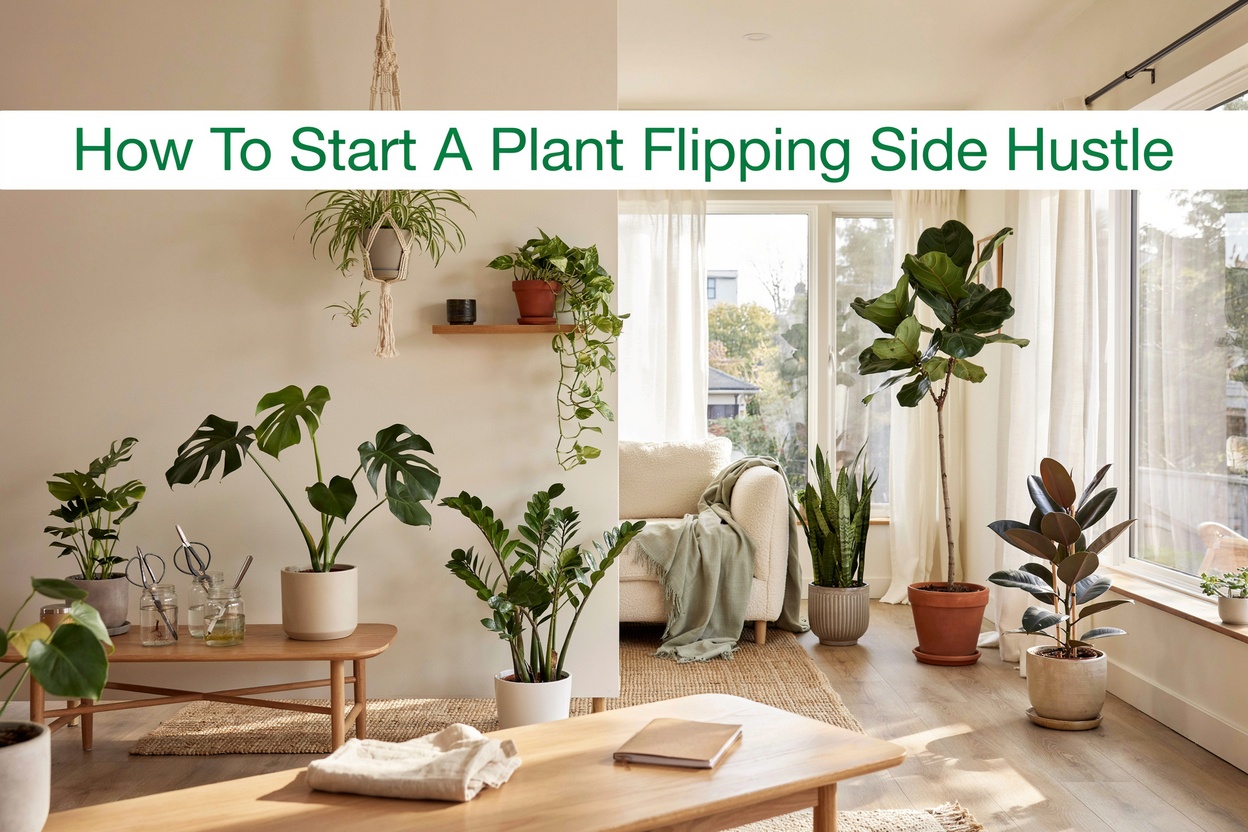
The first plant I ever sold wasn’t rare, expensive, or even particularly trendy. It was a simple pothos cutting that had grown so well I ended up with more vines than I knew what to do with.
I listed a few rooted cuttings online, expecting nothing to happen, and by the next day someone was on their way to pick them up.
That was when I realized something surprising: people are constantly looking for healthy, affordable houseplants, and many are happy to buy them from local sellers instead of big box stores.
Plant flipping has quietly become one of the easiest side hustles to start because you don’t need a storefront, expensive equipment, or a huge investment.
With a little patience, a few thriving plants, and some basic plant care knowledge, you can turn inexpensive nursery finds, clearance plants, or even simple propagations into a profitable little business.
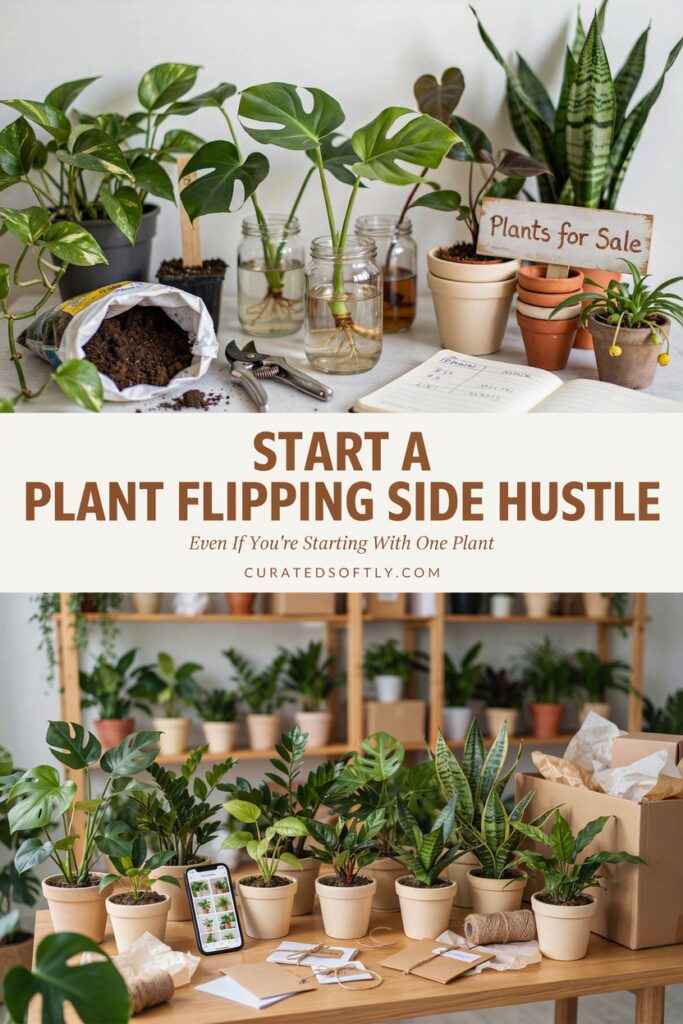
Whether your goal is to make an extra $100 a month or eventually build a full-time plant business, this guide walks you through exactly how to get started, which plants actually sell, how to grow your inventory, and the mistakes I wish more beginners avoided.
Not sure your space gets enough natural light for propagating and growing out stock? My post on the best indoor plants for dark rooms is a good starting point either way.
Why Plant Flipping Has Become So Popular
Plant flipping sits somewhere between gardening and reselling, which makes it one of my favorite side hustles because you’re actually creating value instead of simply buying low and selling high.
A neglected clearance plant can often be revived with fresh soil, proper watering, and a few weeks of good care. A single healthy pothos can become six or seven rooted plants through propagation.
Even common houseplants become much more valuable once they’re healthy, established, and beautifully presented.
Unlike many side hustles, your inventory can literally grow itself.
Some people begin with just one Monstera or one Pothos and, after several months of propagation, have dozens of plants ready to sell.
Another reason I love this business is that startup costs stay incredibly low. You don’t need expensive machinery or specialized tools. Many successful sellers started with less than the cost of dinner out.
If you’re completely new to indoor plants, it’s worth learning how to care for them properly before buying large amounts to resell. Healthy plants always sell faster than neglected ones, and understanding lighting, watering, and propagation gives you a huge advantage over other local sellers.
Is Plant Flipping Actually Profitable?
Yes, but not because every plant is rare.
The biggest misconception is that you need expensive variegated Monsteras worth hundreds of dollars.
You don’t.
Most successful local plant flippers make consistent money selling healthy, easy-care plants that beginners actually want.
For example:
- A $6 Pothos can produce dozens of cuttings over time.
- A $12 Monstera can become multiple propagated plants.
- Snake Plants naturally produce pups that can be divided and sold.
- Spider Plants continuously grow baby plantlets that root easily.
Over time, your original investment keeps multiplying without constantly buying new inventory.
The profit margins become even better once you’re propagating plants you’ve already grown yourself.
What You’ll Need Before You Start
The nice thing about this business is how little equipment you actually need.
Here’s what I recommend having before buying your first resale plants:
- Healthy starter plants
- Good-quality indoor potting mix
- Nursery pots in several sizes
- Decorative planters for staging photos
- Sharp pruning shears
- Rooting jars for propagation
- Watering can
- Plant labels
- Liquid houseplant fertilizer
- Bright window or inexpensive grow light
If you plan on propagating frequently, investing in a few glass propagation stations also makes your listings look much more professional.
As your collection grows, staying organized becomes increasingly important, especially when you’re caring for dozens of plants at once.
Choose Plants That Actually Sell
One of the biggest mistakes beginners make is buying unusual plants simply because they personally like them.
Instead, focus on plants that people are actively searching for.
These consistently perform well:
Pothos
Pothos might be the best beginner flipping plant.
It grows quickly, propagates easily in water, tolerates neglect, and appeals to first-time plant owners.
One mature mother plant can produce dozens of saleable cuttings every year.
Monstera Deliciosa
Monsteras continue to be one of the most recognizable houseplants online.
Even smaller, juvenile plants sell consistently because buyers know they’ll eventually develop the iconic split leaves.
Buying one healthy plant and propagating it over time can dramatically increase your inventory.
Snake Plant
Snake Plants are incredibly forgiving and produce pups that divide easily.
Because they’re known for being almost impossible to kill, they’re always popular with beginners furnishing apartments and offices.
They also photograph beautifully, which helps listings stand out.
Where to Find Cheap Plants to Flip
One of the biggest mistakes beginners make is paying full retail prices for every plant. If you’re buying a pothos for $25 and hoping to sell it for $30, there isn’t much profit left after your pot, soil, and time.
The real money comes from buying low or propagating plants you already own.
These are the places I check first.
Facebook Marketplace
This is honestly my favorite place to source plants.
People move, downsize, or simply lose interest in houseplants all the time. I’ve seen mature Monsteras listed for less than the price of a tiny nursery plant simply because someone wanted them gone quickly.
Look for listings that mention:
- Moving sale
- Plant bundle
- Must sell today
- Downsizing
- Pickup only
Bundles are where you usually find the best deals because sellers often price everything together instead of individually.
Local Plant Swaps
Many cities have monthly plant swaps where growers exchange cuttings instead of buying them.
You can start with just a few pothos cuttings and gradually trade your way up to much more valuable plants.
Besides saving money, you’ll meet experienced growers who are often happy to share propagation tips.
Garage Sales and Estate Sales
This one surprises a lot of people.
Many people don’t think of houseplants as valuable, especially older homeowners.
I’ve purchased healthy snake plants, ZZ plants, and peace lilies for just a few dollars at estate sales.
Often the decorative pot alone is worth more than the asking price.
Clearance Sections at Garden Centers
Every nursery has plants that aren’t selling well.
Maybe they’re slightly dry.
Maybe a few leaves are damaged.
Maybe they’re simply out of season.
Those discounted plants can often be restored within a few weeks with proper watering, fresh soil, and better lighting.
A $5 clearance plant can easily become a $30 listing.
Friends and Family
Don’t overlook the people you already know.
Once friends hear you’re growing plants, many will happily give you cuttings they were planning to trim anyway.
Some of my favorite propagations actually came from family members who were throwing away overgrown vines.
The Best Plants to Flip for Beginners
Not every houseplant is worth selling.
Some grow too slowly.
Some are difficult to propagate.
Others simply don’t have much demand.
These are the beginner-friendly plants I’d focus on first because they’re easy to grow, easy to propagate, and consistently popular.
1. Pothos
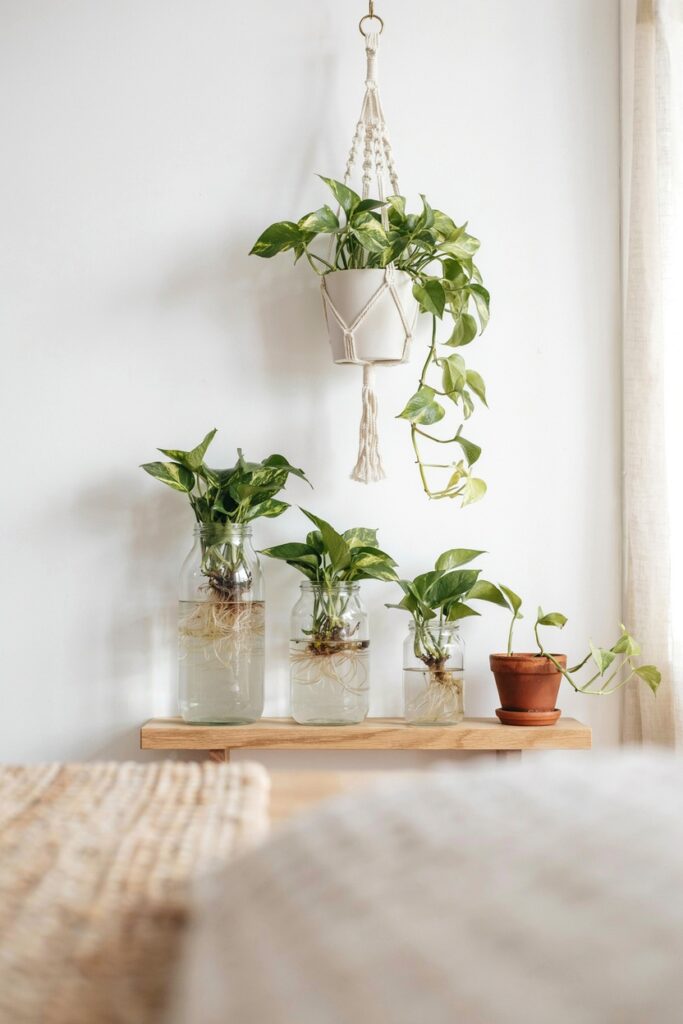
If I were starting a plant flipping side hustle from scratch today, Pothos would be the very first plant I’d buy.
It’s affordable, incredibly forgiving, grows quickly, and can produce dozens of new plants from a single healthy mother plant.
Even better, it’s one of those houseplants that almost everyone recognizes, making it much easier to sell than more unusual or difficult varieties.
One of the biggest lessons I learned is that you don’t need hundreds of plants to start making money.
One thriving Pothos can become five plants, then ten, then twenty over time. Instead of constantly buying new inventory, you’re growing your own, which is exactly why it’s such a great choice for beginners.
Why It Sells So Well
Pothos has remained one of the most popular indoor plants for years because it fits almost every home and lifestyle. It thrives in apartments, offices, dorm rooms, and family homes, making it appealing to a wide range of buyers.
People also love that it’s incredibly low maintenance. Even someone who has killed a few houseplants in the past is usually willing to give a Pothos a try because of its reputation for being hard to kill.
Popular varieties include:
- Golden Pothos
- Marble Queen Pothos
- Neon Pothos
- Jade Pothos
- Pearls and Jade Pothos
- Cebu Blue Pothos
Offering a few different varieties gives buyers more choice and often encourages them to purchase multiple plants at once.
How to Propagate Pothos
One of the reasons Pothos is so profitable is how simple it is to propagate.
Start by selecting a healthy vine with several leaves. Using clean, sharp pruning shears, cut just below a node. The node is the small bump on the stem where leaves and roots naturally grow. Every cutting should have at least one node and one or two healthy leaves.
Remove the lowest leaf so the node is exposed, then place the cutting into a glass jar filled with clean water, making sure the node stays submerged while the leaves remain above the water.
Place the jar in bright, indirect light and replace the water every three to four days. Within one to three weeks, you’ll usually see small white roots begin to appear.
Once the roots are about two inches long, transplant the cutting into a small nursery pot filled with well-draining indoor potting mix. Water lightly after planting and keep the soil slightly moist during the first week while the roots adjust.
Care Tips
Pothos doesn’t need perfect conditions to thrive, but a few simple habits will help it grow faster and produce more cuttings.
Keep it somewhere with bright, indirect light for the fastest growth. Although it tolerates lower light, brighter conditions encourage longer vines and larger leaves.
Water only when the top inch or two of soil feels dry. Overwatering is far more common than underwatering and can quickly lead to root rot.
During spring and summer, feed the plant with a balanced liquid fertilizer once a month to encourage vigorous growth. As the vines become longer, trim them regularly. Every trimming gives you more propagation material and more future plants to sell.
Profit Potential
Pothos may not be the most expensive houseplant, but it makes up for that with volume.
Typical selling prices are:
- Fresh cutting: $5 to $10
- Rooted cutting: $10 to $20
- Small potted plant: $20 to $35
- Large hanging basket: $40 to $70
Because one mature plant can provide dozens of cuttings throughout the year, your cost per new plant becomes incredibly low. It’s one of the easiest ways to build inventory without continually spending money on new stock.
Pro Tip
Don’t rush to sell freshly rooted cuttings. I’ve found that buyers are much happier paying more for a plant that’s already established in soil and actively producing new growth.
Waiting an extra few weeks before listing your plants can often increase both their value and your customers’ confidence, leading to happier buyers and better reviews.
2. Monstera Deliciosa
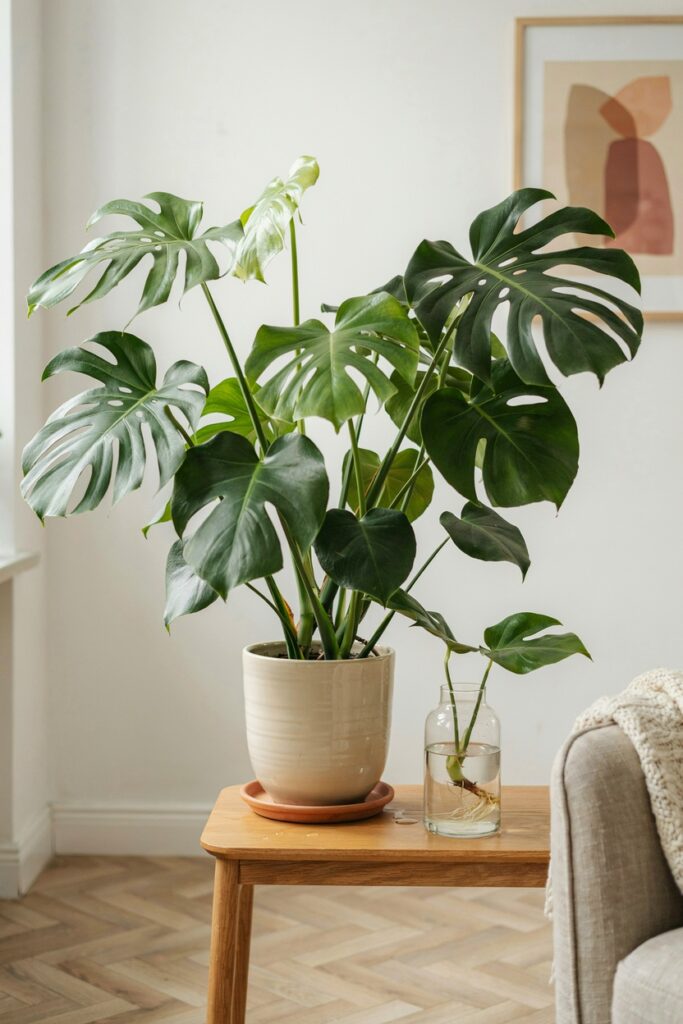
If there is one plant that consistently earns its place in the plant flipping world, it is Monstera deliciosa.
Even though it has been popular for years, demand has remained incredibly strong because it has become one of the most recognizable indoor plants.
Those large split leaves instantly make a room feel modern and expensive, which is exactly why buyers are willing to pay good money for healthy plants.
The best part is that you do not have to keep buying new Monsteras to sell. One healthy mother plant can produce cuttings for years, making it one of the best long-term investments for a plant flipping business.
Why It Sells
Monstera deliciosa appeals to a huge range of buyers. Interior designers love it because it creates a statement in living rooms and offices.
First-time plant owners appreciate that it is fairly forgiving, while experienced collectors often look for larger, more mature specimens with beautiful fenestrated leaves.
Unlike trendy plants that disappear after a season, Monsteras have stayed popular year after year, making them one of the safest plants to grow for profit.
How to Propagate
Choose a healthy stem with at least one leaf and one visible node. If the stem already has an aerial root, even better.
Using clean, sharp pruning shears, cut just below the node. Place the cutting into a jar of clean water, making sure the node stays submerged while the leaf remains above the waterline.
Keep the jar somewhere with bright, indirect sunlight and replace the water every few days. Within three to six weeks, healthy white roots should begin to develop.
Once the roots are around two to three inches long, transplant the cutting into a chunky, well-draining houseplant mix. Water lightly after planting and keep it in bright indirect light while it establishes itself.
Care Tips
Monsteras prefer bright indirect light and dislike sitting in soggy soil. Allow the top couple of inches of soil to dry before watering again. During spring and summer, feeding with a balanced liquid fertilizer every month encourages faster growth and larger leaves.
Cleaning the leaves regularly also makes a noticeable difference. Dust can block sunlight, slowing growth, while shiny, healthy foliage photographs much better when it is time to create your listing.
Profit Potential
A rooted Monstera cutting can often sell for $25 to $50, while larger established plants commonly sell for $75 to well over $200, depending on size and maturity.
Instead of selling your mother plant, continue taking cuttings as it grows. Over time, one healthy Monstera can generate dozens of new plants, making it one of the highest-return plants you can own for a flipping business.
If a Monstera is already part of your collection, my guide on how to grow a bigger Monstera fast covers exactly the kind of care that makes a plant sellable sooner.
3. Snake Plant
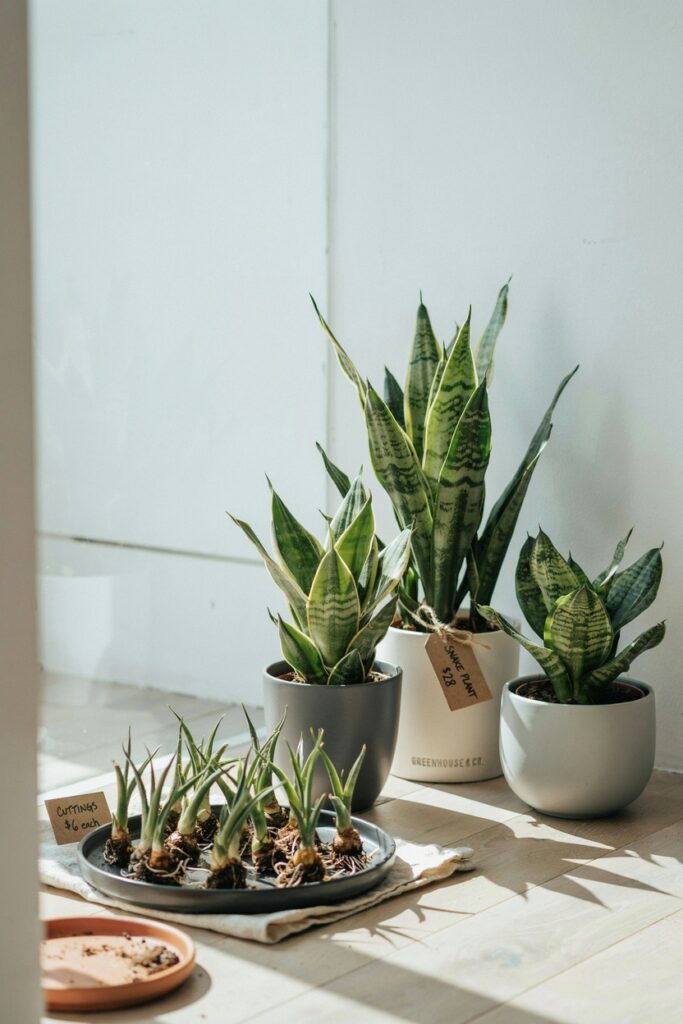
Snake Plants are one of the easiest houseplants to flip because they’re practically foolproof.
They’re known for tolerating neglect, low light, and inconsistent watering, which makes them incredibly appealing to beginners.
Buyers are often looking for plants that are attractive but don’t require constant attention, and Snake Plants fit that description perfectly.
Another reason I love flipping Snake Plants is that mature plants naturally produce pups, which means your inventory can continue growing without much effort. Instead of taking stem cuttings, you’ll simply divide the offsets and pot them separately.
Why It Sells
Snake Plants remain one of the best-selling houseplants year after year because they complement almost every decorating style. Whether someone has a modern apartment, a farmhouse-inspired home, or a minimalist office, a Snake Plant fits right in.
They’re also commonly recommended as one of the easiest plants for beginners, making them a safe purchase for first-time plant owners.
How to Propagate
The fastest method is by division.
Remove the plant from its pot and gently separate the baby plants (called pups) that have developed around the base. Each pup should already have its own small root system attached.
Plant each division into its own nursery pot filled with a well-draining succulent or cactus mix. Water lightly after repotting, then wait until the soil dries before watering again.
Snake Plants can also be propagated from leaf cuttings, but division is much faster and produces a mature-looking plant immediately.
Care Tips
Snake Plants prefer bright indirect light but tolerate lower light surprisingly well.
Allow the soil to dry completely between waterings, as overwatering is the quickest way to damage the roots.
Use a pot with drainage holes, and avoid letting the plant sit in standing water.
Profit Potential
Typical selling prices include:
- Small division: $15 to $30
- Medium plant: $35 to $60
- Large mature plant: $70 to $150+
One mature Snake Plant can continue producing pups for years, making it an excellent long-term investment.
4. Spider Plant
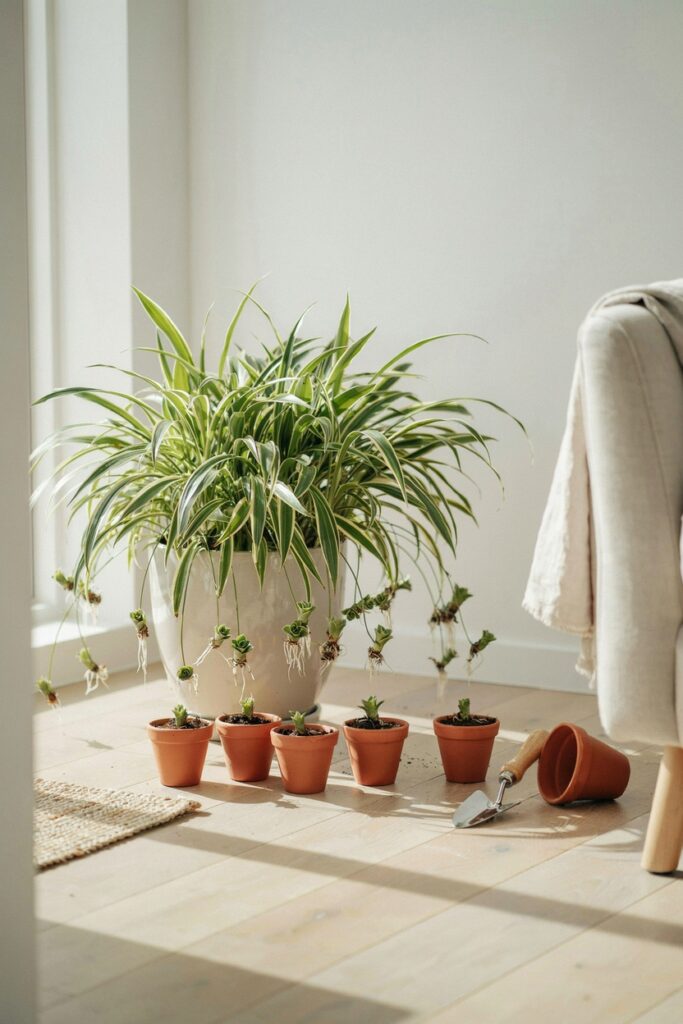
Spider Plants are one of the few houseplants that practically produce free inventory on their own.
Once mature, they send out long stems covered in baby plants called spiderettes, each one capable of becoming a brand-new plant.
Because they grow so quickly, they’re perfect for anyone looking to build inventory without constantly purchasing more plants.
Why It Sells
Spider Plants appeal to buyers because they’re affordable, easy to care for, and instantly brighten shelves, desks, and hanging baskets.
Families, college students, and first-time plant owners often choose Spider Plants because they’re one of the easiest houseplants to keep alive.
How to Propagate
Wait until the baby spiderettes have started developing tiny roots.
You can either root them while they’re still attached to the mother plant or snip them off and place them directly into water or moist potting soil.
Roots usually establish within a couple of weeks.
Once rooted, pot them individually into small nursery pots.
Care Tips
Spider Plants grow best in bright indirect light but adapt well to average indoor conditions.
Water whenever the top inch of soil becomes dry.
Trim brown leaf tips before listing your plants for sale, as clean foliage always photographs better.
Profit Potential
Typical selling prices are:
- Baby plant: $5 to $15
- Medium plant: $20 to $35
- Large hanging basket: $40 to $75
Since one mature plant can produce dozens of babies every year, Spider Plants are one of the easiest ways to generate repeat inventory.
5. Philodendron Brasil
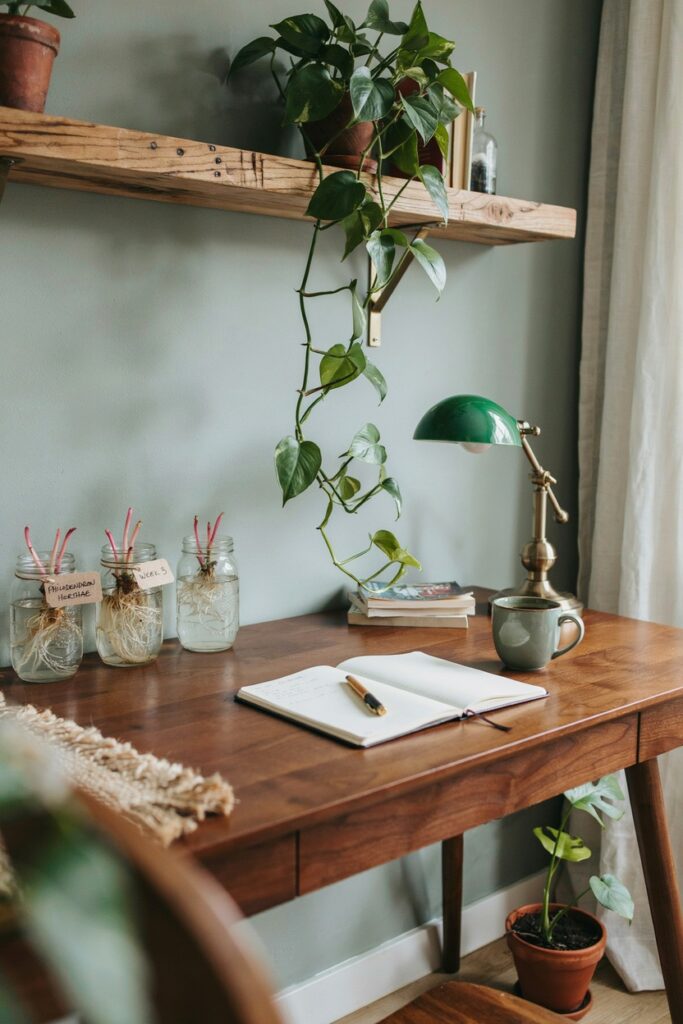
Philodendron Brasil has become increasingly popular thanks to its beautiful green and lime-colored variegated leaves. It grows quickly, trails beautifully from shelves, and is incredibly easy to propagate, making it an excellent choice for plant flippers.
Why It Sells
People love Philodendron Brasil because it offers the beauty of a rare-looking plant without the high price tag.
Its colorful foliage photographs beautifully, which helps listings stand out online.
How to Propagate
Cut healthy vines just below a node using sterilized pruning shears.
Place the cuttings into clean water until healthy roots develop.
After the roots reach about two inches long, transplant into well-draining indoor potting soil.
Care Tips
Provide bright indirect sunlight for the strongest variegation.
Allow the top inch of soil to dry before watering.
Regular pruning encourages fuller vines and gives you even more propagation material.
Profit Potential
Typical selling prices include:
- Rooted cutting: $10 to $20
- Small plant: $20 to $35
- Full hanging basket: $40 to $80
6. ZZ Plant
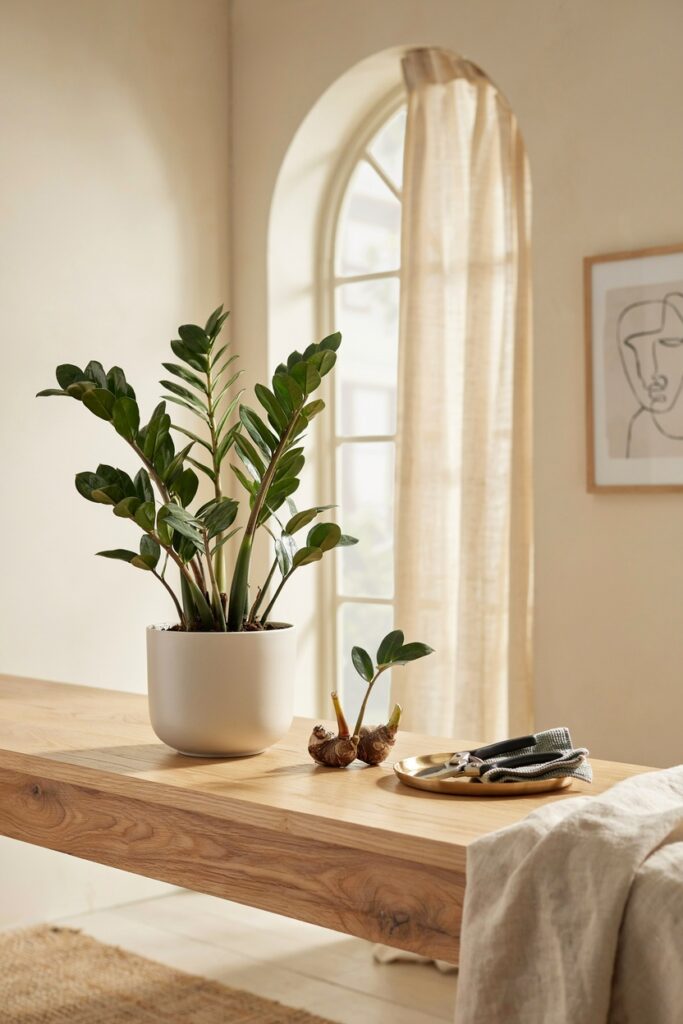
The ZZ Plant is another favorite among beginner plant owners because it’s nearly impossible to kill. It tolerates drought, low light, and neglect better than almost any other common houseplant.
Although it grows more slowly than Pothos, its higher selling price often makes it equally profitable.
Why It Sells
ZZ Plants have thick, glossy leaves that give them an elegant appearance, making them popular for offices and modern homes.
Many buyers specifically search for low-maintenance plants, and the ZZ Plant almost always appears on that list.
How to Propagate
The fastest method is dividing mature plants.
Carefully remove the plant from its container and separate the underground rhizomes into individual sections.
Each section should have healthy roots and several stems attached.
Repot immediately into fresh, well-draining potting mix.
Care Tips
Water only after the soil has dried completely.
Bright indirect light encourages faster growth, although ZZ Plants tolerate much lower light levels than most houseplants.
Avoid frequent watering, since the thick underground rhizomes store plenty of moisture.
Profit Potential
Typical prices include:
- Small division: $20 to $40
- Medium plant: $50 to $80
- Large mature specimen: $90 to $180
7. Chinese Money Plant (Pilea Peperomioides)
Chinese Money Plants have become incredibly popular thanks to their perfectly round leaves and compact growth habit. They’re also one of the easiest plants to multiply because mature plants regularly produce baby offsets around the base.
Why It Sells
Their unique appearance makes them stand out immediately, and they’re often purchased as gifts.
Collectors also enjoy growing several together because of their neat, symmetrical shape.
How to Propagate
Allow the baby offsets to reach two to three inches tall before gently separating them from the mother plant with a clean knife.
Plant each pup into its own small nursery pot filled with well-draining soil.
Keep the soil lightly moist until new growth appears.
Care Tips
Bright indirect light helps maintain compact growth.
Rotate the pot every week so the plant grows evenly instead of leaning toward the light.
Profit Potential
Typical prices include:
- Baby plant: $10 to $20
- Medium plant: $25 to $40
- Mature specimen: $50 to $80
8. Tradescantia Zebrina
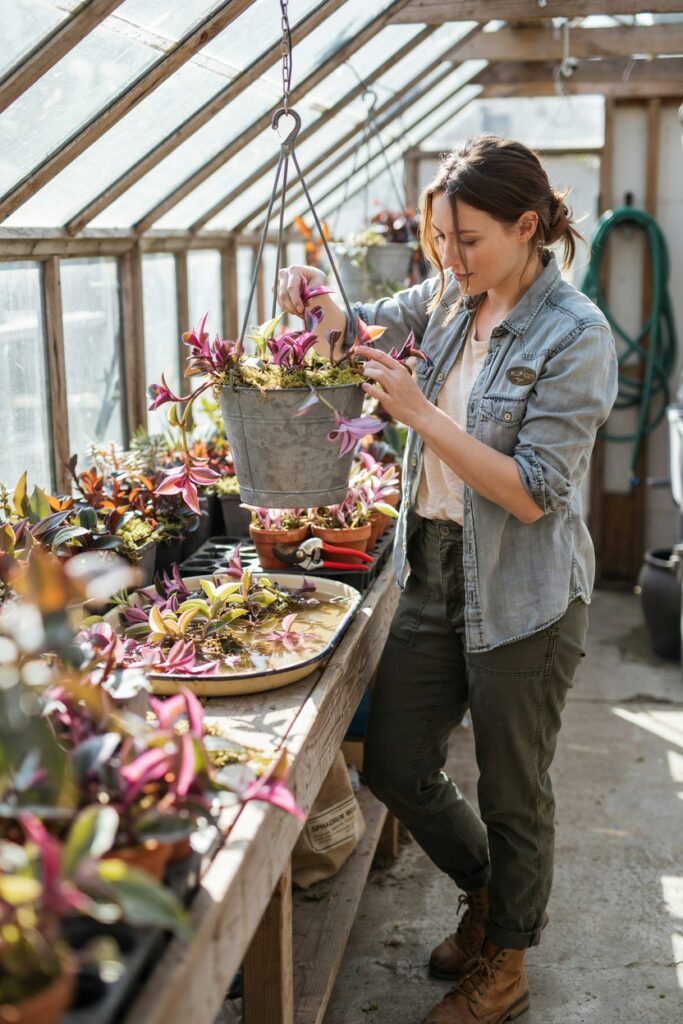
If you want inventory fast, Tradescantia Zebrina is hard to beat. Its vibrant purple and silver striped foliage grows incredibly quickly, and every trimming becomes another future plant.
Why It Sells
Its colorful trailing vines make it popular for hanging baskets, bookshelves, and plant walls.
It grows so quickly that buyers feel like they’re getting excellent value.
How to Propagate
Simply cut healthy stems just below a node and place them directly into water or moist potting mix.
Roots usually appear within one to two weeks.
Once established, pot each cutting individually.
Care Tips
Provide bright indirect light to maintain vibrant coloring.
Pinch back stems regularly to encourage bushier growth.
Profit Potential
Typical prices include:
- Rooted cutting: $8 to $15
- Small plant: $20 to $30
- Hanging basket: $35 to $60
9. Rubber Plant
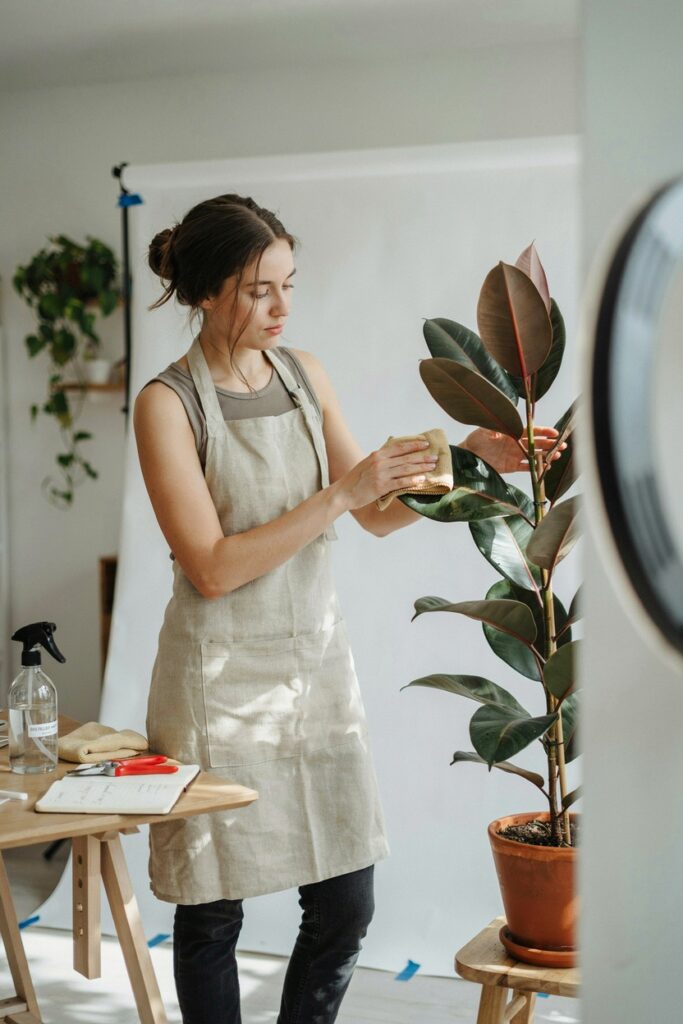
Rubber Plants have become a favorite among home decorators because of their large, glossy leaves and upright growth habit.
Even a relatively young Rubber Plant can make a room look more polished, which is why buyers are often willing to spend more on a healthy specimen.
Although they grow a little slower than Pothos or Spider Plants, they reward your patience with higher selling prices and a premium look.
Why It Sells
Rubber Plants are popular with homeowners, apartment dwellers, and office workers looking for a statement plant that’s still fairly easy to care for.
Their bold foliage fits beautifully into modern, Scandinavian, minimalist, and boho interiors, giving them broad appeal throughout the year.
How to Propagate
Choose a healthy stem with several leaves and cut just below a node using sterilized pruning shears.
Allow the cutting to sit for about an hour so the cut can dry slightly before placing it into water or moist potting mix.
Keep the cutting somewhere warm with bright indirect light until roots develop.
Once the roots reach approximately two inches long, transplant into fresh potting soil.
Care Tips
Rubber Plants love bright indirect light but should be protected from harsh afternoon sun.
Allow the top two inches of soil to dry before watering again.
Wipe the leaves regularly with a damp cloth to keep them glossy and dust-free. Clean leaves not only help the plant photosynthesize better but also make your listing photos look far more professional.
Profit Potential
Typical selling prices include:
- Small plant: $20 to $40
- Medium plant: $50 to $90
- Large mature plant: $100 to $250+
10. String of Pearls
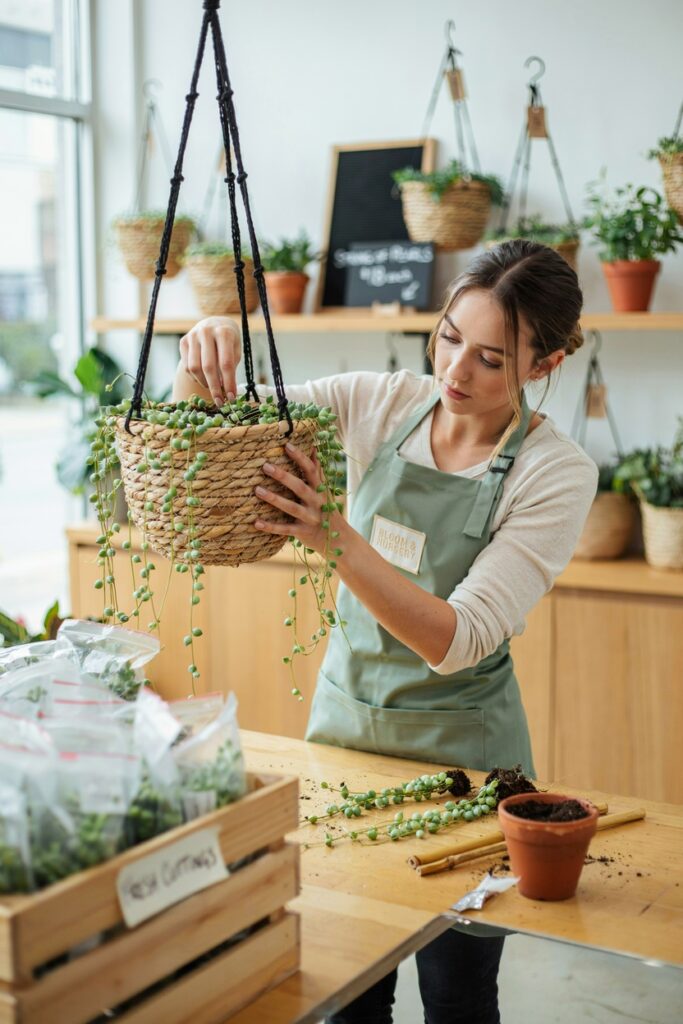
String of Pearls is one of those plants that immediately catches people’s attention. Its long trailing vines covered in bead-like leaves make it look completely different from most houseplants, and that uniqueness makes it highly desirable.
While it requires slightly more care than some beginner plants, buyers are often willing to pay premium prices for full, healthy baskets.
Why It Sells
Its unusual appearance makes it a conversation piece.
It looks beautiful hanging in windows, on floating shelves, or in decorative planters, making it especially popular with people decorating smaller spaces.
How to Propagate
Take several healthy vine cuttings around four to six inches long.
Lay the vines directly on top of moist succulent soil, ensuring multiple nodes touch the soil surface.
Lightly mist until roots begin forming.
Because several cuttings can be planted together, you can quickly create a full-looking pot instead of selling a single vine.
Care Tips
Provide several hours of bright indirect light every day.
Use cactus or succulent soil with excellent drainage.
Water only after the soil has completely dried out.
Profit Potential
Typical prices include:
- Small pot: $20 to $35
- Medium hanging basket: $40 to $70
- Large trailing basket: $80 to $150
11. Hoya Carnosa
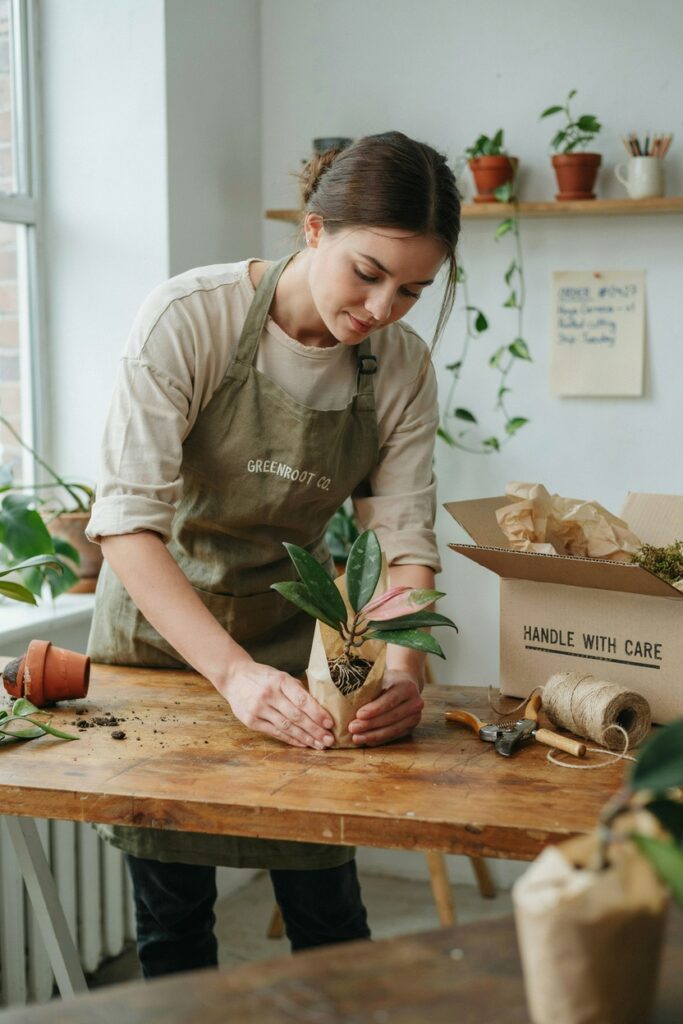
Hoyas are often called Wax Plants because of their thick, glossy leaves. Once mature, they can even produce beautiful clusters of fragrant flowers, making them especially attractive to collectors.
Unlike fast-growing plants, Hoyas reward patience with much higher prices.
Why It Sells
Collectors love Hoyas because they’re long-lived, easy to care for, and available in many beautiful varieties.
Even simple Hoya Carnosa cuttings often sell quickly because buyers know they’ll eventually become impressive trailing plants.
How to Propagate
Select a healthy vine containing two or three nodes.
Place the cutting into water, ensuring the nodes remain submerged.
After several weeks, healthy roots will appear.
Transfer the rooted cutting into a chunky, well-draining soil mix designed for tropical houseplants.
Care Tips
Hoyas enjoy bright indirect sunlight.
Allow the soil to dry almost completely before watering.
Avoid removing flower spurs after blooming because the plant will bloom from the same spot again.
Profit Potential
Typical prices include:
- Rooted cutting: $20 to $40
- Medium plant: $40 to $80
- Large mature hanging plant: $100 to $200+
12. Aloe Vera
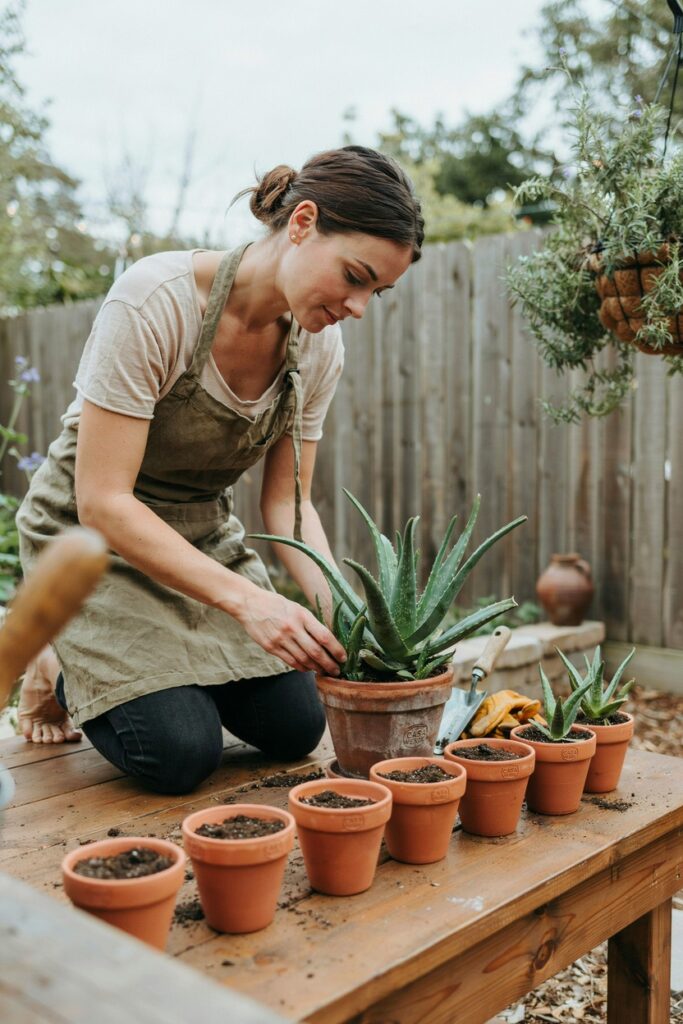
Aloe Vera isn’t just decorative—it’s also practical. Many buyers keep one around because of its soothing gel, making it one of the easiest plants to sell locally.
As mature plants grow, they regularly produce offsets, giving you new inventory without much effort.
Why It Sells
People appreciate Aloe Vera for both its appearance and its usefulness.
It’s easy to grow, drought tolerant, and makes an excellent gift for beginner plant owners.
How to Propagate
Wait until baby offsets have developed their own roots.
Remove the mother plant from its pot and carefully separate each pup.
Plant each offset into its own pot using cactus or succulent soil.
Avoid watering for the first few days to allow the roots to settle.
Care Tips
Place Aloe Vera somewhere bright with plenty of sunlight.
Allow the soil to dry completely before watering again.
Use pots with excellent drainage to prevent root rot.
Profit Potential
Typical prices include:
- Small pup: $10 to $20
- Medium plant: $25 to $50
- Large mature Aloe: $60 to $100
13. Jade Plant
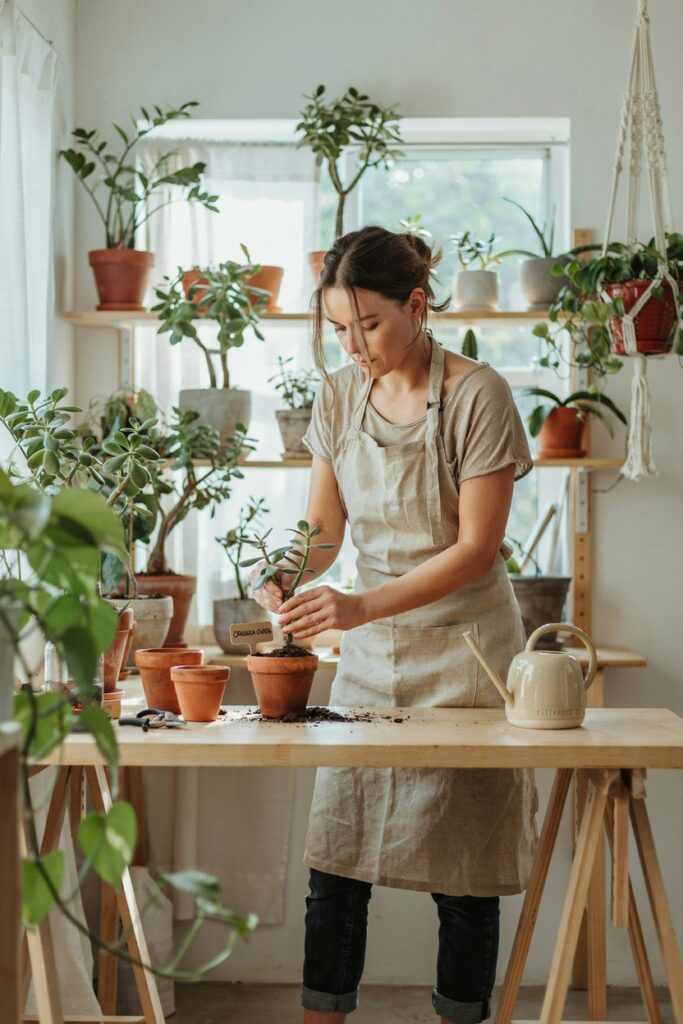
Jade Plants are famous for symbolizing prosperity and good luck, making them popular gifts for birthdays, housewarmings, and businesses.
Their thick trunks also allow older plants to develop a miniature tree-like appearance, which significantly increases their value.
Why It Sells
They’re easy to maintain, drought tolerant, and can live for decades.
Older Jade Plants often become family heirlooms, making mature specimens particularly desirable.
How to Propagate
Take a healthy stem cutting and allow the cut end to dry for several days until it forms a callus.
Plant the cutting into dry succulent soil.
Wait about a week before watering lightly.
Roots typically begin forming within several weeks.
Care Tips
Provide plenty of bright sunlight.
Water deeply but infrequently.
Avoid overwatering, especially during winter.
Profit Potential
Typical prices include:
- Small cutting: $10 to $20
- Medium plant: $30 to $60
- Mature bonsai-style Jade: $100 to $300+
14. Bird of Paradise

Few houseplants create as much impact as a Bird of Paradise. Its enormous tropical leaves instantly make a room feel luxurious, which is why interior designers frequently use them in high-end spaces.
Although they require more patience to grow, they also command some of the highest prices.
Why It Sells
Large Bird of Paradise plants are considered statement pieces.
People decorating new homes or offices often prefer buying a mature plant rather than waiting years for one to grow.
How to Propagate
Unlike many plants, Bird of Paradise is propagated by division rather than stem cuttings.
Separate mature clumps during repotting, ensuring each division has healthy roots attached.
Plant immediately into fresh, well-draining potting mix.
Care Tips
Provide as much bright light as possible.
Water when the top few inches of soil become dry.
Feed monthly during spring and summer to encourage vigorous growth.
Profit Potential
Typical prices include:
- Young division: $40 to $80
- Medium plant: $100 to $180
- Large mature specimen: $200 to $500+
15. Fiddle Leaf Fig
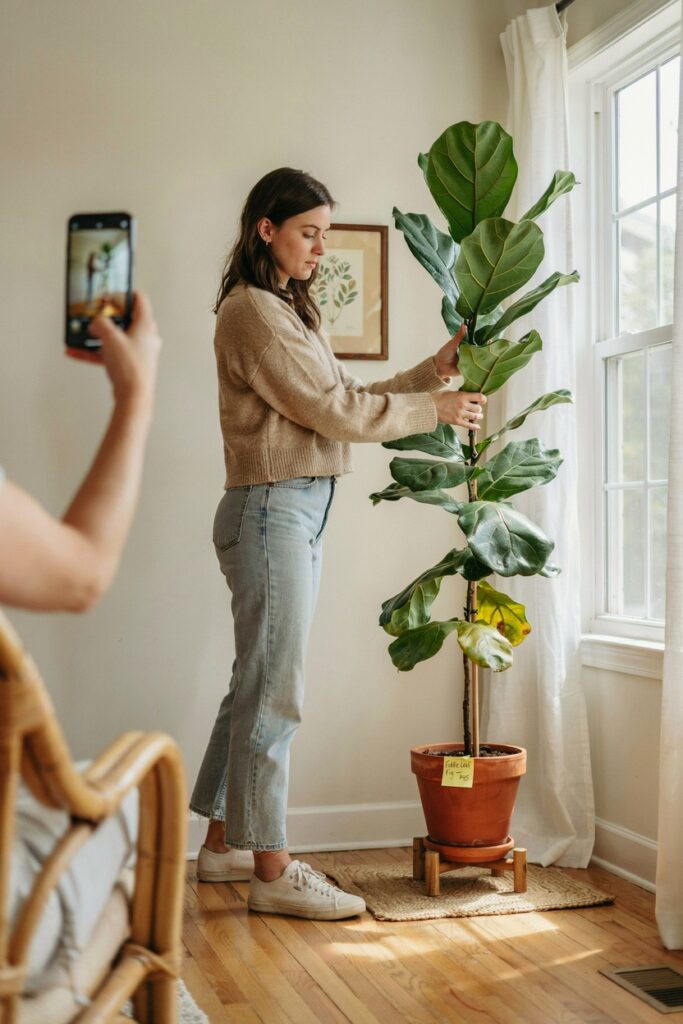
Few plants have become as iconic as the Fiddle Leaf Fig. Even after years of popularity, buyers still actively search for healthy specimens because they instantly elevate almost any room.
While they require a bit more attention than Pothos or Snake Plants, their resale value easily makes up for the extra care.
Why It Sells
The large violin-shaped leaves create an elegant, designer look that’s highly sought after.
Healthy, well-shaped Fiddle Leaf Figs are especially valuable because many people struggle to grow them successfully on their own.
How to Propagate
Take a healthy stem cutting with one or two leaves attached.
Root the cutting in water or sphagnum moss until a healthy root system develops.
Once established, transplant into a well-draining indoor potting mix and keep it somewhere bright while it adjusts.
Care Tips
Place your Fiddle Leaf Fig in bright, indirect light and avoid moving it frequently, as these plants dislike sudden changes in their environment.
Rotate the pot every week for even growth, dust the leaves regularly, and water only when the top two inches of soil feel dry.
Profit Potential
Typical prices include:
- Rooted cutting: $30 to $60
- Medium plant: $80 to $150
- Large mature tree: $200 to $500+
A healthy, well-maintained Fiddle Leaf Fig can become one of the most profitable plants in your collection, especially if you grow it into a tall, branching specimen before selling.
Pricing Strategy That Maximizes Your Profit
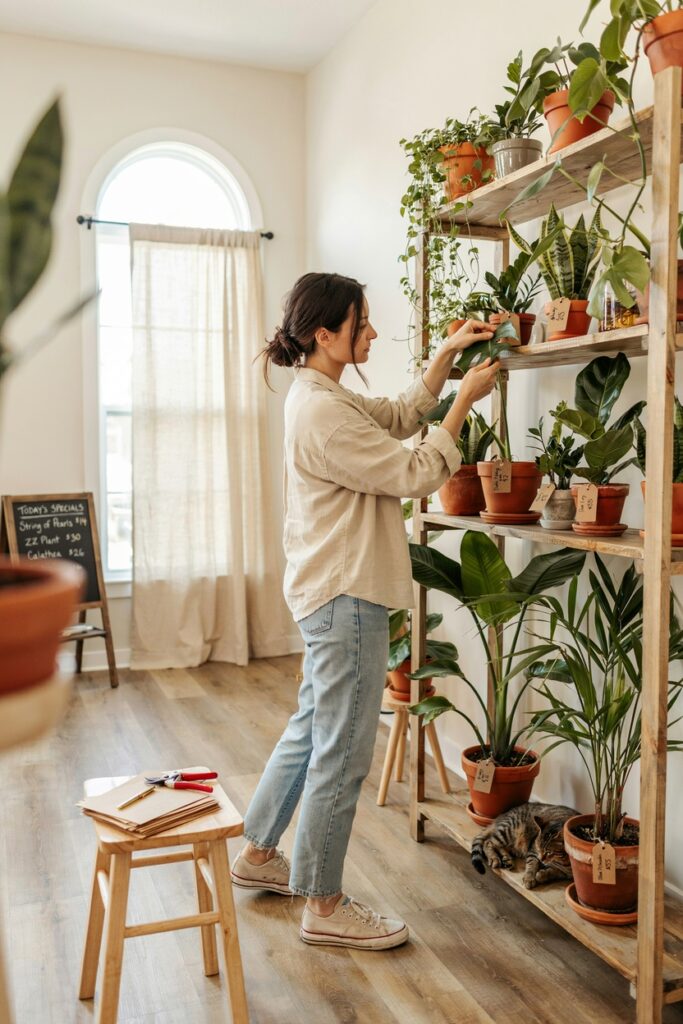
One mistake I see new plant flippers make is pricing everything too cheaply because they’re worried nobody will buy. In reality, healthy, well-presented plants often sell for much more than people expect.
Research similar listings in your area on Facebook Marketplace, Etsy, and local plant groups before deciding on a price. If your plants are healthier, better rooted, or displayed in attractive pots, don’t be afraid to charge a little more.
I also recommend offering multiple price points.
For example:
- Rooted cuttings for beginners
- Medium-sized plants for everyday buyers
- Large mature plants for premium customers
This lets you reach a much wider audience while increasing your average sale value.
Another simple strategy is bundling.
Instead of selling one Pothos for $15, offer:
- Buy 2 for $28
- Buy 3 for $40
Bundles often increase your total sales without requiring much extra work.
How to Take Photos That Actually Sell Plants

Photos can easily double the value of your listing.
People buy with their eyes first, especially online.
Whenever I photograph plants, I always use natural daylight near a bright window. Avoid using your phone’s flash because it makes leaves look dull and unnatural.
Choose a simple background like:
- White wall
- Wooden table
- Neutral shelving
- Outdoor patio
Avoid clutter behind the plant.
Take several angles including:
- Full plant
- Close-up of healthy leaves
- Root system (if selling cuttings)
- Decorative pot
- Side profile
If the plant is large, place something nearby for scale.
A small watering can, chair, or basket helps buyers understand the actual size.
Clean the leaves beforehand.
Dusty leaves instantly make even healthy plants look neglected.
This same “spot the potential” instinct is what I use in thrifted houseplant decor that looks expensive on a budget — reviving something overlooked is half the fun.
Where to Sell Your Plants
You don’t have to rely on one marketplace.
Many successful plant flippers sell across several platforms.
Some of the best places include:
Facebook Marketplace
Excellent for local pickup.
No shipping required, and buyers often purchase multiple plants.
Facebook Plant Groups
Many cities have dedicated houseplant communities filled with enthusiastic buyers.
Etsy
Perfect for rare plants, rooted cuttings, and decorative planters.
Local Farmers Markets
A great option if you have larger inventory.
Beautiful displays often attract impulse buyers.
As your collection grows, social media becomes an excellent way to build repeat customers.
Friends and Family
Never underestimate word of mouth.
Many successful plant businesses started by selling just a few propagated plants to friends.
Supplies You’ll Need
You don’t need a huge investment to get started.
Basic supplies include:
- Nursery pots
- Quality potting mix
- Perlite
- Pruning shears
- Rooting hormone (optional)
- Spray bottle
- Plant labels
- Decorative cache pots
- Fertilizer
- Plastic trays
Most of these supplies last a long time and quickly pay for themselves after only a few sales.
Common Mistakes New Plant Flippers Make
Buying Expensive Rare Plants Too Soon
It’s tempting to chase rare varieties, but they’re also much riskier.
Start with common plants that propagate quickly before investing in collector species.
Selling Weak Cuttings
Never rush propagation.
Healthy roots create happy buyers.
Weak cuttings often die shortly after purchase, leading to unhappy customers and poor reviews.
Overwatering
This is the fastest way to lose inventory.
Most beginner-friendly houseplants actually prefer drying slightly between waterings.
Ignoring Pests
Inspect every plant regularly.
Spider mites, fungus gnats, scale insects, and mealybugs spread quickly through a collection.
Treat problems immediately.
Poor Photos
A beautiful plant deserves beautiful photos.
Good lighting alone can dramatically increase buyer interest.
Underpricing Everything
Remember you’re selling:
- Your time
- Your knowledge
- Healthy plants
- Proper propagation
- Attractive presentation
Don’t be afraid to charge what your plants are worth.
How Much Money Can You Make?
Your income depends on how many plants you grow and how efficiently you propagate them.
Here’s a realistic example.
If you maintain:
- 20 Pothos
- 15 Spider Plants
- 10 Snake Plants
- 10 Philodendrons
- 10 ZZ Plants
Those mother plants can easily produce well over 100 sellable plants each year.
Selling them for an average of just $25 each equals:
100 plants × $25 = $2,500
Many experienced plant flippers produce several hundred plants annually while keeping costs surprisingly low.
Those specializing in rare plants can earn significantly more.
Frequently Asked Questions
Is plant flipping profitable?
Yes. Many houseplants can be propagated repeatedly from a single mother plant, allowing you to sell multiple new plants from one original purchase.
Do I need a greenhouse?
No.
Many successful plant flippers operate entirely from spare bedrooms, apartments, patios, or sunny windowsills.
Which plant grows the fastest?
Pothos, Spider Plants, and Tradescantia are among the fastest-growing and easiest plants to propagate.
Can I sell plants from home legally?
In many places, yes.
However, check your local regulations regarding home businesses, taxes, and plant sales before getting started.
How long does propagation take?
It depends on the plant.
Some root in two weeks, while others may take several months before they’re ready to sell.
Should I sell decorative pots too?
Absolutely.
A beautiful planter can increase the perceived value of your plant and allow you to charge significantly more.
Final Thoughts
Plant flipping is one of my favorite side hustles because it combines creativity, gardening, and entrepreneurship into something genuinely enjoyable. Instead of constantly buying inventory, you’re growing it yourself, which means your profit margins can improve over time as your collection expands.
The key is to start small, focus on healthy plants, and be patient. One thriving mother plant can produce dozens of future sales, and as your confidence grows, so will your inventory and your income.
Whether you’re hoping to earn a little extra spending money each month or build a serious home-based business, plant flipping is a rewarding hobby that has the potential to grow into something much bigger.
Start with one or two easy-to-propagate plants, learn what works, and keep reinvesting in your collection. Before long, you’ll have a thriving indoor jungle that’s not only beautiful but profitable too.