DIY Natural Cinnamon Spray for Bugs
I noticed the ant trail before I noticed the actual ants, a thin, almost invisible line of them tracking along my kitchen windowsill toward a crumb I’d missed the night before.
My first instinct was to grab whatever spray was under the sink, and then I stopped, because that particular spray had a warning label I really didn’t want anywhere near where I actually cook.
That was the afternoon I ended up testing cinnamon oil instead, mostly out of stubbornness, and it worked well enough that I’ve made a fresh batch every few weeks since.
The part that surprised me is how different this is from just sprinkling ground cinnamon along a windowsill, which I’d tried once, years earlier, and abandoned within a day because it turned into a gritty mess the second I wiped the counter.
The active ingredient doing the real work here is cinnamon leaf essential oil, not the spice from your baking cabinet, and once I understood that distinction, the whole thing finally made sense to me.
A quick safety note before you make this: cinnamon essential oil is a skin irritant at full strength and should always be diluted before use, never applied directly to skin.
It can also be irritating to eyes and mucous membranes, so avoid spraying near your face, and keep it away from pets, especially cats, who process essential oils very differently than humans and can be sensitive even to diffused or residual amounts.
I always patch test on a small, out-of-sight area before spraying any new surface in my home, since cinnamon oil can occasionally affect certain finishes or fabrics, something I learned the hard way on a windowsill I’ll get to below.
Why This Spray Actually Works
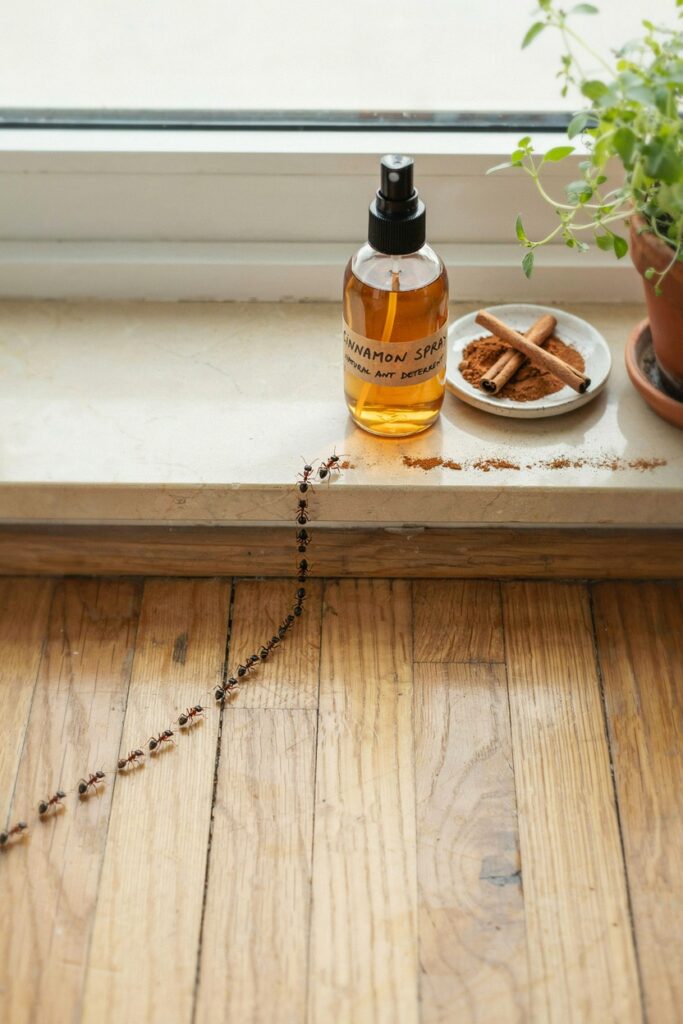
Cinnamon leaf oil disrupts scent trails ants rely on. I didn’t fully believe this until I watched it happen in my own kitchen.
Ants navigate largely through pheromone trails, and once I sprayed along that windowsill, the line of ants didn’t just slow down, it scattered, clearly confused about where to go next.
That’s the strong scent interfering with the trail they’d been following.
It’s a genuine deterrent, not just something that smells nice to me. I was skeptical going in that this was more placebo than pest control, but the behavior change I actually watched happen convinced me it’s doing something real, not just masking a smell I couldn’t detect anyway.
It’s safer to use around food prep areas than what I was using before. Once properly diluted, I’m comfortable spraying this right on my kitchen counters and windowsill, which is exactly the spot I wasn’t willing to use a chemical spray on in the first place.
What Makes This Different From Just Sprinkling Cinnamon Powder
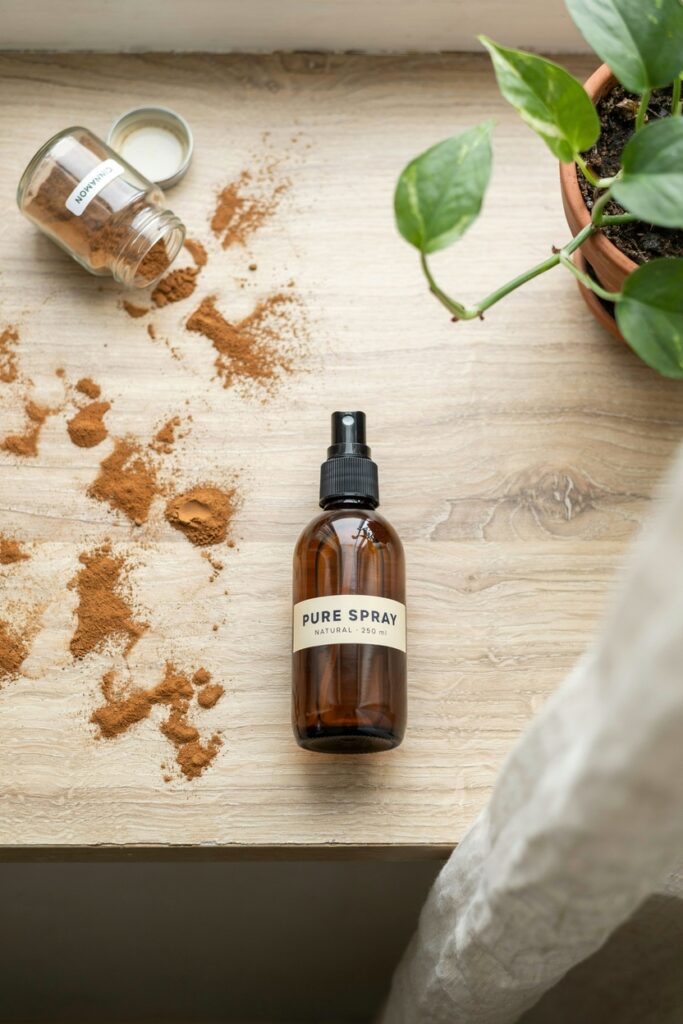
I want to be specific about this because I made the powder mistake myself years before I ever tried the oil version.
Ground cinnamon spice does have some repelling effect, and it’s a common enough home remedy on its own, but it comes with real downsides I ran into firsthand: it made a visible mess along my windowsill, it didn’t survive the first time I wiped the counter down, and I was reapplying it almost daily just to keep any effect going at all.
Cinnamon leaf essential oil solves all three of those problems for me.
Diluted into a spray, it distributes evenly, dries without leaving anything gritty behind, and the scent has genuinely lingered for days at a time in my kitchen, not hours, since essential oils are formulated to be more concentrated and slower to fully evaporate than the ground spice ever was.
You can also see my – DIY Mason Jar Mosquito Candles to Keep Bugs Away and How to Make Bug Repellent Lotion Bars
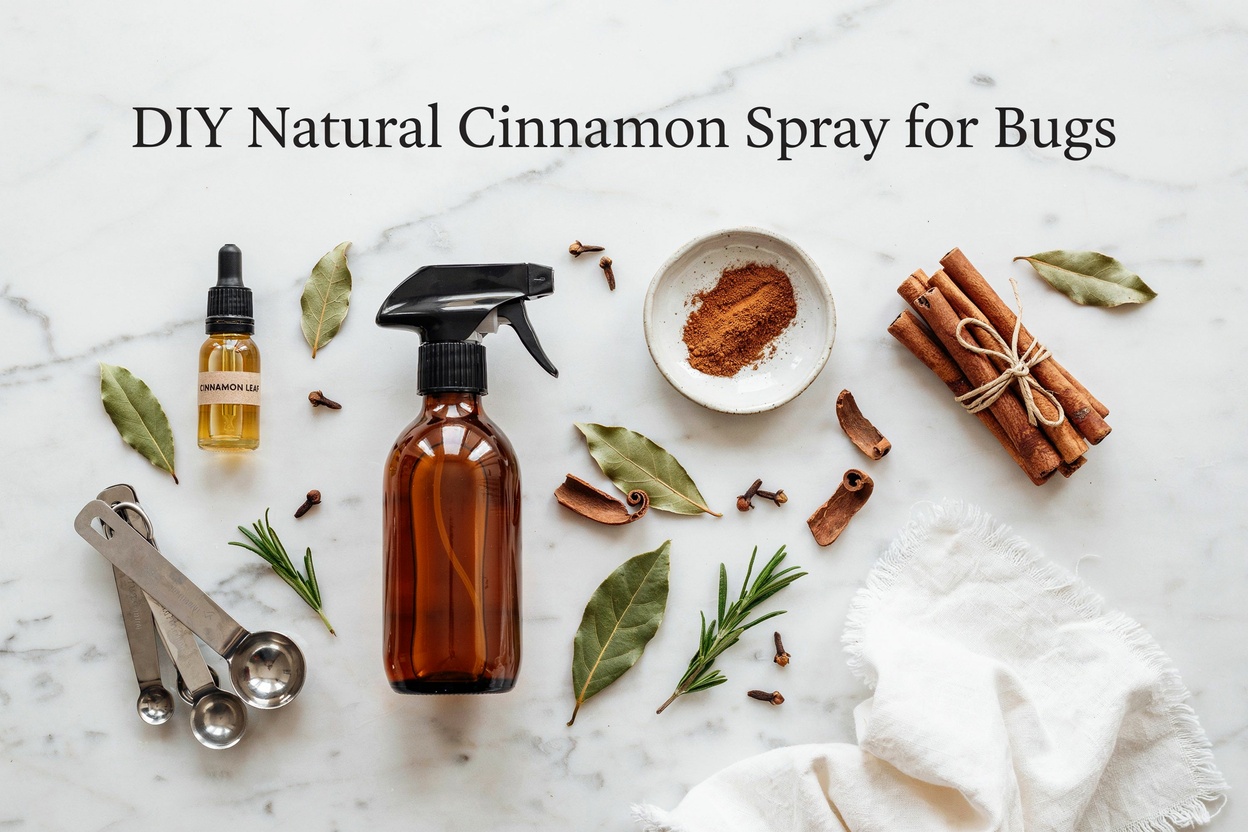
Ingredients
- Cinnamon leaf essential oil. I specifically look for bottles labeled “cinnamon leaf” rather than “cinnamon bark,” since bark oil is more potent and, as I found out, more likely to irritate skin or surfaces. Leaf oil has given me a better balance of effectiveness and safety for everyday household use.
- Water, distilled if possible. I switched to distilled after noticing my tap water left a slightly cloudy residue in one batch.
- A small amount of unscented liquid castile soap. This helps the oil actually mix into the water instead of sitting on top of it, which is exactly what happened the one time I skipped this step and just shook plain oil and water together.
- A spray bottle, glass if you have one. I switched to glass after noticing my first plastic bottle had started to feel slightly tacky on the inside after a few weeks of regular use.
Substitutions I’ve Actually Tested

No castile soap on hand? I’ve used witch hazel as a stand-in, though I found I had to shake the bottle more often mid-use to keep it properly mixed compared to the soap version.
Want a stronger scent for a bigger ant problem? I’ve bumped up my concentration slightly during a particularly bad week, but I stayed within general safe dilution guidelines rather than assuming more oil automatically meant faster results, since it didn’t seem to actually speed anything up for me.
Want to blend scents? I added a few drops of clove oil to one batch and genuinely preferred it, since it seemed to hold up a little longer along my windowsill than cinnamon alone.
How to Make It
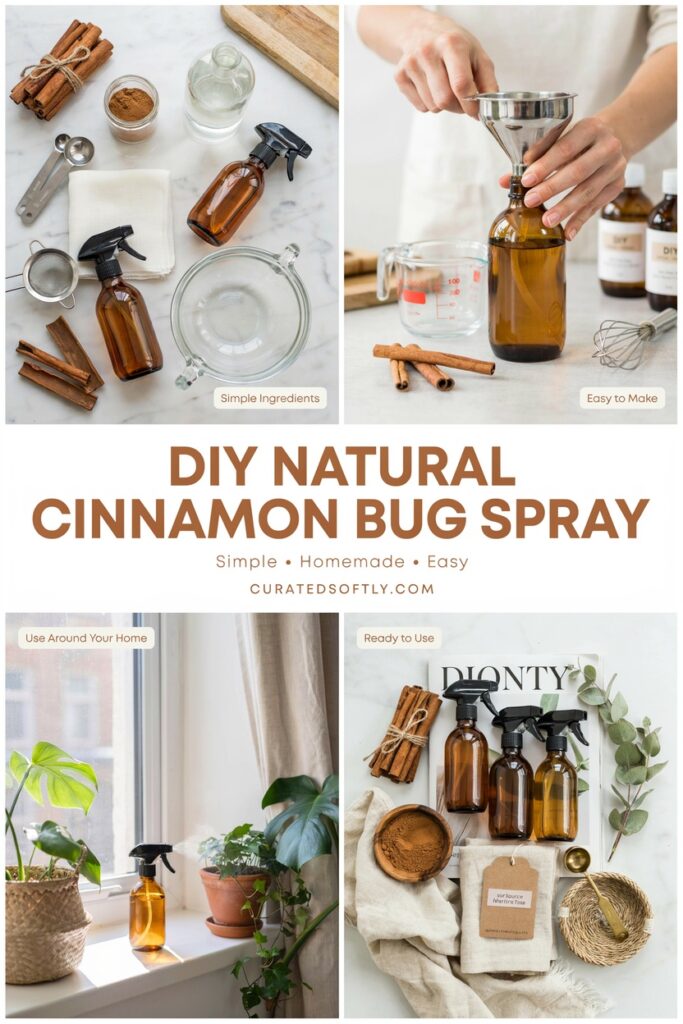
Step 1: Fill Your Spray Bottle With Water
Fill a glass spray bottle with distilled water, leaving a small amount of room at the top for the oil and soap to be added.
I fill mine about three-quarters full so there’s enough room to shake everything together without it splashing out the moment I start.
Step 2: Add the Castile Soap

Add about ¼ teaspoon of unscented liquid castile soap for every 8 ounces of water.
I measure this loosely at this point, since a little extra hasn’t caused any issues for me, but going too light on it is what led to that separated, oily mix I mentioned earlier.
Step 3: Add the Cinnamon Leaf Oil
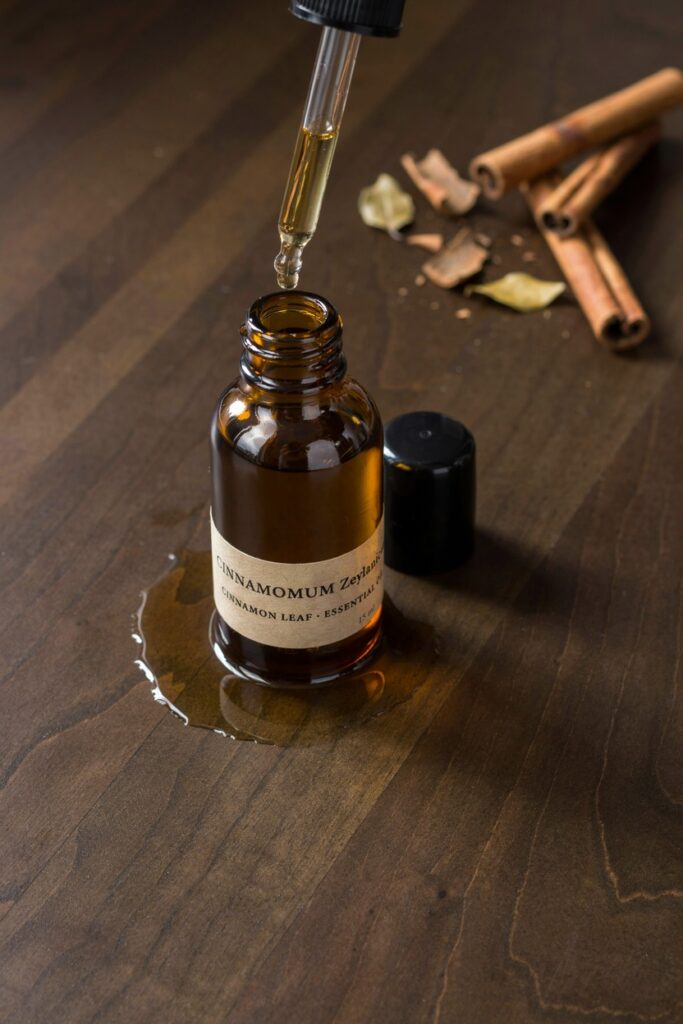
Add about 15 to 20 drops of cinnamon leaf essential oil per 8 ounces of water, which lands within a safe, commonly recommended dilution range for a household surface spray.
I count my drops rather than eyeballing it, mostly because the one time I didn’t, I ended up with a spray so strong it gave me a headache standing near my own kitchen counter.
Step 4: Shake Thoroughly

Secure the cap and shake vigorously for at least 20 to 30 seconds.
I genuinely set a timer for this the first few times, since I kept underestimating how long it actually takes for the oil to properly disperse rather than just swirl around.
Step 5: Spray Along Entry Points and Trails
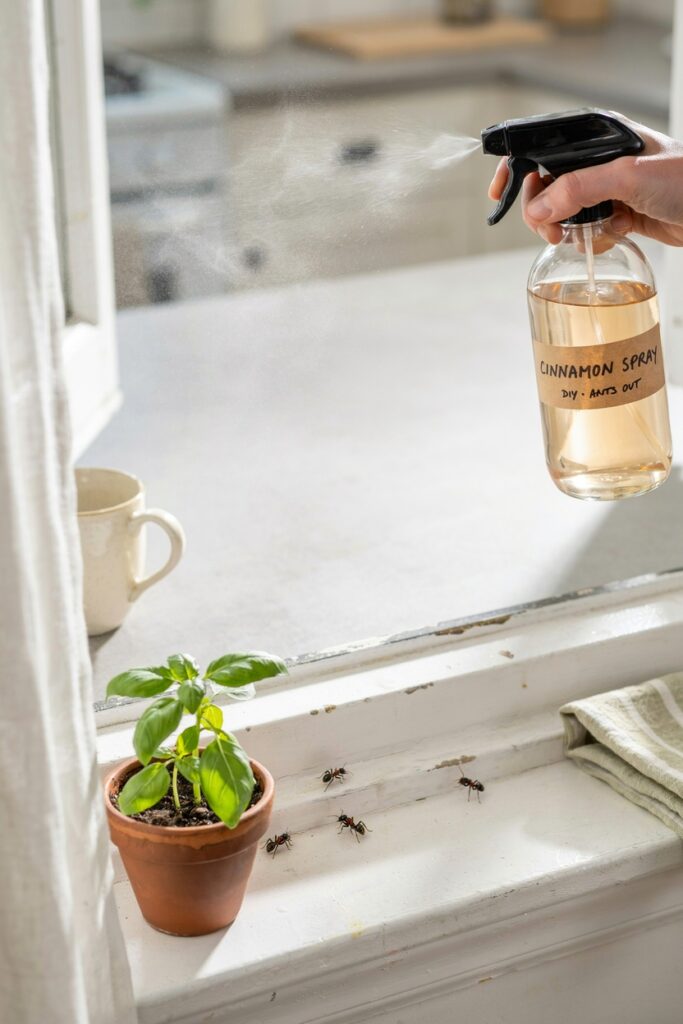
Spray along windowsills, door thresholds, baseboards, and any spot where you’ve actually noticed activity, rather than spraying your entire home indiscriminately.
I reapply mine every few days, or right after I’ve cleaned that specific surface, since wiping it down removes the residue along with everything else.
Tips From Making This More Times Than I’ll Admit
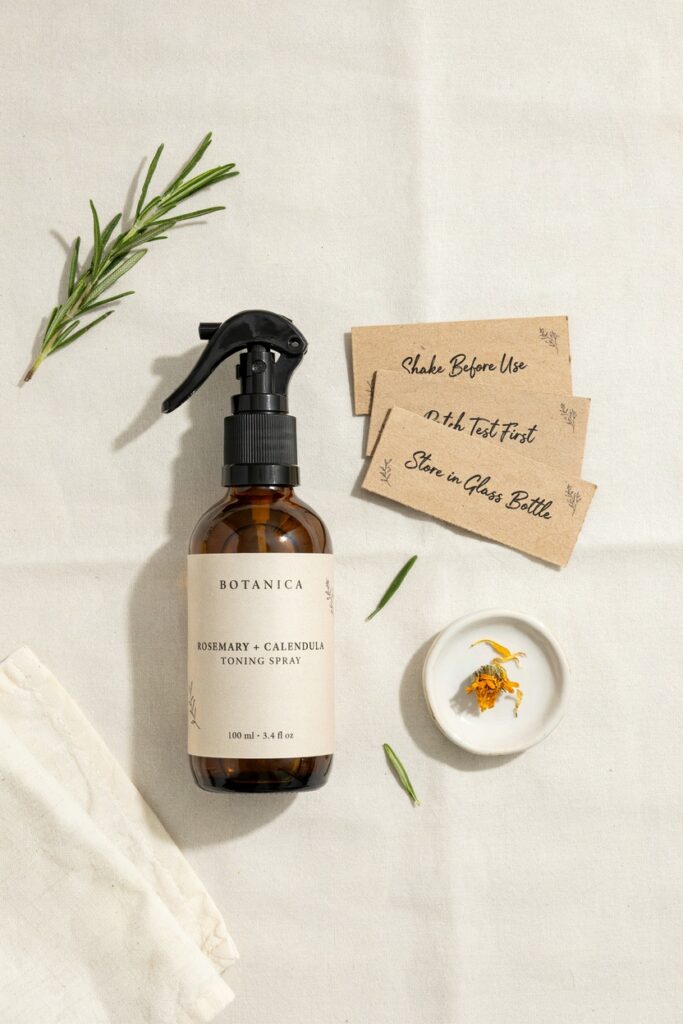
- Shake before every single use, not just once. I learned this the annoying way, described below, and now it’s the first thing I do without thinking about it.
- Focus on entry points, not open floor space. I wasted half a bottle early on spraying the middle of my kitchen floor before I figured out this works as a barrier at thresholds, not a general room mist.
- Use cinnamon leaf, not cinnamon bark, oil. I only made the bark mistake once.
- Store away from direct sunlight. I keep mine in a cabinet rather than on the windowsill it’s meant to protect, since I noticed the scent faded noticeably faster on a bottle I’d left in direct light for a week.
- Don’t oversaturate porous surfaces. A light, even mist has worked better for me than heavily soaking an area, both for effectiveness and for not leaving marks.
Mistakes I’ve Made So You Don’t Have To
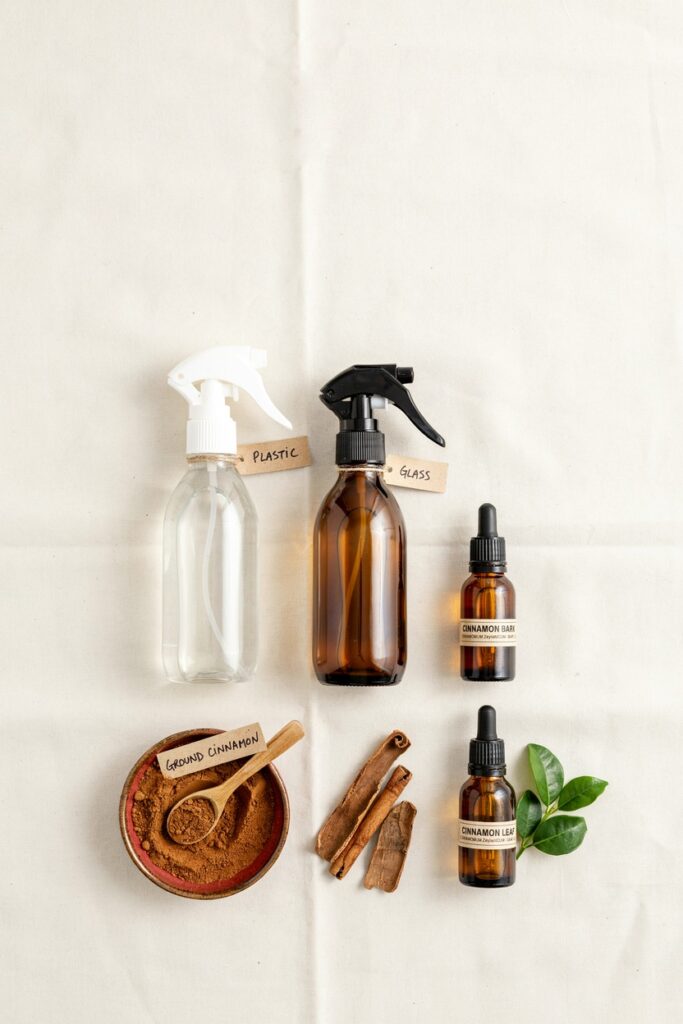
Using cinnamon bark oil instead of leaf oil the first time. It was noticeably harsher, and it left a faint mark on my painted windowsill that I still notice if I look closely, something leaf oil has never done in the time since.
Forgetting to shake the bottle before a second use. I sprayed what was basically just scented water and genuinely couldn’t figure out why the ants were back within a day, until I realized the oil had completely separated and settled at the top.
Making the concentration too strong, thinking it would work faster. The smell became overwhelming in my small kitchen almost immediately, and it wasn’t actually any more effective against the ants than my properly diluted batches have been since.
Spraying directly onto unfinished wood without testing first. That’s the mark I mentioned on my windowsill. A thirty-second patch test in a hidden spot would have caught it before I sprayed the whole thing.
Troubleshooting

The spray doesn’t seem to be repelling ants at all. Check your dilution ratio and how recently you shook the bottle. In my experience, a mix that’s had time to separate is essentially just water with a faint scent by the time it actually reaches the surface.
The scent fades too quickly. This is somewhat expected with any natural spray compared to a commercial chemical repellent, but reapplying every 2 to 3 days, especially after cleaning, has kept mine consistently effective.
It left a mark on a surface. This happened to me specifically with unfinished wood. Always patch test on a small, hidden area first, and consider diluting further for surfaces that seem sensitive.
The oil and water won’t mix no matter how much I shake it. Double check you’ve actually included the castile soap, since I found out firsthand that oil and water won’t blend on their own no matter how thoroughly you shake an unmodified mix.
Variations and Uses

Ant-Specific Blend. I combine cinnamon leaf oil with a few drops of clove oil when I know I’m dealing with an active trail, since it’s held up a little longer for me than cinnamon alone.
General Bug Deterrent Spray. I’ve added peppermint oil alongside the cinnamon for a broader, less ant-specific version I keep for general use around doors and windows.
Outdoor Patio Version. I make a slightly stronger dilution for outdoor surfaces like my patio furniture and door frame, where skin contact and surface sensitivity are less of a concern than they are inside.
If you’re looking for a complementary approach for keeping bugs off yourself rather than just off your surfaces, my natural bug repellent lotion bars pair well with this spray as a two-part system, one for your home’s entry points, one for your skin when you’re actually outside in it.
Storage
I keep mine in a cool, dark cabinet, away from direct sunlight, in a glass spray bottle.
A properly diluted batch has stayed effective for me for several weeks, though I’ve noticed the scent strength does gradually fade over time, at which point I just make a fresh batch rather than trying to revive an old one.
Frequently Asked Questions
Is this spray safe to use around pets? Use caution, especially with cats, who metabolize essential oils very differently than humans and dogs. I avoid spraying directly in areas my own pet frequents, and I keep them away from any freshly sprayed surface until it’s fully dry.
Can I use ground cinnamon instead of essential oil? You can, and I did for a while, but it’s much less potent, makes more mess, and needed far more frequent reapplication than my properly diluted essential oil spray ever has.
Will this get rid of an existing ant infestation? In my experience, this works best as a deterrent and barrier method, not as a solution for an established infestation, which may need a more targeted approach or professional pest control.
Is cinnamon leaf oil the same as cinnamon bark oil? No, and I’d genuinely recommend double-checking the bottle before you buy, since I didn’t the first time and paid for it with a marked windowsill.
How long does a batch last once mixed? Typically a few weeks before the scent noticeably fades for me, though I always shake before each use throughout that time since separation happens much faster than the scent actually fading.
Final Thoughts
This has become one of my go-to natural home solutions, mostly because it’s simple, inexpensive, and I don’t hesitate to spray it right where I actually cook.
If you’re building out a broader natural home care routine, my post on natural air freshening with epsom salt potpourri comes from that same instinct, swapping out something chemical for something simpler I actually trust having around.
If you try this spray, let me know how it worked for your specific bug situation, since I’ve found results can vary a fair bit depending on what you’re actually dealing with.