DIY Mason Jar Mosquito Candles to Keep Bugs Away
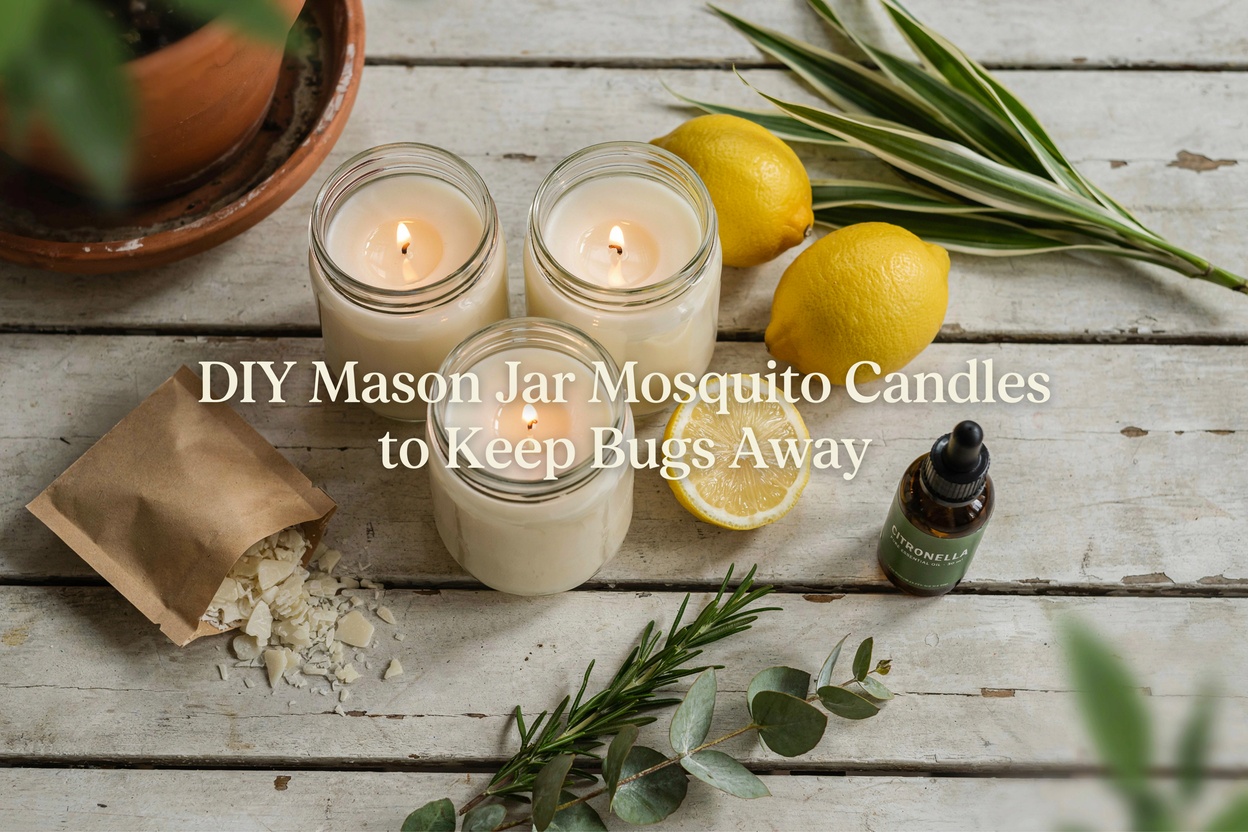
Our porch has an outlet about six feet from the table, which is the only reason this project happened at all, I got tired of running an extension cord out the back door for a plug-in bug zapper that buzzed all night and barely made a dent anyway.
I’d been buying the citronella tins from the hardware store for years without really thinking about it, restocking a three-pack every June like it was a given.
It wasn’t until I actually sat down and did the math on how many I’d bought, and how little each one actually lasted, that I looked up whether I could just make my own.
Turns out mason jar mosquito candles are genuinely easy, and now I make a batch of six or eight at the start of every summer instead of running back to the store every few weeks.
If you’ve never made candles before, my beginner candle tutorial covers the basics of working with wax and wicks before you jump into a scented, outdoor-specific project like this one.
What surprised me most is how much longer these hold their scent compared to the tins.
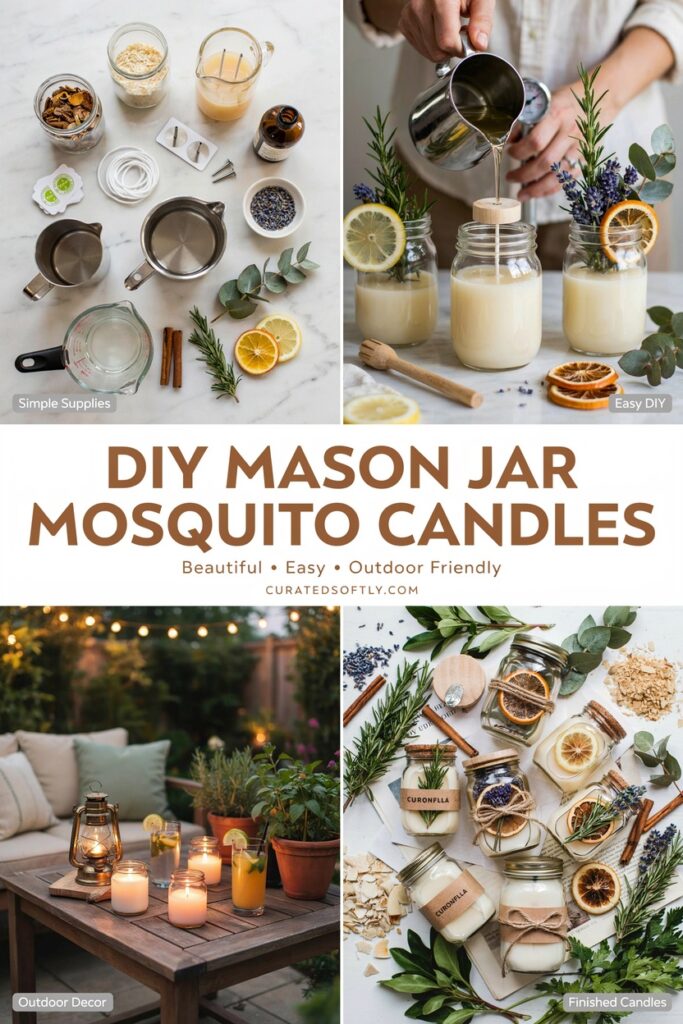
I always assumed the fading smell after a day or two was just how citronella worked, and it wasn’t until I understood how the oil actually needs to be measured into the wax that I realized the cheap versions were probably underdosed from the start.
A quick safety note before you make these: citronella essential oil is a fire hazard in high concentrations, so it needs to stay within safe fragrance load limits for the wax you’re using, never dumped in freely because “more is stronger.”
Mason jar candles should always be burned on a heat-safe surface, away from curtains, overhangs, or anything flammable, and never left unattended, especially outside where wind can shift a flame more than you’d expect.
I keep mine away from small kids and pets while lit, and I always let the wax fully harden and cool, at least 24 hours, before I move or trim a jar.
Why Mason Jar Mosquito Candles Actually Work

Citronella oil doesn’t kill mosquitoes, it masks the scent trail they use to find you.
I didn’t fully believe this until I sat on my porch with one lit and noticed how much longer I went without getting bitten compared to a bug-free evening with no candle at all.
Mosquitoes are drawn in partly by the carbon dioxide and body scent we naturally give off, and citronella’s strong smell interferes with their ability to track that.
It’s not a forcefield, but it’s a genuine deterrent in a contained outdoor space like a porch, patio table, or backyard gathering.
Mason jars hold scent longer than thin tins. This was the actual reason I switched.
A proper mason jar has enough wax volume and surface area for the citronella oil to disperse steadily over hours instead of flashing off in the first twenty minutes, which is exactly the problem I kept running into with cheap store-bought versions.
They’re also reusable and refillable, which the tins never were. Once a jar burns down, I don’t throw anything away, I just clean it out and pour a fresh batch.
Citronella Candles vs. Store-Bought Tins
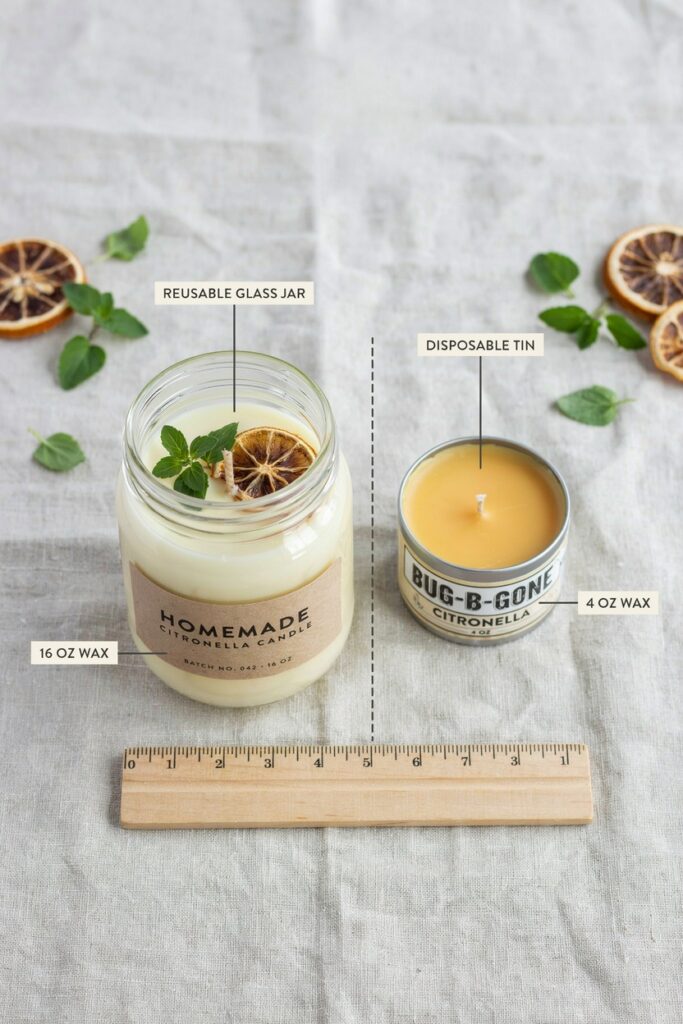
I want to be specific about this because I bought the drugstore tins for years before I ever made my own.
Store-bought citronella tins are usually made with a low-cost paraffin wax and a light citronella fragrance oil rather than pure essential oil, which is part of why the scent fades so fast and the smoke can smell slightly chemical, something I never noticed until I compared it side by side with a batch made from real citronella essential oil.
Making your own mason jar mosquito candles solves the three problems I kept running into: the scent throw lasts through an entire evening instead of an hour, the jar itself becomes reusable decor instead of a disposable tin, and I control exactly how strong or mild the citronella scent is instead of guessing based on a manufacturer’s fragrance load.
Ingredients
- Soy wax flakes. I use soy over paraffin because it burns cooler and slower, which matters for an outdoor candle that’s often sitting in wind and heat. Look for a container blend specifically, since straight pillar wax can perform differently in a jar.
- Citronella essential oil. This is the ingredient actually doing the mosquito-deterring work, not a citronella-scented fragrance oil, which smells similar but doesn’t carry the same natural compounds.
- Cotton wicks, pre-tabbed, sized for your jar’s diameter. I learned the hard way that a wick sized for a narrow jar will tunnel down the middle of a wide mason jar and leave wax unburned on the sides.
- Wide-mouth mason jars, pint size has worked best for me. Wide-mouth makes centering the wick significantly easier than a narrow-mouth jar ever did.
- A wick sticker or small dab of hot glue, to anchor the wick base to the bottom of the jar before pouring.
- A wooden skewer or pencil, to hold the wick centered and upright while the wax sets.
Not sure how much wax you’ll need for however many jars you’re making? My candle wax measurement guide walks through figuring that out by jar size so you don’t end up short mid-pour.
Substitutions I’ve Actually Tested

No soy wax on hand? I’ve used a coconut-soy blend and found it holds scent slightly better, though it’s also a bit pricier and can look faintly uneven on top if you don’t pour at the right temperature.
Want a stronger citronella scent? I’ve increased my ratio slightly for a particularly bad mosquito season, but I stayed within the wax’s recommended fragrance load rather than assuming double the oil means double the effect, since past a certain point it just pools on top instead of burning evenly.
Want to blend scents? I’ve added a few drops of lemongrass or eucalyptus oil alongside the citronella, and I genuinely think the lemongrass batch held up a little longer outdoors than citronella on its own.
How to Make Mason Jar Mosquito Candles
Step 1: Prep the Jars and Wicks

Wash and fully dry your mason jars. Attach the wick sticker to the bottom of the wick tab and press it firmly into the center of the jar’s base.
I press down and hold for a few seconds to make sure it actually adheres, since a wick that shifts mid-pour is the single most common mistake I made early on.
Step 2: Melt the Wax
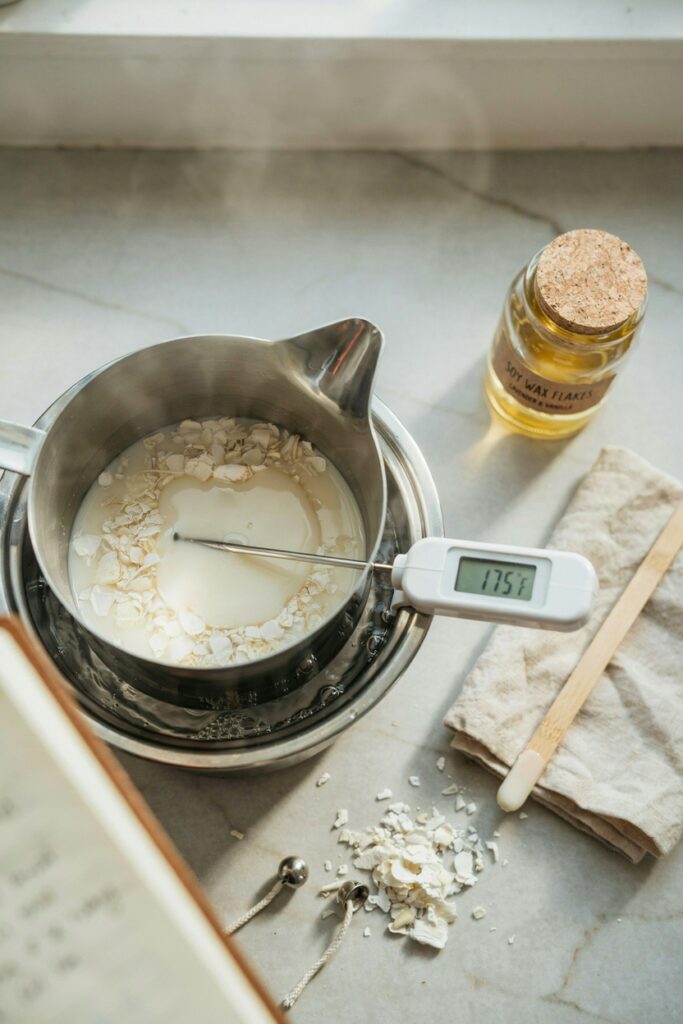
Melt your soy wax flakes in a double boiler or a heat-safe pitcher set over simmering water, stirring occasionally, until fully liquid.
I never melt wax directly over a burner, since it heats unevenly and can scorch.
Step 3: Add the Citronella Oil

Once the wax reaches a safe pouring temperature, usually around 185°F for soy, remove it from heat and stir in your citronella essential oil at a rate of about 1 ounce of oil per pound of wax, which sits within a commonly recommended fragrance load range.
I stir slowly and steadily for a full minute, since rushing this step is how I ended up with a batch where the scent settled unevenly through the jar.
Step 4: Pour and Center the Wick
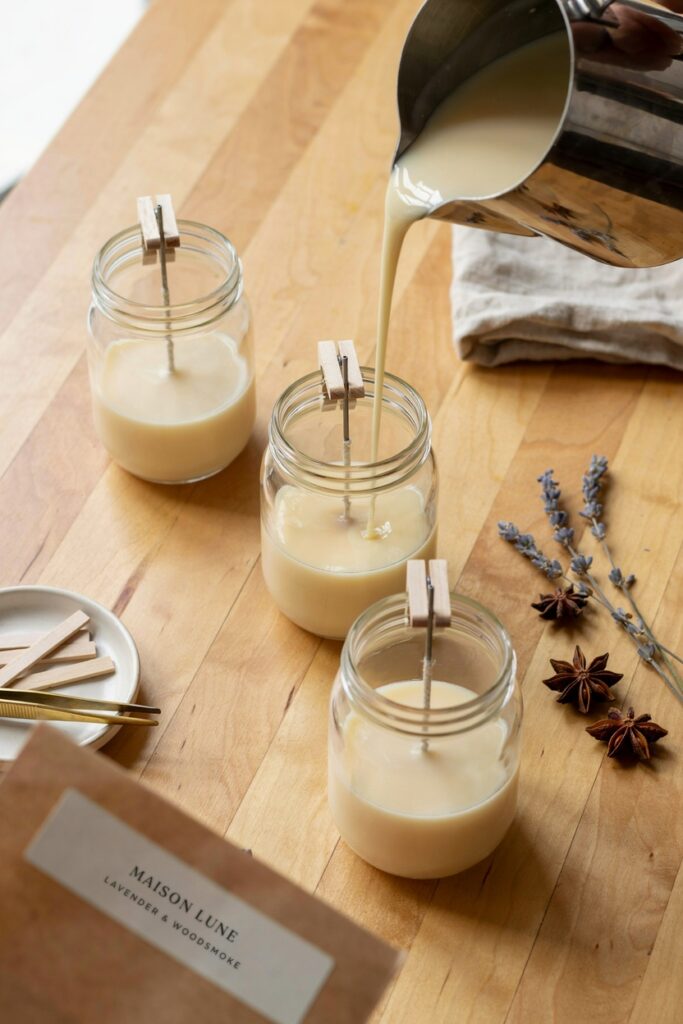
Pour the scented wax into your prepared jars, leaving a small gap at the top. Use a skewer laid across the rim to hold the wick centered and upright while the wax begins to set.
Step 5: Let the Candles Cure
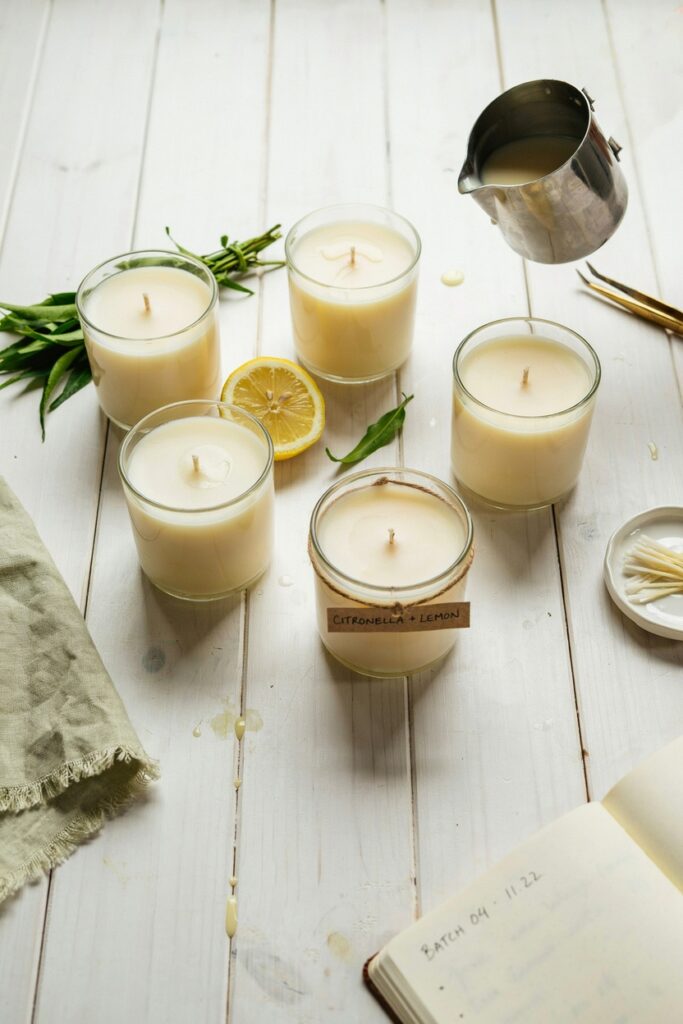
Let the candles sit undisturbed at room temperature for at least 24 hours before trimming the wick or burning.
I know it’s tempting to light one the same day, but a candle that hasn’t fully cured burns less evenly and the scent throw is noticeably weaker.
Step 6: Trim and Burn
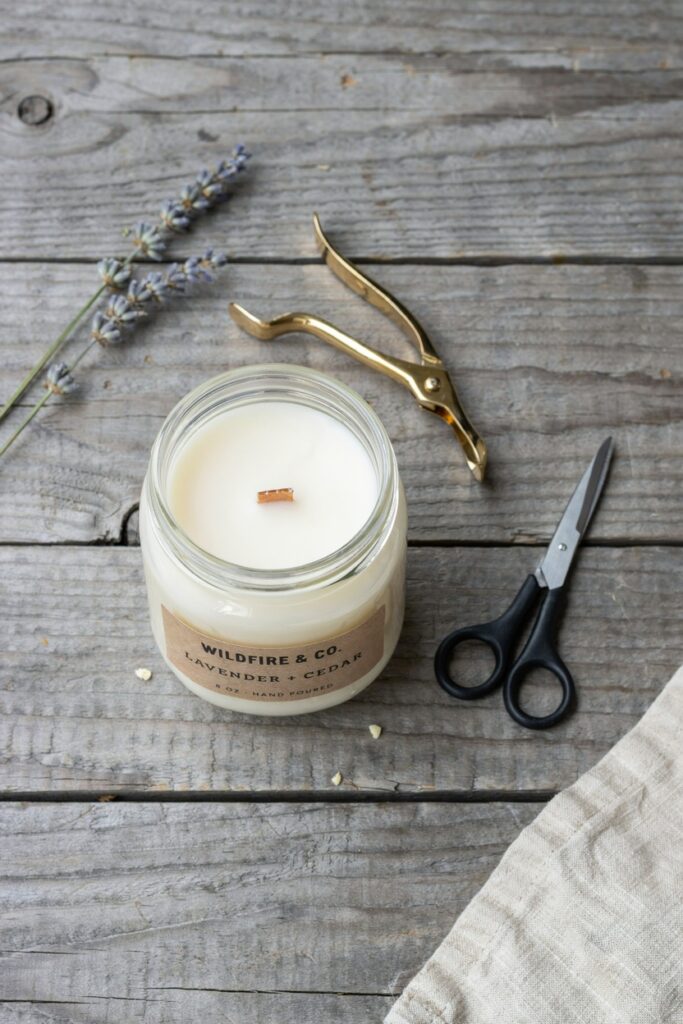
Trim the wick to about a quarter inch before each burn. Place the jar on a heat-safe surface outdoors, away from anything flammable, and never leave it burning unattended.
Tips From Making This More Times Than I’ll Admit
- Center the wick before you pour, not after. I tried adjusting one mid-pour once and ended up with a lopsided burn for the entire life of that candle.
- Don’t skip the cure time. A 24-hour rest genuinely changes how strong and even the scent throw is.
- Use pure citronella essential oil, not fragrance oil, if mosquito deterrence is actually the goal and not just the scent.
- Trim the wick every single burn. A long wick is the main reason I used to get black smoke and soot rings inside the jar.
- Keep a lid nearby when burning outside. Wind can occasionally cause an uneven flame, and a quick cover, once the flame is out, protects the wax from debris between uses.
Mistakes I’ve Made So You Don’t Have To
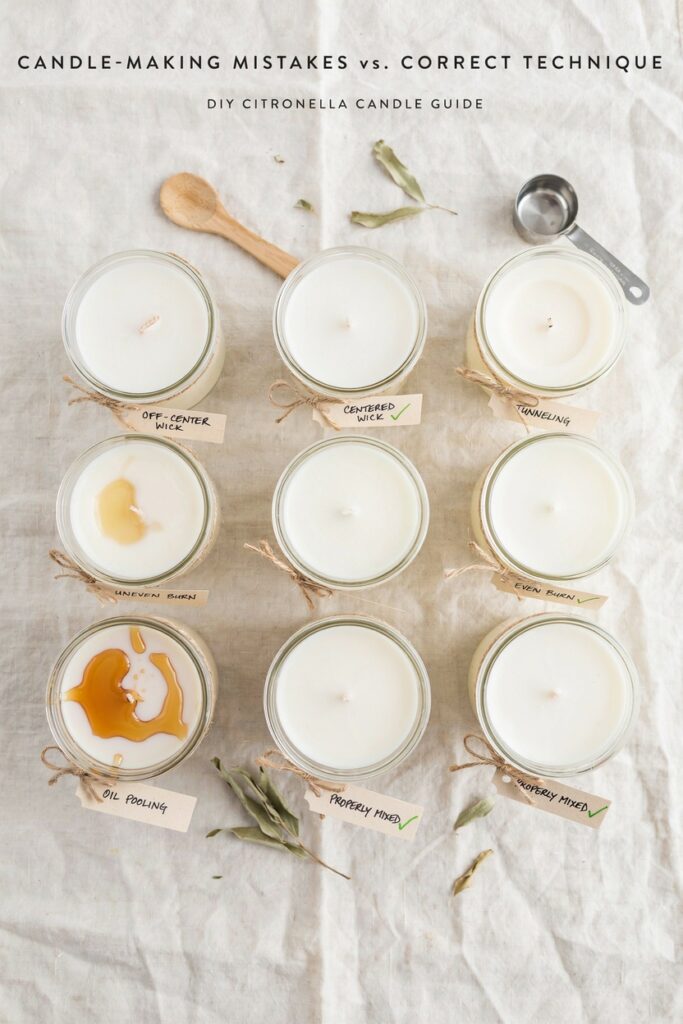
Using a wick sized for a narrow jar in a wide-mouth mason jar. It tunneled straight down the middle and left almost an inch of unburned wax around the edges by the time the wick drowned itself out.
Pouring the wax too hot. The jar cracked from thermal shock on one particularly cold evening, which I now know happens more easily with glass that hasn’t been warmed slightly first.
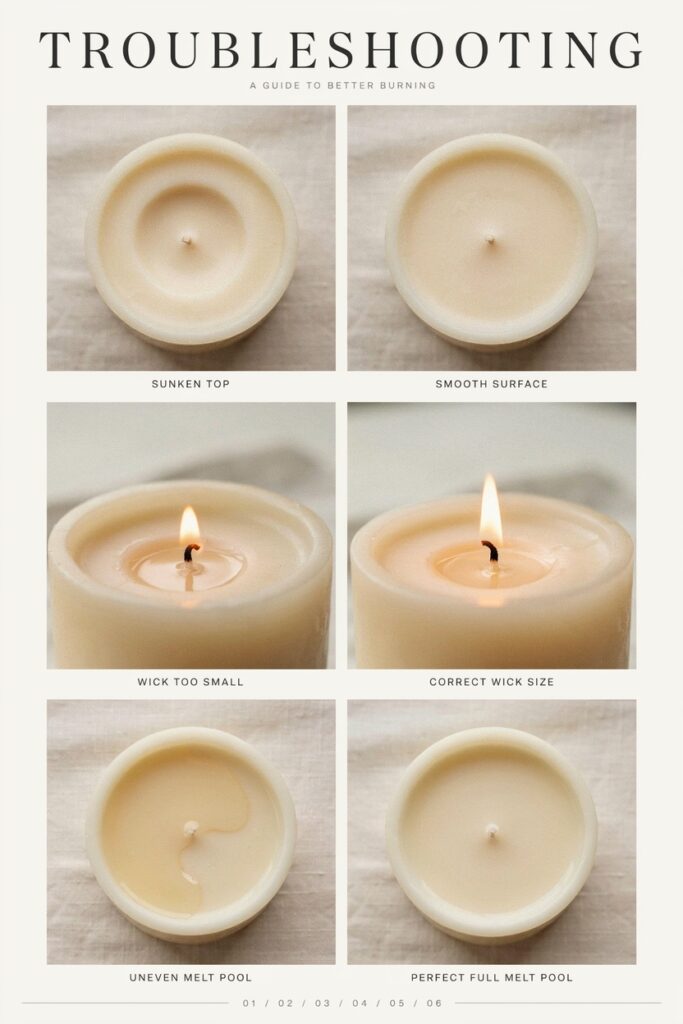
Skipping the cure time because I was impatient to test it. The scent was noticeably weaker that first burn, and the top of the candle set with a slightly sunken, uneven surface.
Adding too much citronella oil, thinking it would repel mosquitoes better.
It pooled slightly on the surface instead of absorbing evenly into the wax, and the extra oil didn’t actually seem to add any real deterrent effect beyond what a properly measured batch already gave me.
If you’re troubleshooting a sunken or pitted candle top on any project, not just this one, my guide on fixing sinkholes in candles covers exactly what causes that and how to prevent it before you pour.
Troubleshooting
The candle doesn’t seem to be repelling mosquitoes at all. Check that you used pure citronella essential oil and not a fragrance oil, and confirm your oil-to-wax ratio actually falls within a real fragrance load range rather than a token few drops.
The scent fades too quickly. This can happen if the candle wasn’t given the full cure time, or if the jar has been sitting somewhere hot or sunny, which causes the oil to evaporate out of the wax before you’ve even lit it.
The wax has a sunken or pitted top. This is usually a pouring temperature issue. My post on fixing sinkholes in candles walks through the fix in more detail than I can cover here.
The wick keeps drowning in melted wax. This is almost always a sizing issue. A wick that’s too thin for your jar’s diameter can’t burn fast enough to keep up with the melt pool.
Sizing your wick correctly the first time will save you from remaking the whole batch, and if you’re not sure how much wax you actually need for your jar size, my candle wax measurement guide breaks that down clearly.
Variations and Uses
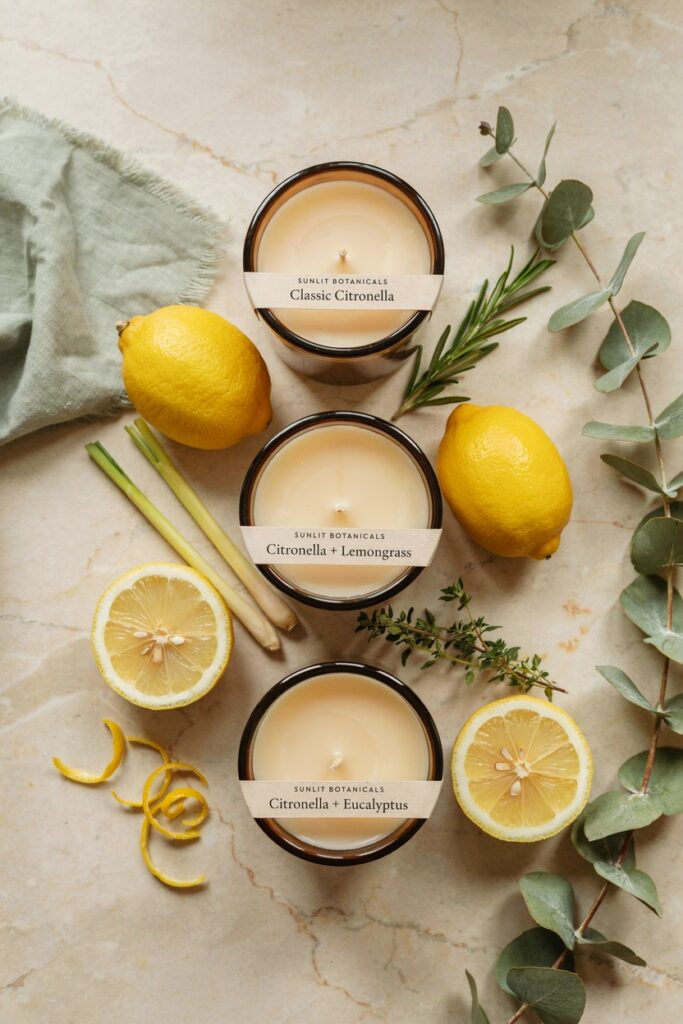
Layered Citrus Blend. I’ve poured a base layer scented with citronella and a top layer with a few drops of lemongrass, which looks nice in a clear jar and smells slightly more complex once both layers are burning together.
Gift-Ready Porch Set. I’ve made a batch of three in matching jars with kraft paper labels for a summer hostess gift, and they’ve gone over better than I expected for something this simple.
Double-Wick Version. For a larger mason jar, I’ve used two wicks spaced apart instead of one centered wick, which gives a wider, more even melt pool and a slightly stronger scent throw across a bigger space.
If you’re building out a full natural pest-deterrent lineup for the porch and kitchen, these pair well with a natural bug repellent lotion bar for your skin and a citronella candle for the space around you.
And if candle-making is new to you, I’d actually start with my more basic cinnamon candle tutorial before jumping into a scented outdoor version, since the pouring and wick-centering basics are the same either way.
Storage
I keep unlit jars in a cool, dry cabinet away from direct sunlight, which has kept the scent noticeably stronger over time compared to the ones I left out on a sunny windowsill by mistake early on.
Once lit and cured, a jar has lasted me most of a summer with regular evening use before the wax burns down completely.
Frequently Asked Questions
Are mason jar mosquito candles safe to use around pets? Keep lit candles out of reach of pets and never leave them burning unattended outside.
Citronella oil itself can be irritating to some animals in concentrated amounts, so I keep my pet away from a freshly poured or freshly lit jar until any strong initial scent has settled.
Do I need pure citronella oil, or will citronella fragrance oil work? For actual mosquito-deterring effect, pure citronella essential oil is what does the work.
Fragrance oil will smell similar but won’t carry the same natural compounds mosquitoes react to.
How long does one candle burn? This depends on your jar size and wick, but a pint mason jar with a properly sized wick has given me somewhere in the range of 30 to 40 hours of total burn time for me, spread across a full season of evening use.
Can I reuse the mason jars once the candle burns down? Yes, and I do every time. Once the wax is fully spent, I clean out the jar with hot soapy water and pour a fresh batch right back into it.
Will this fully keep mosquitoes away from an entire backyard? In my experience, this works best as a deterrent in a contained area close to where you’re sitting, not as something that clears mosquitoes from a wide open yard.
For a bigger space, I’d pair a few of these with other natural deterrents rather than relying on one candle alone.
Final Thoughts
These mason jar mosquito candles have become one of my favorite summer porch staples, mostly because they actually smell like something I want burning near me, and I’m not left guessing what’s in the wax by the time the season’s over.
If you try a batch, let me know how the scent throw held up for you, since I’ve found it can vary a bit depending on your climate and how much wind your porch actually gets.