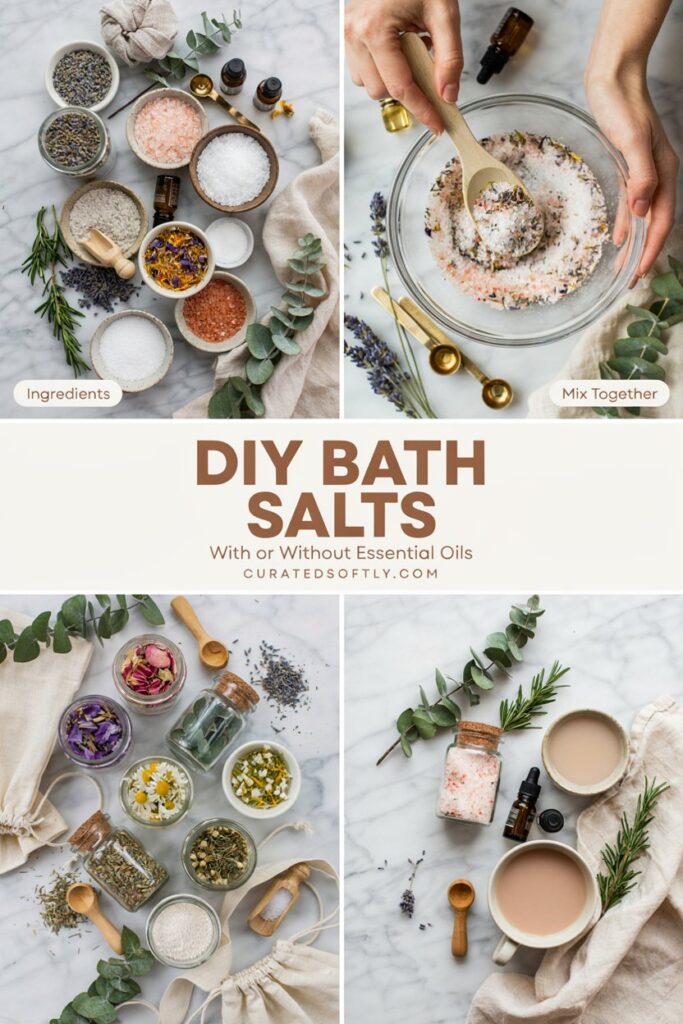
DIY Bath Salts With or Without Essential Oils
My mother-in-law mentioned once, almost in passing, that she loved a particular bath salt blend from a shop that had since closed, and that comment sat in my head for months longer than it probably should have.
When her birthday came around, I decided to just make a version myself instead of hunting down a replacement online, mostly because I couldn’t find anything close to what she’d described and I was tired of scrolling.
That first batch was rougher than I expected, too salty-smelling in one jar and barely scented at all in another, and it took a few more rounds before I landed on something I’d actually want to sit in myself.
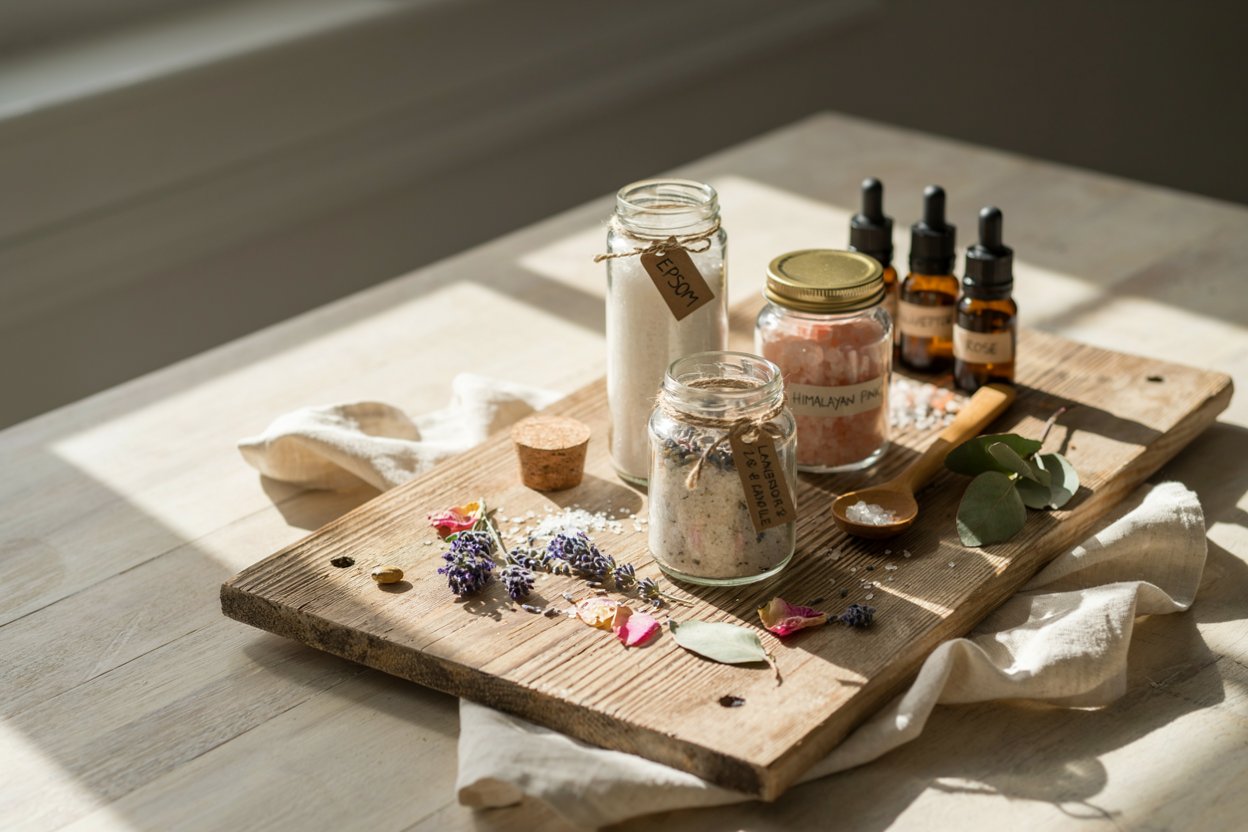
Now I keep a jar going pretty much constantly, and I’ve made enough gift batches for other people that I finally wrote the ratios down instead of eyeballing them every time.
What I like most about this recipe is that it works with or without essential oils. My mother-in-law is sensitive to strong scents, so her batches are always plain, just the salts and a little oil for the skin, while mine usually gets a full dose of whatever essential oil blend I’m in the mood for that week.
A quick safety note before you make these: essential oils should always be diluted into a carrier oil before being added to a bath, never dropped directly into bathwater, since they don’t dissolve in water and can sit concentrated against the skin.
Some essential oils, including citrus oils like bergamot and lemon, can increase skin sensitivity to sunlight, so I avoid those in the days before I know I’ll be out in direct sun.
As with any bath product, if you’re pregnant, have sensitive skin, or have a specific skin condition, I’d check with a doctor before adding essential oils to a bath routine, and always patch test a new oil on a small area of skin first.
Newer to DIY? If bath salts are your entry point into making things at home, you might also like my air dry clay beginner tips and my soap making for beginners guide — both are similarly low-equipment, low-stakes ways to get started.
Why This Bath Salt Recipe Works
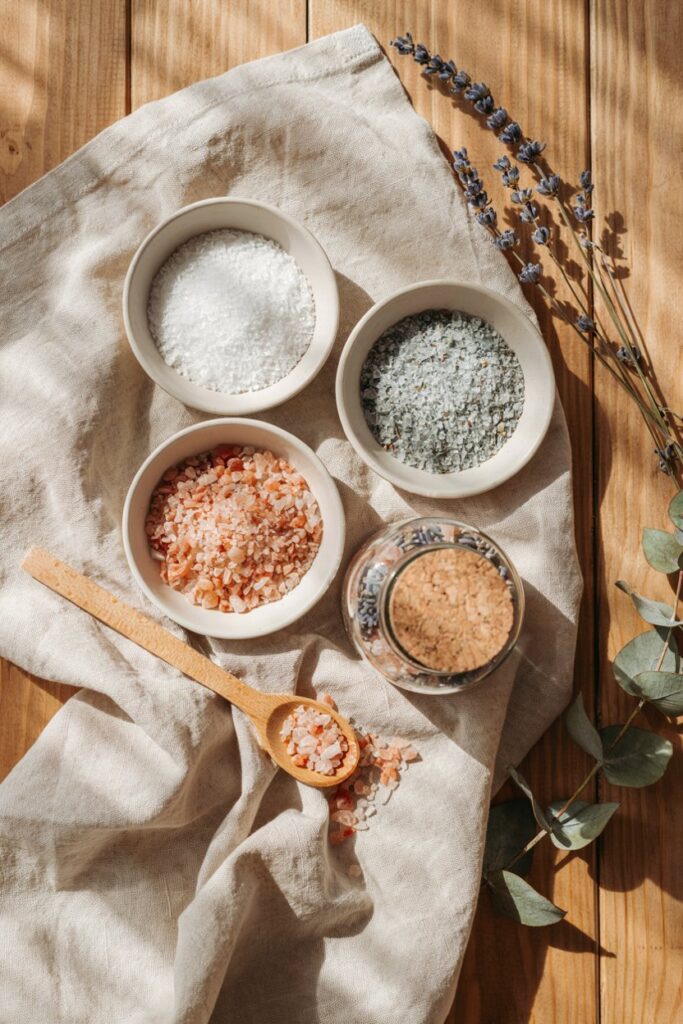
Epsom salt is doing real work here, not just filling volume. It’s made of magnesium sulfate, and soaking in it is a common home remedy people use for muscle soreness and general relaxation, which is part of why it’s the base of pretty much every bath salt recipe you’ll come across, including this one.
Coarse salt, like sea salt or Himalayan salt, adds texture and a slightly different dissolve rate than Epsom salt alone. I mix the two rather than using just one, since an all-Epsom batch dissolves almost too fast for my taste, and an all-sea-salt batch feels a little sharp against the skin without the softening the Epsom brings.
The carrier oil matters more than I expected it to. Early on I skipped it entirely and just did salt and essential oil, and my skin felt noticeably drier afterward than it does now that I always include a carrier oil in the mix.
Bath Salts With Essential Oils vs. Without
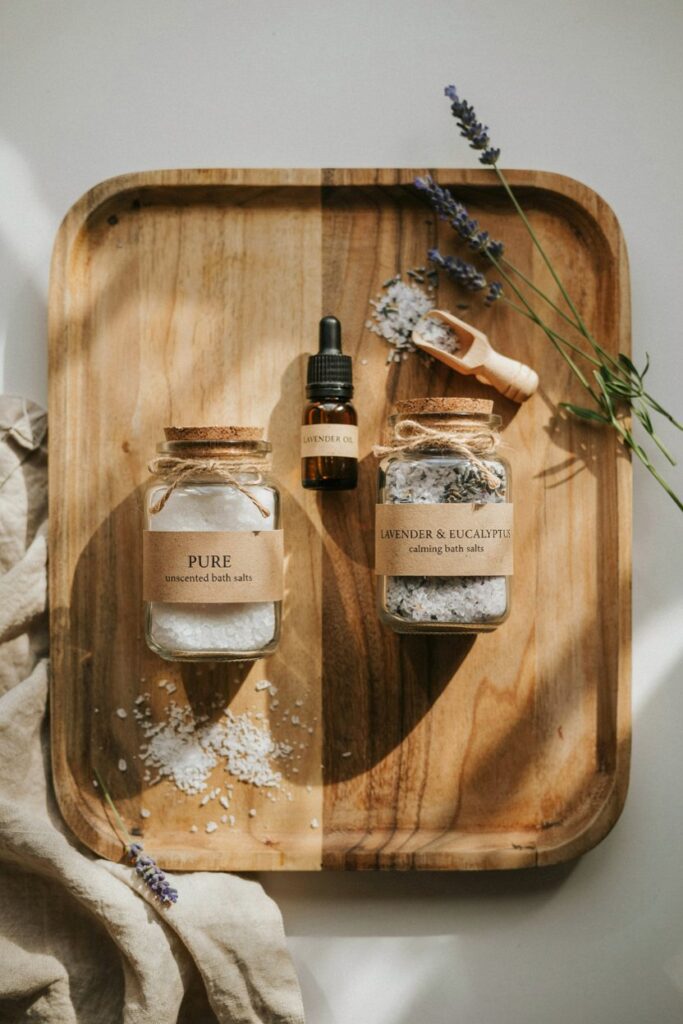
I want to be upfront that both versions are genuinely good, not just a “full version” and a “compromise version.”
The essential oil version gives you an actual aromatherapy effect on top of the soak itself, lavender for winding down before bed, eucalyptus if I’m congested, peppermint after a long day on my feet.
If you’re building out a broader natural scent routine at home, my post on scenting candles without essential oils actually covers the flip side of this same idea, for the times you want scent without going the essential oil route at all.
The oil-free version is what I make for my mother-in-law, and honestly what I’d recommend for anyone with sensitive skin, a fragrance allergy, or young kids in the house. It still has the texture and the muscle-soak benefit of the salt itself, it just skips the aromatic layer.
Ingredients
- Epsom salt. This is the base of the recipe and does the most work in terms of the actual soak benefit.
- Coarse sea salt or Himalayan salt. Adds texture and a different mineral profile than Epsom salt alone.
- A carrier oil, like sweet almond oil, jojoba oil, or fractionated coconut oil. This keeps the salt from drying out your skin and is also what safely dilutes the essential oil if you’re using one.
- Essential oil of choice, optional. Lavender, eucalyptus, and peppermint have all worked well for me, but this is entirely down to personal preference.
- Dried flowers or herbs, optional, for appearance. I’ve used dried lavender buds and dried rose petals, both purely decorative rather than functional.
- An airtight glass jar, for storage.
Substitutions I’ve Actually Tested
No coarse sea salt on hand? A batch made with just Epsom salt still works fine, it just dissolves a bit faster and has a slightly finer texture than the blended version.
No jojoba or almond oil? I’ve used plain olive oil in a pinch, and while it works, the scent is noticeably more noticeable than a neutral carrier oil, so it can compete a little with whatever essential oil you’re using.
Want a colored batch? A few drops of skin-safe cosmetic mica powder, mixed in before the oil, gives a soft color without staining the tub, though I’d test a small amount first since mica can vary a lot in how strongly it tints.
How to Make DIY Bath Salts
Step 1: Combine the Salts
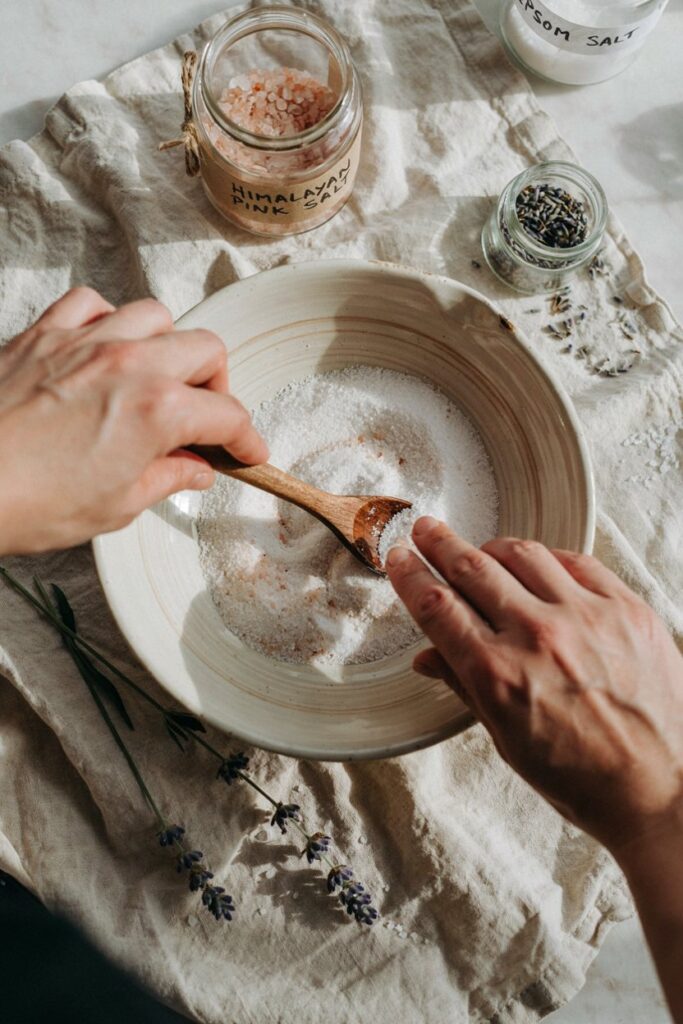
In a large bowl, combine 2 cups of Epsom salt with 1 cup of coarse sea salt, roughly a 2-to-1 ratio.
Stir with a spoon or your hands for a good 30 seconds, working from the bottom of the bowl up, since the two salts settle into layers pretty quickly if you just swirl the top.
I use my hands for this step more often than not, it’s the easiest way to tell if there are still dry pockets sitting at the bottom.
Step 2: Add the Carrier Oil
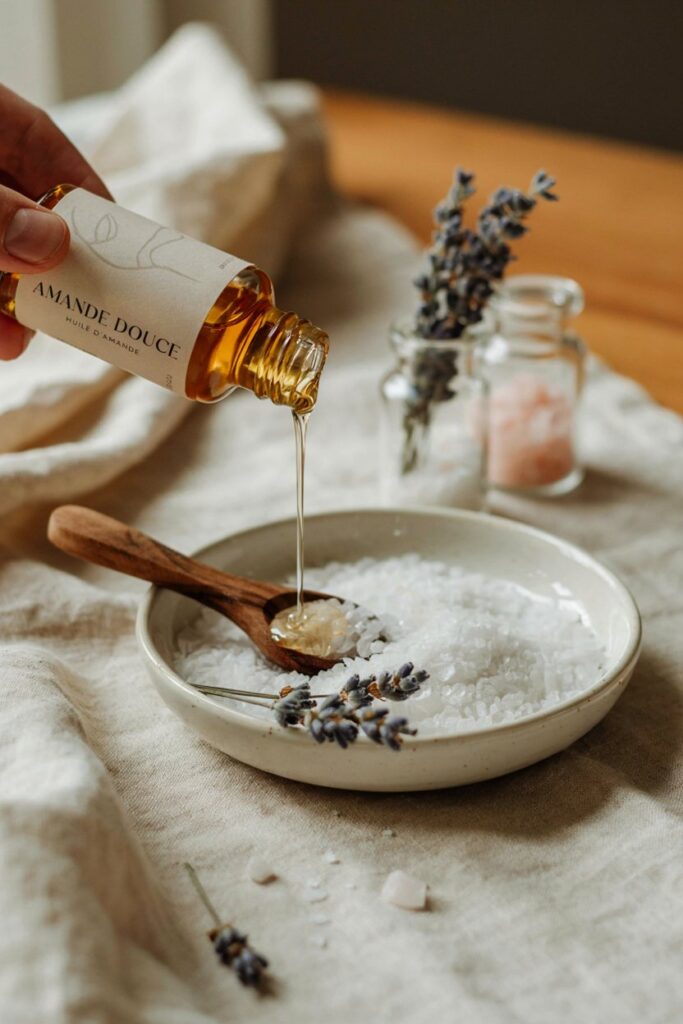
Drizzle in about 1 tablespoon of carrier oil per 2 cups of total salt, pouring it slowly in a thin stream across the surface rather than dumping it in one spot.
Stir immediately after, since oil poured all at once tends to soak into whatever salt it lands on first and leave the rest of the batch dry.
You’re looking for salt that looks faintly damp and holds together loosely if you press a small amount between your fingers, not salt that’s visibly wet or starting to clump into wads.
Step 3: Add Essential Oil, If Using
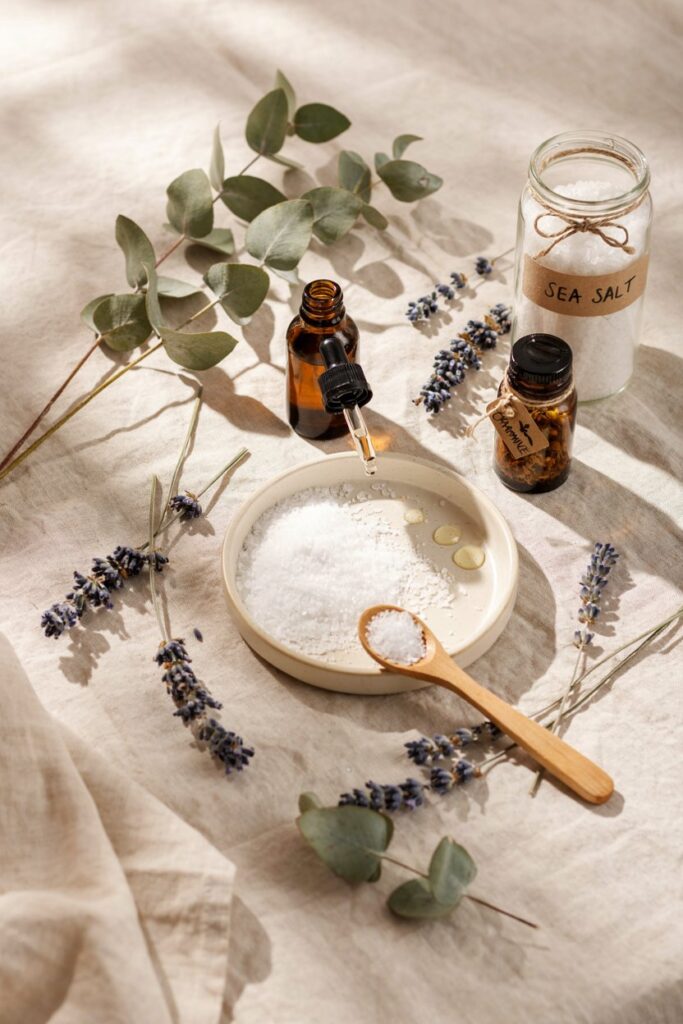
If you’re making the scented version, add 15 to 20 drops of essential oil per 2 cups of salt directly into the bowl, then stir for a full minute, not just a few quick passes.
I count my drops here rather than pouring freely, since essential oil is potent enough that a slightly heavy hand makes the finished scent noticeably sharper than I actually want. Stop stirring once you can smell it evenly if you bring the bowl close to your face from a few different spots, not just the top.
Step 4: Fold In Dried Flowers or Herbs, If Using
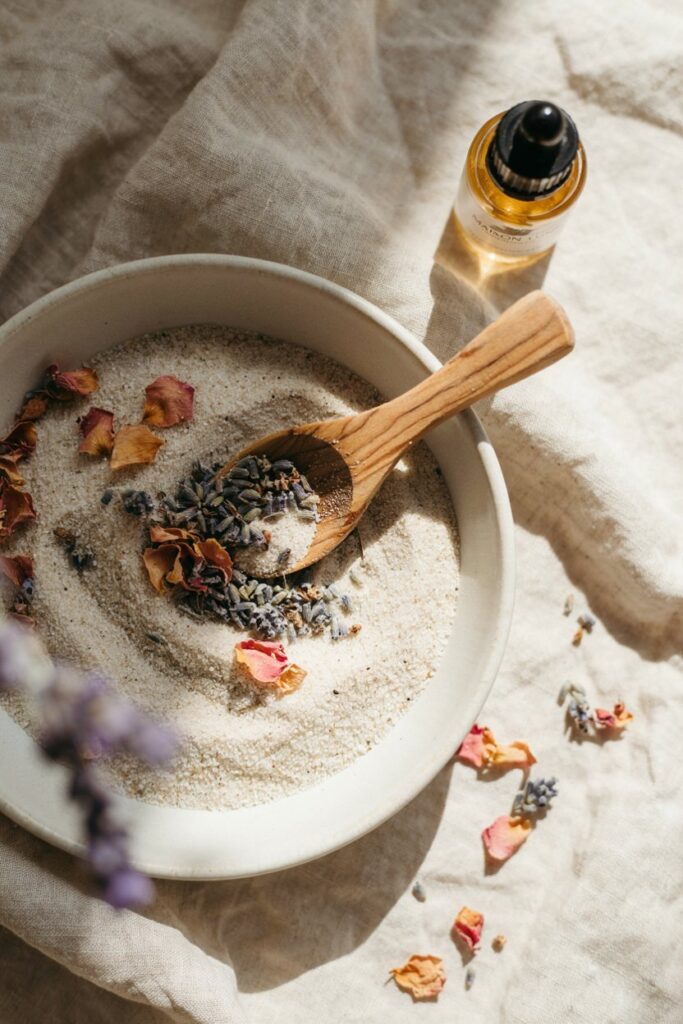
Sprinkle any dried botanicals over the top and fold them in gently with a spoon, using a scooping motion rather than stirring hard.
Dried lavender buds and rose petals are both fragile once fully dried, and vigorous stirring at this stage is the fastest way to turn whole petals into confetti-sized bits by the time you’re done.
Step 5: Transfer to an Airtight Jar
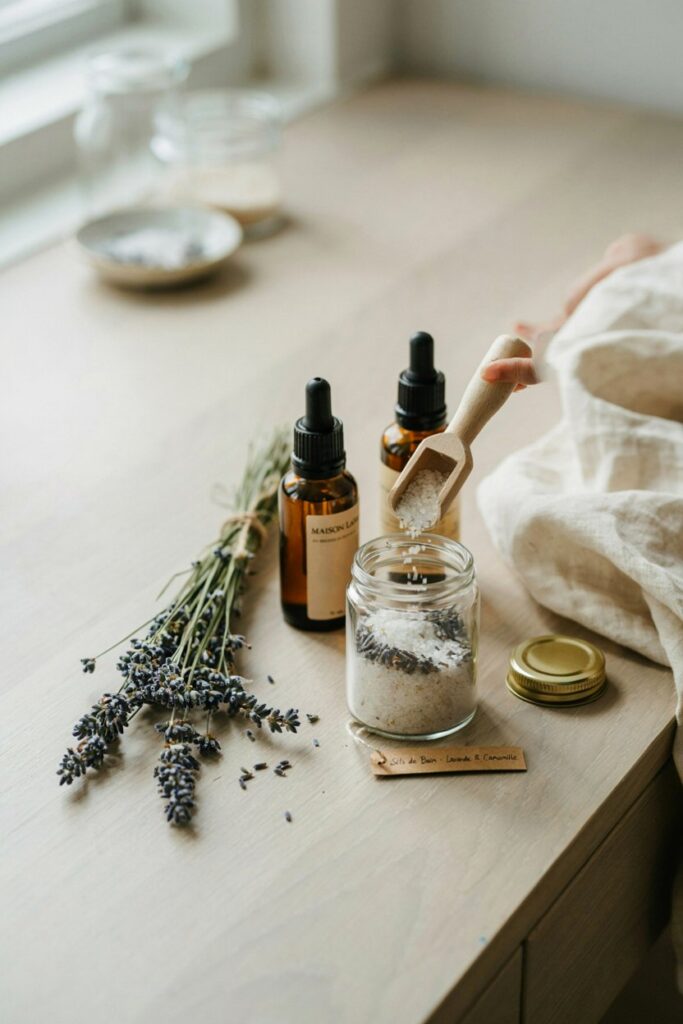
Spoon the finished mixture into a clean, completely dry glass jar, adding it in a few smaller batches rather than one large dump.
After each addition, press down gently with the back of the spoon to settle it and push out trapped air pockets, which has genuinely made a difference for how long my jars stay fresh compared to batches I just poured in loosely.
Wipe the rim clean before sealing the lid, since a bit of oil residue there can make the lid harder to open cleanly later.
Step 6: Let It Sit Before First Use
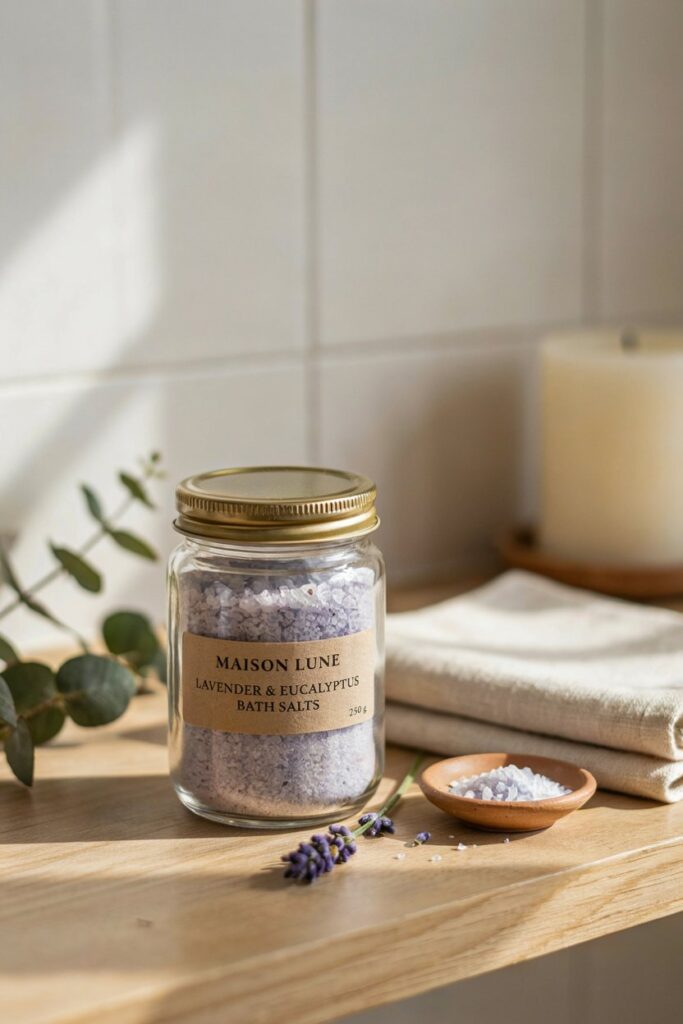
Set the sealed jar somewhere out of direct sunlight and let it rest for at least 24 hours before the first use.
I give mine a firm shake once, about halfway through that resting period, which helps redistribute any oil that’s settled toward the bottom and gets the scent to come through more evenly by the time I actually use it.
Tips From Making Many, Many Batches of This
- Use about half a cup to a full cup of salt per bath, depending on how strong you want the effect. I start on the lighter side and add more if I want it stronger.
- Store the jar somewhere dry. Bathroom humidity is the enemy here, and I learned that one the hard way, described below.
- Stir before each use if it’s been sitting a while, since the oil can settle slightly toward the bottom over time.
- Label the jar with the essential oil used and the date made, especially if you’re making multiple scent variations at once. I’ve mixed up jars more than once without labels.
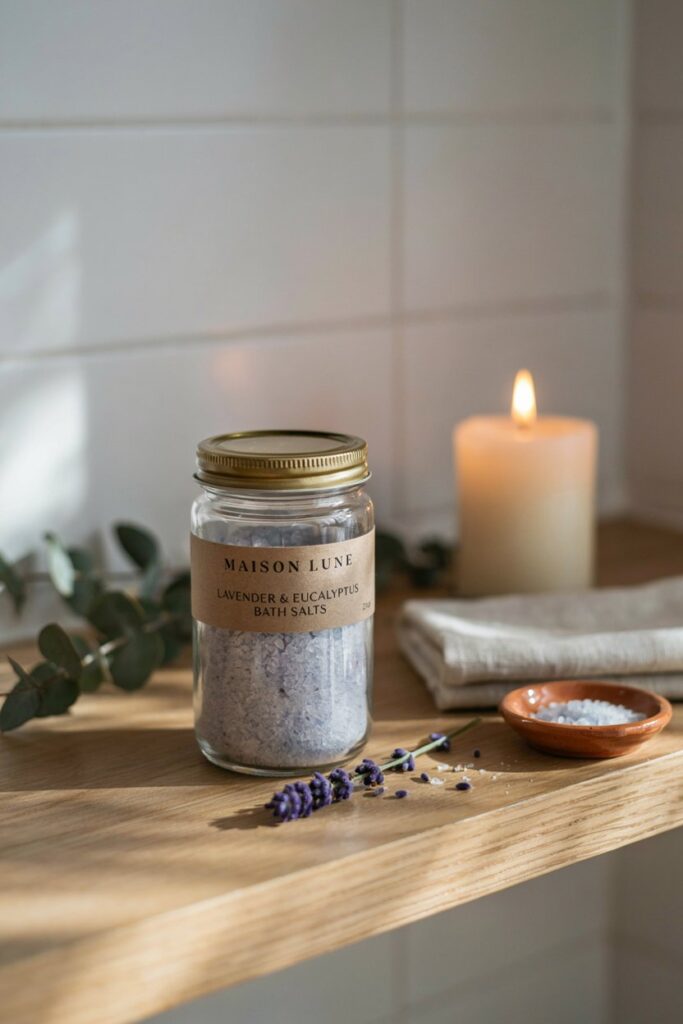
- If gifting, a simple kraft label with the ingredients listed is genuinely appreciated, especially for anyone with sensitivities who wants to check before using it.
Mistakes I’ve Made So You Don’t Have To
Storing a finished jar on my bathroom counter instead of in a cabinet. The humidity from regular showers caused the salt to clump into a solid, damp mass within about two weeks, which I only noticed when I went to scoop some out.
Adding essential oil directly to bathwater once, before I understood why that was a problem. It sat on the water’s surface in visible droplets and left a couple of small red patches on my skin where it touched directly.
Overdoing the carrier oil in an early batch. The salt turned almost slushy and didn’t hold its texture in the jar, and it made a genuinely oily mess in the tub that took extra rinsing to get off the surface afterward.
Skipping the 24-hour rest period because I wanted to use a batch the same day I made it. The scent was noticeably weaker and less even than in batches I let sit overnight first.
Troubleshooting
The salt has clumped together. This is almost always a humidity issue. Break up the clumps with a fork and consider moving the jar to a drier storage spot, like a cabinet instead of an open bathroom shelf.
The scent is barely noticeable. Check how long the batch has rested and whether your essential oil ratio was on the lighter side. A short rest time and a light hand with the oil both lead to a milder finished scent than expected.
The bath water feels oily rather than silky. This usually means the carrier oil ratio was too heavy. Cut back slightly on the next batch, since a little goes a long way.
My skin felt irritated after a bath. Stop using that particular blend and check whether you diluted the essential oil properly, patch tested it beforehand, and aren’t using a photosensitizing oil like a citrus blend right before sun exposure.
Variations and Uses
Sleep Blend. Lavender and a touch of chamomile essential oil, made for an evening soak before bed.
Muscle Soak Blend. Eucalyptus and peppermint, which I reach for after a long day of physical work or exercise.
Unscented Sensitive-Skin Blend. Just the salts and carrier oil, no essential oil at all, which is the version I always make for my mother-in-law.
Gift Jar Set. A trio of small jars in different blends, labeled and tied with twine, makes a nice low-cost gift. If you’re building out a broader natural gift set, these pair well with my bug repellent lotion bars or homemade aloe cucumber after-sun soap for a full natural self-care bundle rather than a single jar on its own.
Storage
Keep the finished jar sealed and stored somewhere dry, away from direct bathroom humidity if possible. A well-sealed batch has stayed good for me for a couple of months before the scent noticeably fades, at which point I just make a fresh batch rather than trying to re-scent an old one.
If You Want More DIY Self-Care Projects to Try
- DIY Bath Bombs
- Moisturizing Oatmeal Honey Soap for Dry Skin
- How to Scent Candles Without Essential Oils
- Easy DIY: How to Make Candles at Home for Beginners
Frequently Asked Questions
Can I use bath salts if I’m pregnant? I’d check with a doctor before using essential oils during pregnancy, since some oils aren’t recommended. The unscented, oil-free version is generally considered lower-risk, but a doctor’s input is worth getting either way.
Do I have to use essential oils for this to work? No. The salt itself, particularly the Epsom salt, is doing the main soak-related work. Essential oils add scent and an aromatherapy layer, but the base recipe stands on its own without them.
How much should I use per bath? I typically use about half a cup to a full cup per bath, depending on tub size and how strong I want the effect.
Can kids use this? For young kids, I’d stick to the unscented version and use a smaller amount, and I’d avoid essential oils in a kid’s bath altogether unless a pediatrician has specifically said it’s fine for their age and skin.
Why did my jar turn into one solid block? This is almost always moisture getting into the jar, either from storage location or from a lid that wasn’t fully sealed. Store in a cool, dry spot with the lid tightly closed.
Final Thoughts
What started as one birthday gift has quietly become one of my most-used self-care staples, cheap enough that I never feel bad using a full cup in one bath, and personal enough that half the jars in my cabinet are blended for someone specific rather than just “bath salts” in general.
That’s really the part I didn’t expect going in, that the recipe would end up flexing so easily between a quiet night alone and something worth handing to someone else.
If you make a batch, I’d genuinely love to hear which blend you landed on, and whether you ended up in the scented camp or the plain one. Mine changes depending on the week, but if I had to pick just one to keep making forever, it’d be the eucalyptus and peppermint.