
Air Dry Clay Business Ideas: What Can You Actually Sell?
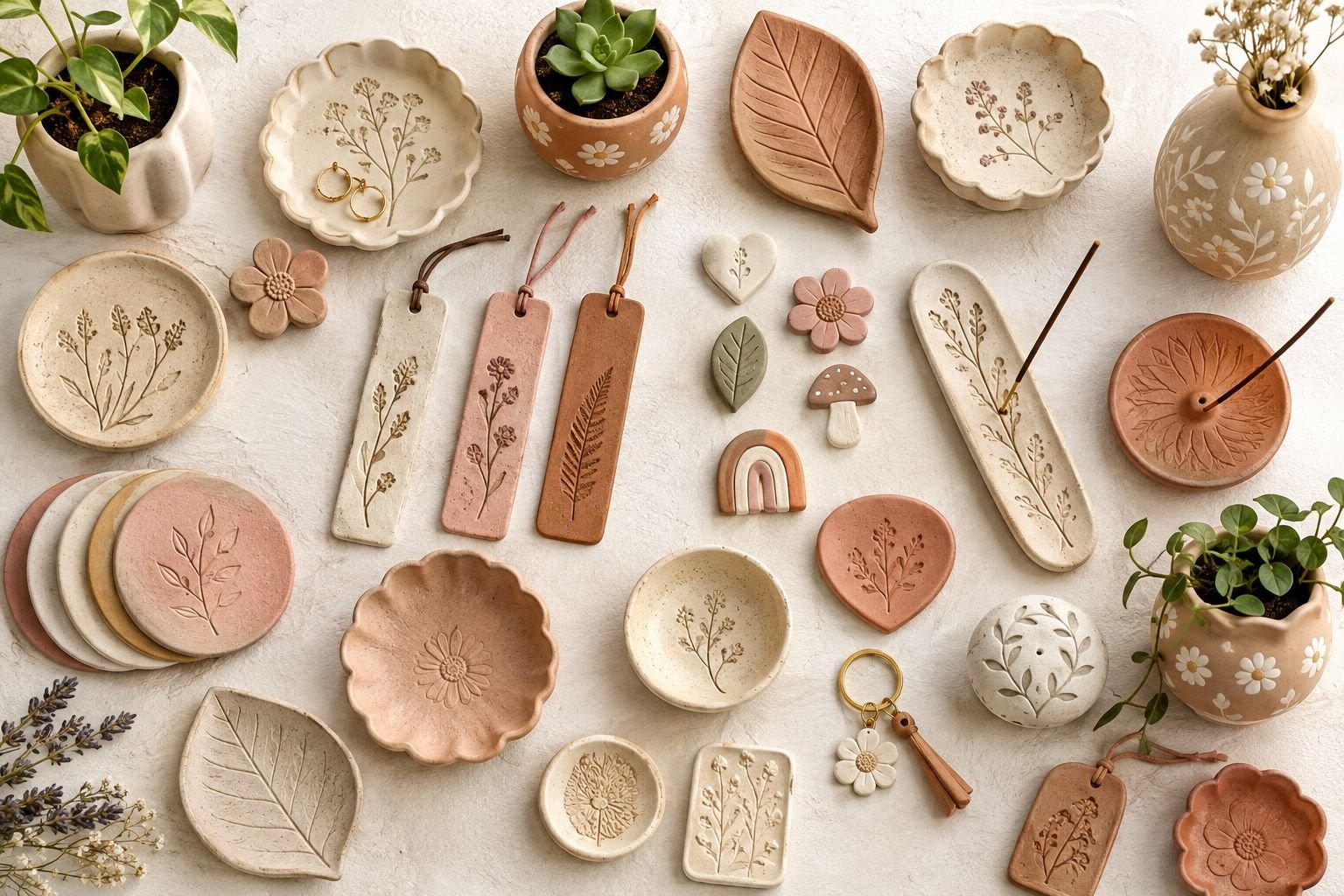
Someone messaged me a few months back after I posted my leaf imprint jewelry dish, asking, almost apologetically, if it was “silly” to wonder whether she could actually sell something like that. It wasn’t silly at all.
I get some version of that question more than almost anything else I get asked, right up there with “does this crack in the microwave?”
The honest answer is yes, but with a catch. Not every air dry clay project that looks cute on a shelf is actually something a stranger will pay for.
There’s a real gap between what’s fun to make on a Tuesday night and what has genuine resale demand, and I’ve made enough of both kinds at this point to have a pretty clear sense of where that line sits.
So this isn’t a “everything you make is worth money” post, because that’s not true and I think it does new sellers a disservice.
It’s a rundown of the specific air dry clay items I’ve seen actually move, either from my own small batches or from other makers I follow, along with realistic pricing and where I’d actually try to sell them.
If you’ve read my post on turning a DIY hobby into a blog and making an income, some of this will feel familiar. The honest version of “can I make money from this” is almost always more specific and less glamorous than people hope, and that’s true here too.
Why Air Dry Clay Specifically Works for This
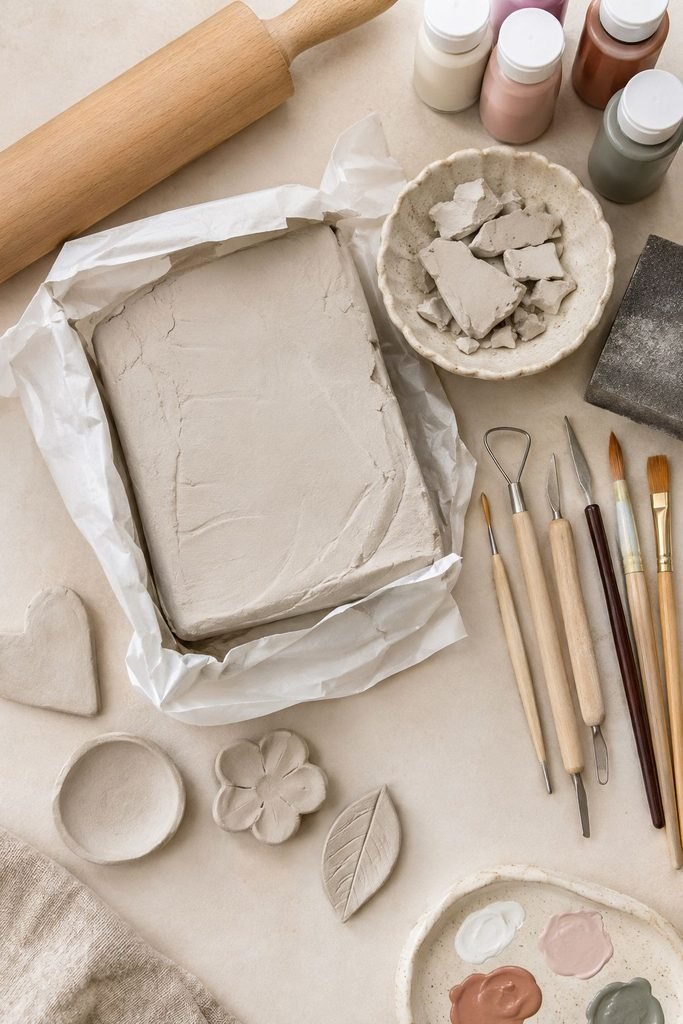
Air dry clay has one advantage over polymer clay or ceramics that makes it a genuinely good starting material for anyone testing whether they even like selling handmade goods: there’s no kiln, no oven curing, or expensive equipment investment beyond a bag of clay and some paint you probably already own.
That low barrier cuts both ways, though. It also means the market’s a little more crowded, since anyone can start with a five-dollar bag of clay and a Saturday afternoon.
What separates the pieces that sell from the ones that sit in an Etsy shop for eight months usually isn’t the material.
It’s finishing quality, consistent sizing, and picking products people actually have a reason to buy rather than just admire.
Amazon Supplies You’ll Need to Start Selling Air Dry Clay
- DAS Air-Hardening Modeling Clay
- Air-Dry Clay Sculpting Tool Set
- Acrylic Paint Set
- Fine Detail Paint Brush Set
- Clear Acrylic Sealer
- Jewelry Making Findings Kit
- Keychain Hardware Kit
- Strong Craft Magnets
- Cork Sheets for Coaster Backing
The Products That Actually Sell
Here’s where I’d focus if I were starting from scratch, roughly ordered by how reliably I’ve seen each one move.
I’ve tried to be specific about why each one sells and not just that it does, because the “why” is usually what tells you how to make your version better than the ten other shops selling something similar.
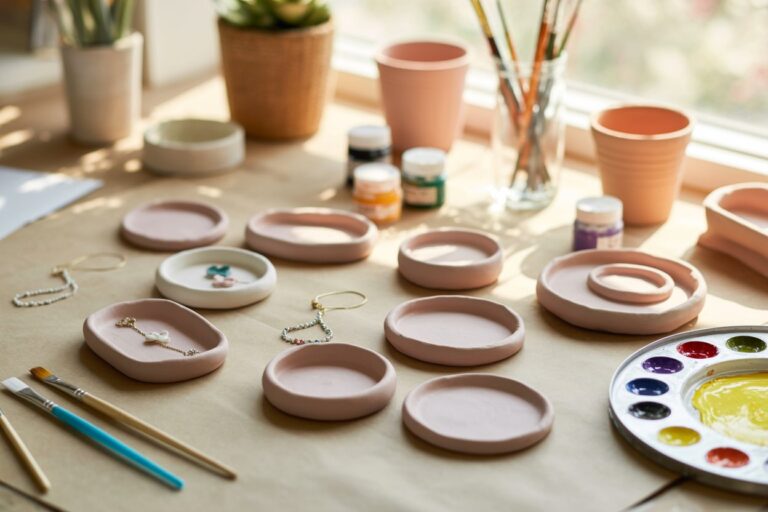
Trinket Dishes and Ring Holders
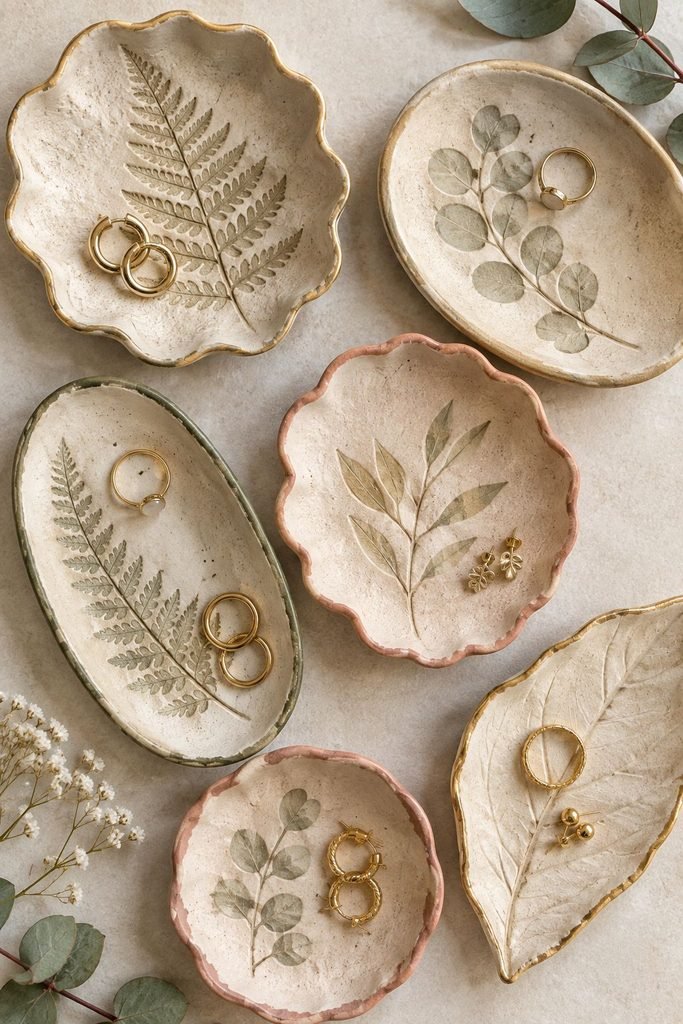
Price range: $12–$22, depending on size and detail
These are, in my experience, the single easiest air dry clay item to sell. They’re useful, they’re small enough to ship cheaply, and they photograph beautifully next to a plant or on a nightstand, which matters more than people think when your whole shop lives or dies on a thumbnail.
My air dry clay trinket dish tutorial covers the basic shape. A scalloped or leaf-pressed edge tends to sell better than a plain circle.
A plain circle reads as “I made this in twenty minutes,” which, fair, but customers pay for the illusion of more effort than that.
Buyers are almost always shopping for a gift or a specific spot in their own home, a nightstand, a bathroom counter, or a desk.
Having two or three sizes ready rather than one standard dish also gives them a reason to buy more than one.
Genuinely one of the best entry points if you’ve never sold anything handmade before, since the shaping is forgiving and a single bag of clay makes several. The leaf-pressed or scalloped versions justify the top of the price range.
Jewelry Dishes With a Botanical Imprint
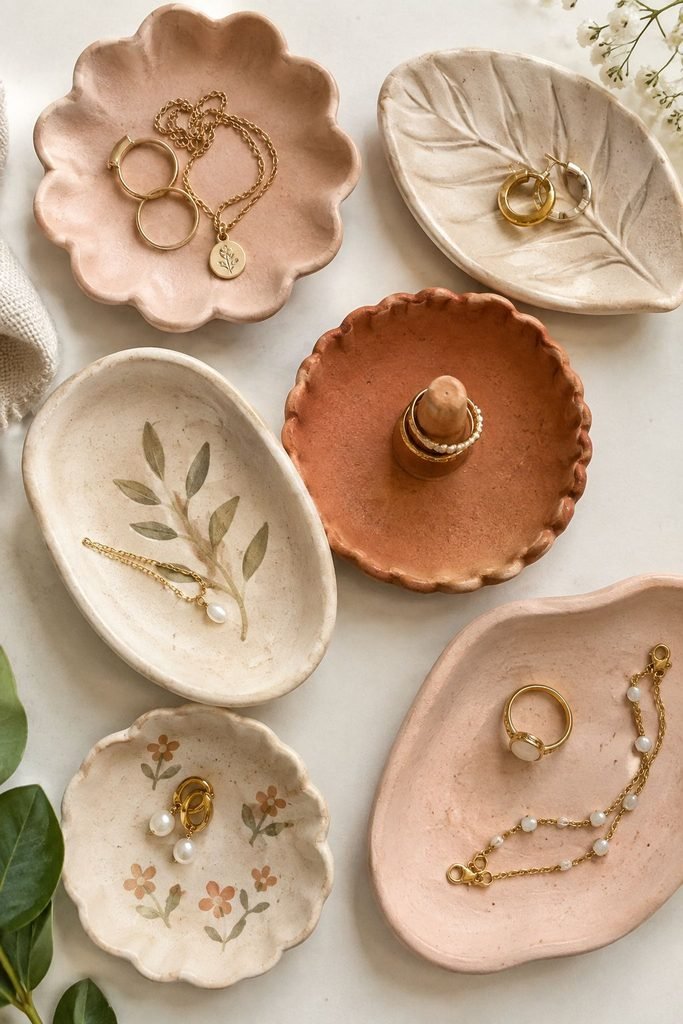
Price range: $18–$28
A step up from the basic trinket dish, these use pressed leaves or flowers for texture, which reads as more intentional and lets you charge more for the same amount of clay. My leaf imprint jewelry dish tutorial walks through the imprinting technique.
What makes this category work as a business is that the imprint itself becomes a variable customers can choose, fern, eucalyptus, or a specific flower shape.
That turns a single product into an entire small collection without you having to design ten different shapes from scratch.
Photograph these on a neutral, slightly textured background rather than plain white. The shadow the imprint casts is a lot of the visual appeal, and it gets lost against stark white. A two-tone glaze or a gold-painted rim pushes toward the top of the price range.
Fridge Magnets
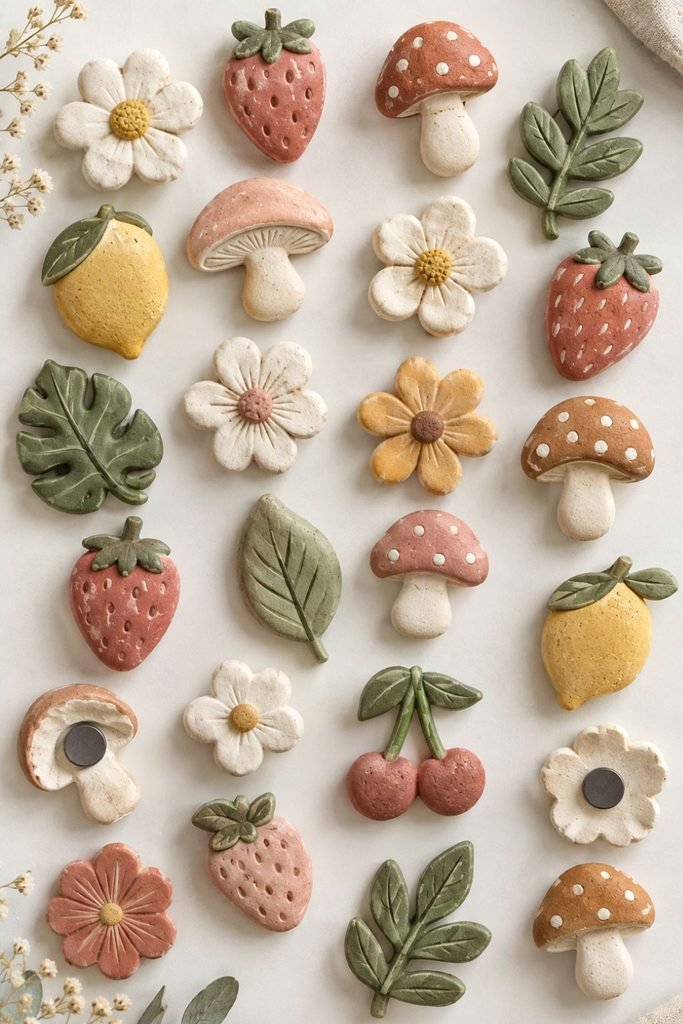
Price range: $15–$20 for a set of three or four
Genuinely underrated as a sellable item. They’re cheap to make in batches, cheap to ship, and work well as an impulse-buy price point at a craft fair table, where someone’s already committed to buying something bigger and just needs a small add-on to round out their purchase.
My DIY fridge magnets post covers the magnet-backing step, which is the part most beginners get wrong. Using magnets that are too weak for the clay’s weight is tempting if you’re trying to save a few cents, but don’t skimp there.
Themed sets sell noticeably better than a single random shape, such as fruit, mushrooms, or a specific flower. Sell as sets, not singles; the shipping cost barely changes between one and four.
Bookmarks
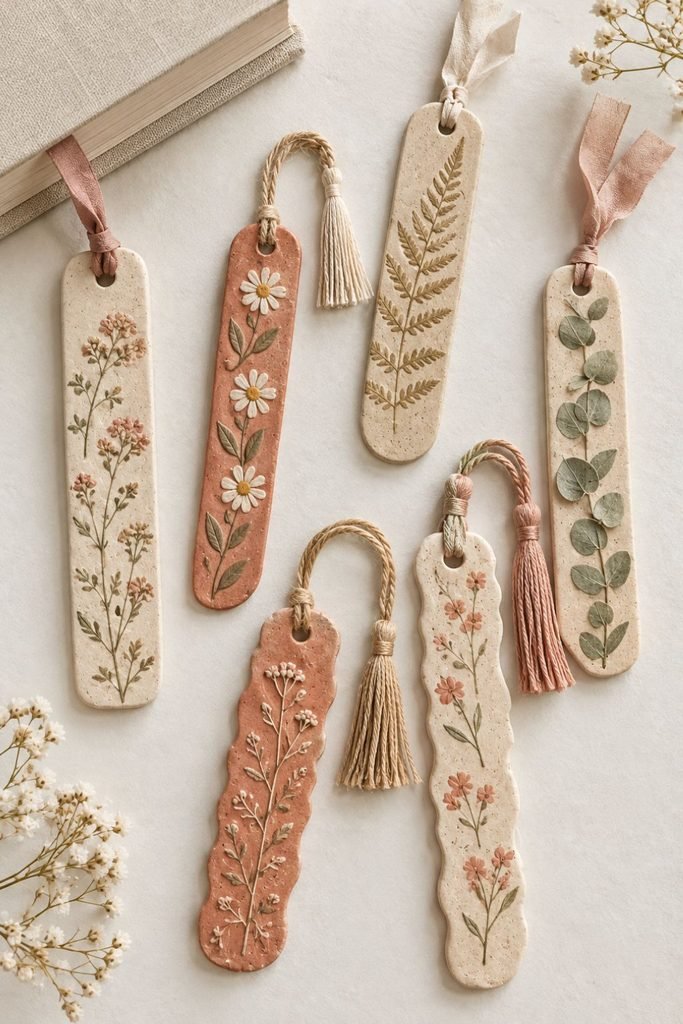
Price range: $8–$14 each
A little niche, but a real audience exists for them, especially seasonal or themed sets. It’s also a category with surprisingly little competition compared to trinket dishes. My air dry clay bookmark tutorial has the basic technique.
The people buying these tend to be buying for themselves, not as a gift, which changes your marketing angle. Lean into “for the reader who deserves something nicer than a receipt stuck in their book” rather than gift-focused copy.
A tassel or ribbon in a color that coordinates with the clay tone does a lot of visual work for very little added cost. Consider a small discount on sets of two or three, since bookmark buyers often want a rotating collection rather than just one.
Small Planters and Mini Pots
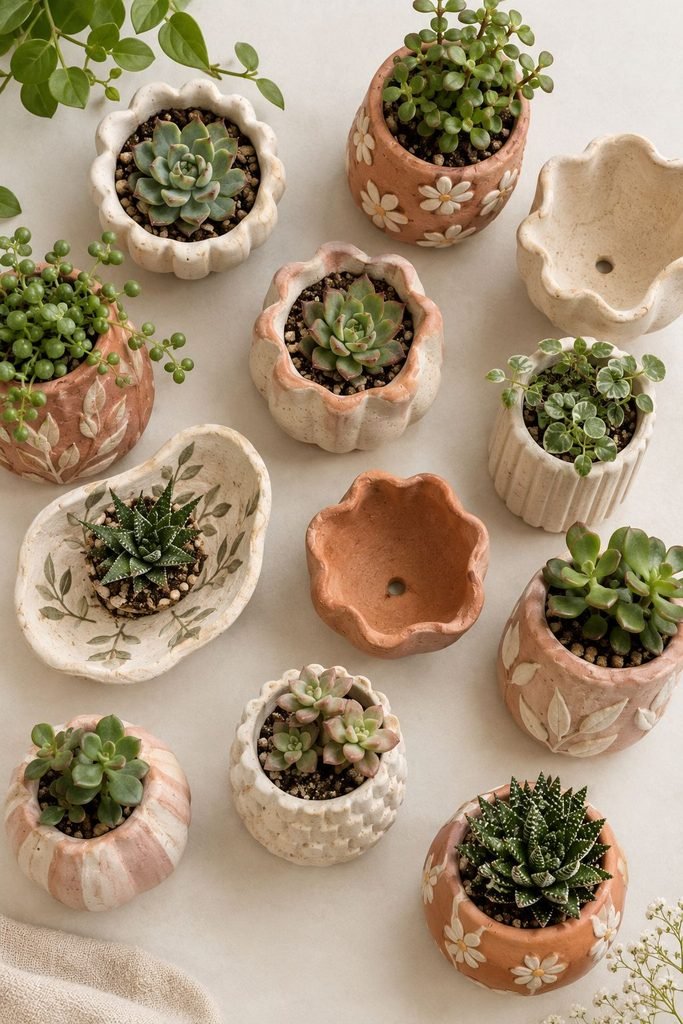
Price range: $10–$18 empty, higher bundled with a plant
These sell especially well paired with a small succulent cutting if you’re doing an in-person market. The plant does a lot of the visual selling for you, and it turns a static object into something that feels alive on the table. My mini pots tutorial covers sizing.
Drainage matters more here than in almost any other item on this list. A pot without a drainage hole is a decor object, not a functional planter, and buyers who actually garden will notice and ask.
I’d offer both: a drainage version marketed for a live plant, and a sealed version marketed as a faux-plant or dried-flower holder. It doubles your potential customer base from one mold. Bundled versions at a market consistently outsell empty ones sitting next to them.
Ornaments
Price range: $20–$35 for a set of three to five
Seasonal, obviously, but the seasonality actually works in your favor since people buy them in batches for gifts, teacher gifts, hostess gifts, and stocking stuffers, rather than one at a time for themselves. My complete beginner’s ornament guide has the full process.
This is the one category where I’d genuinely recommend starting production two to three months before the season hits.
Drying and painting takes real time, and the demand window is short and unforgiving. If you’re still shaping ornaments the second week of December, you’ve likely missed the bulk of the buying window.
Personalized versions, such as a family’s initials or a pet’s name added in fine paint, can command a premium and are worth offering even though they slow down your batch process. Personalized single pieces reasonably run higher than the set price above.
Necklace Charms and Pendants
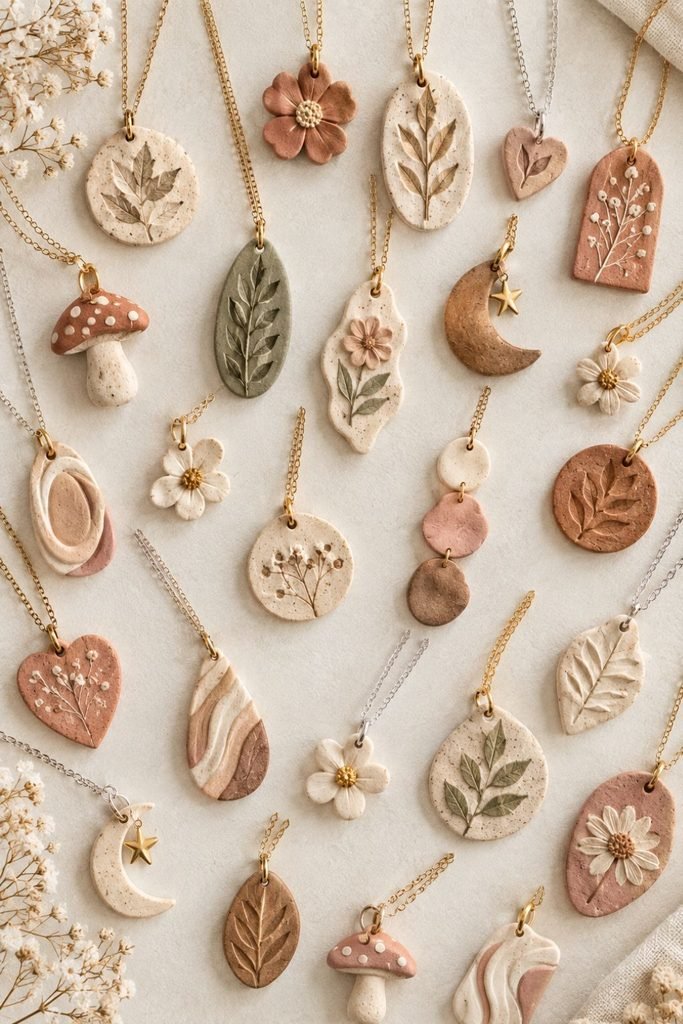
Price range: $16–$30, depending on complexity
More labor per piece than most items on this list, but the margin can be better if your painting and sealing are solid.
This is where finishing quality separates a $16 sale from a $30 one more than almost any other category here. My necklace charms tutorial covers attaching jump rings and findings.
Get genuinely comfortable with the findings before you list these. A charm that falls off its chain within a week is the fastest way to a bad review.
Buyers here are shopping the way they’d shop for actual jewelry, so your photography needs to work harder, on a neck or a flat lay with a chain, not just sitting on a table like your other items.
Hand-painted detail work justifies the upper price range far more than size alone does.
Key chains
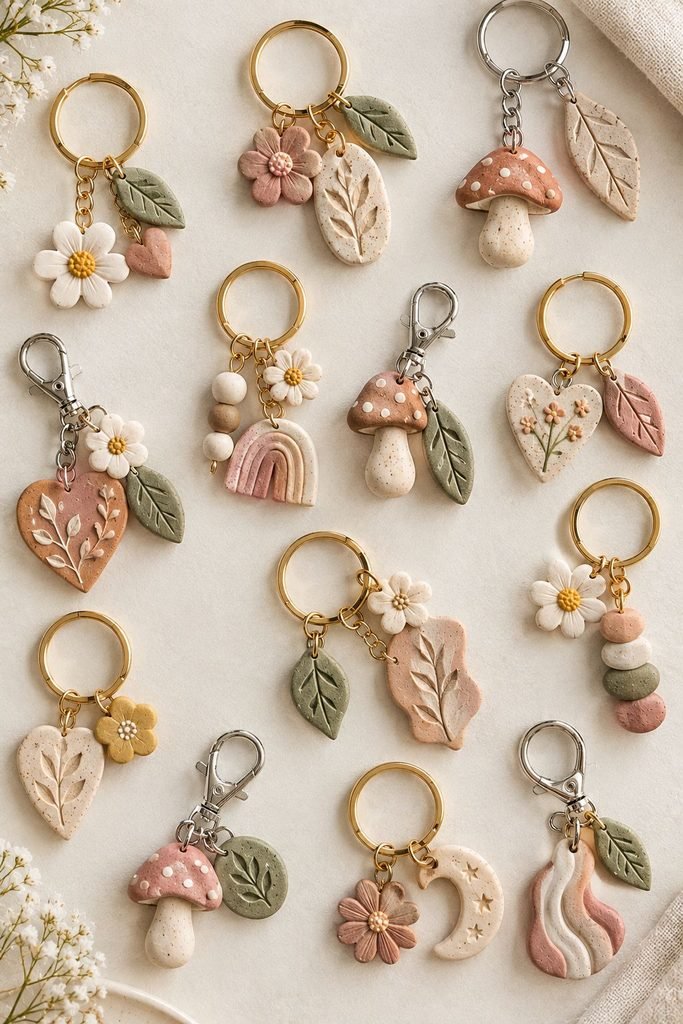
Price range: $8–$15
A lower-price-point item that works well as an add-on sale next to a bigger piece, or as your cheapest table item at a market to get people browsing and touching things before they commit to something bigger. My keychain tutorial has the basics.
Initials, small animals, and mini versions of your other bestsellers, such as a tiny trinket dish shape on a keyring, tend to outsell abstract shapes because there’s an obvious “who’s this for” built in.
Genuinely the item I’d hand to a new maker practicing for volume production, since the stakes of a slightly imperfect piece are low. This category has a pretty firm price ceiling in most buyers’ minds, so I wouldn’t go much above $15 regardless of detail.
Incense Holders
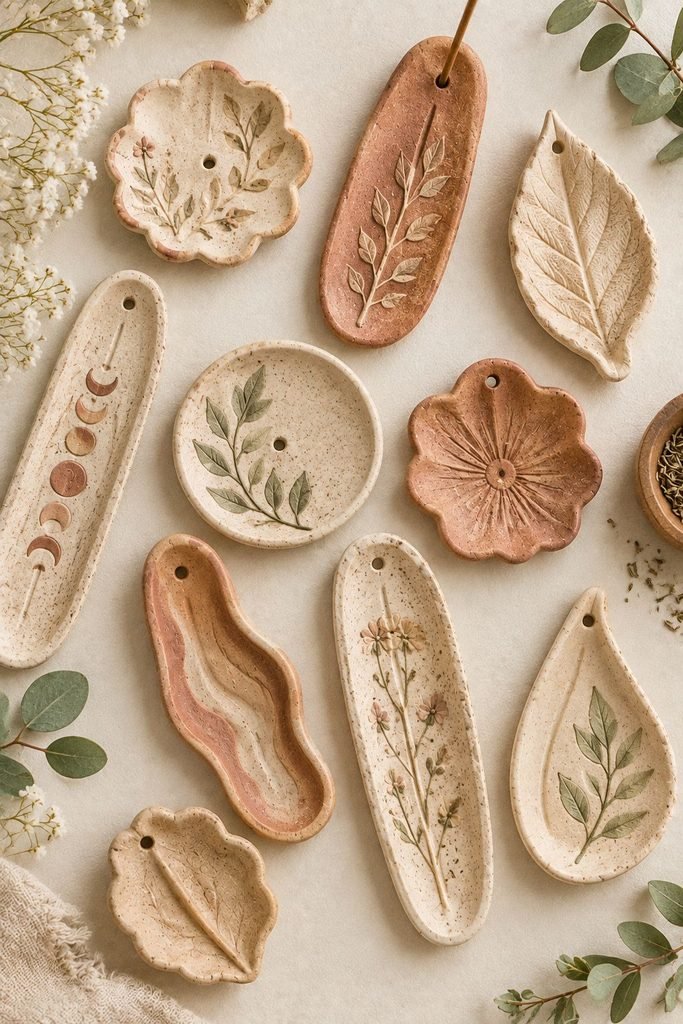
Price range: $15–$25
A smaller audience than trinket dishes, but a genuinely loyal one, and less market saturation than you’d think given how popular incense itself has become again. My incense holder tutorial covers the ash-catching groove that makes these actually functional rather than just decorative.
That functional detail is genuinely what separates a sellable piece from one that just looks nice. Buyers in this niche tend to know what they’re looking for and will pass on a holder that’s clearly decor-only.
Pairing the listing photo with a lit stick of incense rather than an empty holder sells the function much more clearly. An organic, irregular shape often works especially well in this particular category.
Aromatherapy Diffuser Stones
Price range: $12–$18 for a set of two or three
These pair naturally with the essential oil and wellness crowd, and they’re cheap to produce in bulk since they’re small and use very little clay per piece. My diffuser stones tutorial has the technique.
The real selling point here isn’t the clay itself, it’s positioning. List these alongside language about car diffusers, desk diffusers, or closet fresheners so the buyer immediately pictures where it goes.
A vague “diffuser stone” listing with no context tends to be harder for shoppers to understand.
Shapes that double as small decor, such as a mini mushroom, leaf, or little moon, give you more visual interest for essentially the same production effort. Most buyers want one for a couple of different rooms, so sets make sense here too.
Coasters
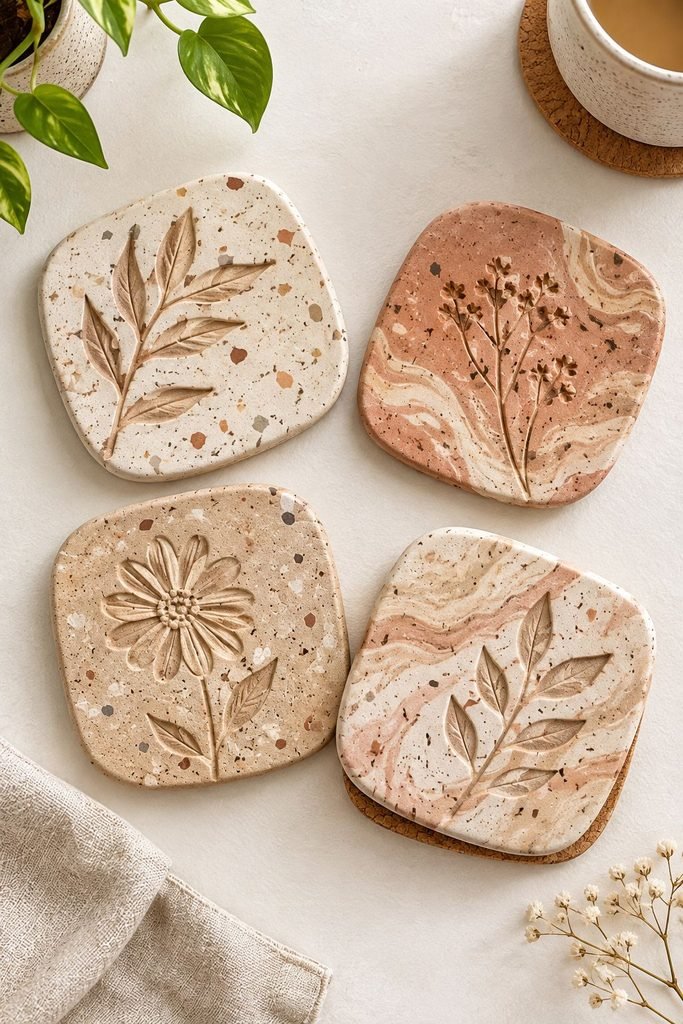
Price range: $20–$32 for a set of four
A crowded category, but still a potential seller if your finishing and waterproofing are genuinely good.
This is one where quality separates you quickly, and where a lot of underprepared sellers can run into problems with water rings and warping. My air dry clay coaster ideas post has several design directions.
Because the category’s so saturated, I’d lean hard into a distinctive pattern or color story rather than a plain single-tone coaster.
Marbling, a terrazzo-style speckle, or a consistent botanical theme across the set gives buyers a reason to pick your shop over the dozens of others.
Cork backing is a small added cost that can meaningfully improve perceived quality while also protecting furniture. It’s worth considering as a standard part of the finished product.
Flower Vases
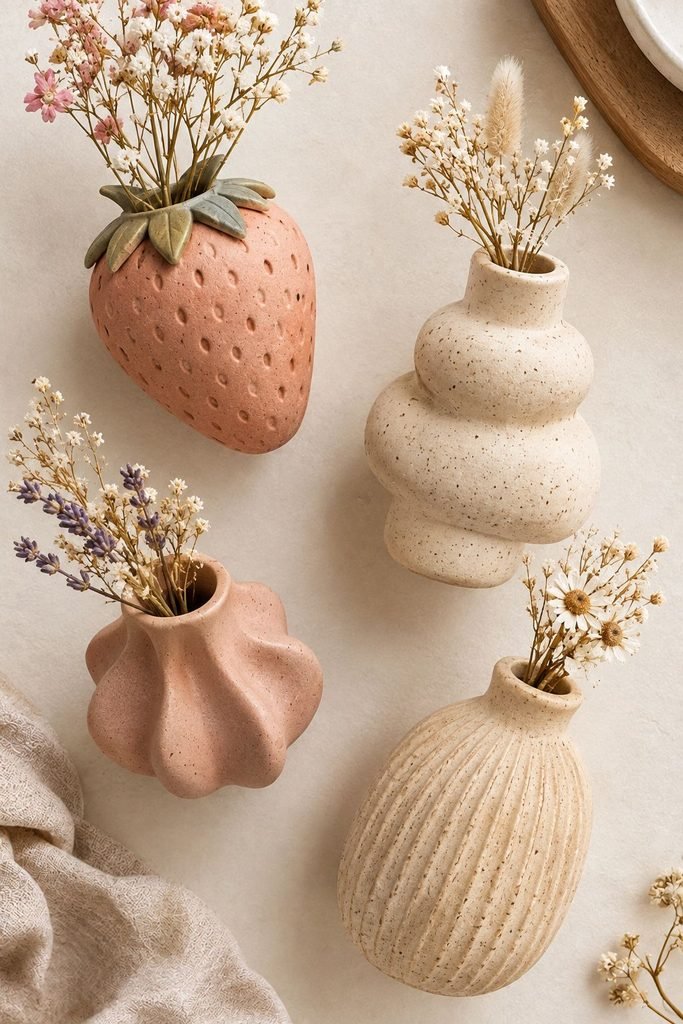
Price range: $25–$45, custom color requests at the top
A higher-effort, higher-reward item. These take longer to shape well and ship carefully, but the price ceiling is higher too, and this is the category where a genuinely distinctive silhouette can do the most for your price point relative to material cost.
My strawberry vase tutorial is a good example of a vase with enough personality to stand out rather than reading as a generic clay cylinder.
Shipping is the real challenge here. A taller, narrower vase needs genuinely thoughtful packaging, and I’d factor that cost directly into your price rather than eating it.
Buyers researching handmade vases tend to expect and accept a higher shipping charge if the listing explains why.
These also work well as a made-to-order item where a buyer can request a specific color story for their space, which justifies a longer lead time and a bit more price flexibility than your smaller, in-stock items.
Pricing These Realistically
The mistake I see most often, and the one I made myself early on, is pricing purely off material cost. A trinket dish might use fifty cents of clay, but that’s not what you’re actually charging for.
I use a rough formula: material cost, plus hours worked times a reasonable hourly rate, even a modest one, plus a bit extra for packaging and the platform fees you’ll lose to Etsy or a market booth cut.
If that math puts a small dish at $18 and that feels high compared to what you see other sellers charging, it usually means those other sellers are underpricing, not that you are.
My post on small handmade products that actually make money goes into this pricing logic in more depth across different craft categories, and most of it applies directly here.
Where to Actually Sell Them
Etsy is the obvious starting point, and the platform logic I laid out in my guide to selling candles on Etsy applies just as much to clay: good photos, honest processing times, and a shop that doesn’t try to sell fifteen different product categories at once.
In-person markets are genuinely worth considering for clay specifically. People want to pick these pieces up and feel the weight before buying, which is hard to convey in a photo.
A local craft fair table with a small, well-curated selection can give you useful direct feedback when you’re just starting.
Instagram and local Facebook buy-and-sell groups round out the list, less about direct sales and more about building the audience that eventually finds your Etsy shop or shows up at your market table on purpose.
Mistakes I’ve Made Pricing and Selling These
Pricing my first batch of trinket dishes at $8 because that’s what felt “fair” for a small clay dish. I sold through them in a weekend, which felt like a win until I did the math on my actual hourly rate and realized I’d essentially paid people to take my work.
Making twelve different product types for my first market table instead of narrowing to four or five done really well. A table that looks curated sells better than one that looks like a garage sale, even when the individual pieces are just as good.
Underestimating sealant costs and shipping breakage on my first few vase-shaped pieces. Taller, narrower pieces need genuinely careful packaging, and I ate the cost of two replacements before I adjusted my process.
Common Mistakes to Avoid
Skipping proper sealing on anything meant to hold liquid, oil, or be handled often. A trinket dish or coaster that isn’t properly sealed will show wear fast, and that comes back to you as a return or a bad review.
Not accounting for shipping weight and breakage risk before pricing. Clay is heavier and more fragile than it looks on a screen.
Factor that into both your price and your packaging before your first sale, not after a broken piece shows up in someone’s mailbox.
Trying to compete purely on price. There will always be a seller charging less. Focus on finishing quality, consistent sizing, and a look that’s identifiably yours instead.
If You Want to Take This Further
Once you’ve got a product or two that’s actually selling, the next reasonable step for a lot of makers is diversifying income around the same skill set rather than just making more of the same thing.
My posts on starting a gift box business and turning a DIY hobby into a blog both cover adjacent directions worth considering once the clay side is running smoothly.
Related Posts
If this was helpful, here are a few more worth reading next:
- Leaf Imprint Jewelry Dish Tutorial — one of the strongest sellers on this list, start here.
- 10 Air Dry Clay Gift Ideas That Actually Feel Thoughtful — good inspiration for seasonal product sets.
- Air Dry Clay Beginner Tips — worth a read before you scale up production.
- How to Seal Air Dry Clay — non-negotiable if you’re selling anything that’ll be handled regularly.
- 17 Small Handmade Products That Make Money — broader pricing and category logic beyond just clay.
Frequently Asked Questions
Do I need a business license to sell handmade clay items?
It depends entirely on where you live and how much you’re selling.
Small-scale hobby sales can fall under different rules than a registered business, so it’s worth checking your local regulations rather than assuming either way.
What’s the most beginner-friendly item on this list to start selling?
Trinket dishes are a simple starting point because they’re low-cost, relatively quick to make, and forgiving for beginners.
Should I sell on Etsy or in person first?
If you have access to a local market, selling in person can give you useful feedback on pricing, designs, and finishing quality before you invest heavily in an online shop.
How many pieces should I have ready before my first sale?
For a market table, I’d aim for at least twenty to thirty finished pieces across four or five product types, enough to look curated rather than sparse.
Is air dry clay durable enough to sell as functional items, not just decor?
It can be used for many functional decorative items when properly constructed and finished, but air dry clay isn’t naturally waterproof. Products exposed to moisture or frequent handling need an appropriate sealant and clear care instructions.
Final Thoughts
I still think about that message, the “is this silly to ask” one, because I don’t think it was silly at all. I think it’s the exact right question to ask before you spend a weekend making forty of something nobody wants yet.
The honest version of this list is smaller and less exciting than “everything sells,” but it’s also more useful. Start with one or two items from here, get the finishing quality genuinely good, and figure out your pricing before you scale up.
If you end up selling any of these, I’d love to hear which one moved first. It’s usually not the one people expect.

One Comment